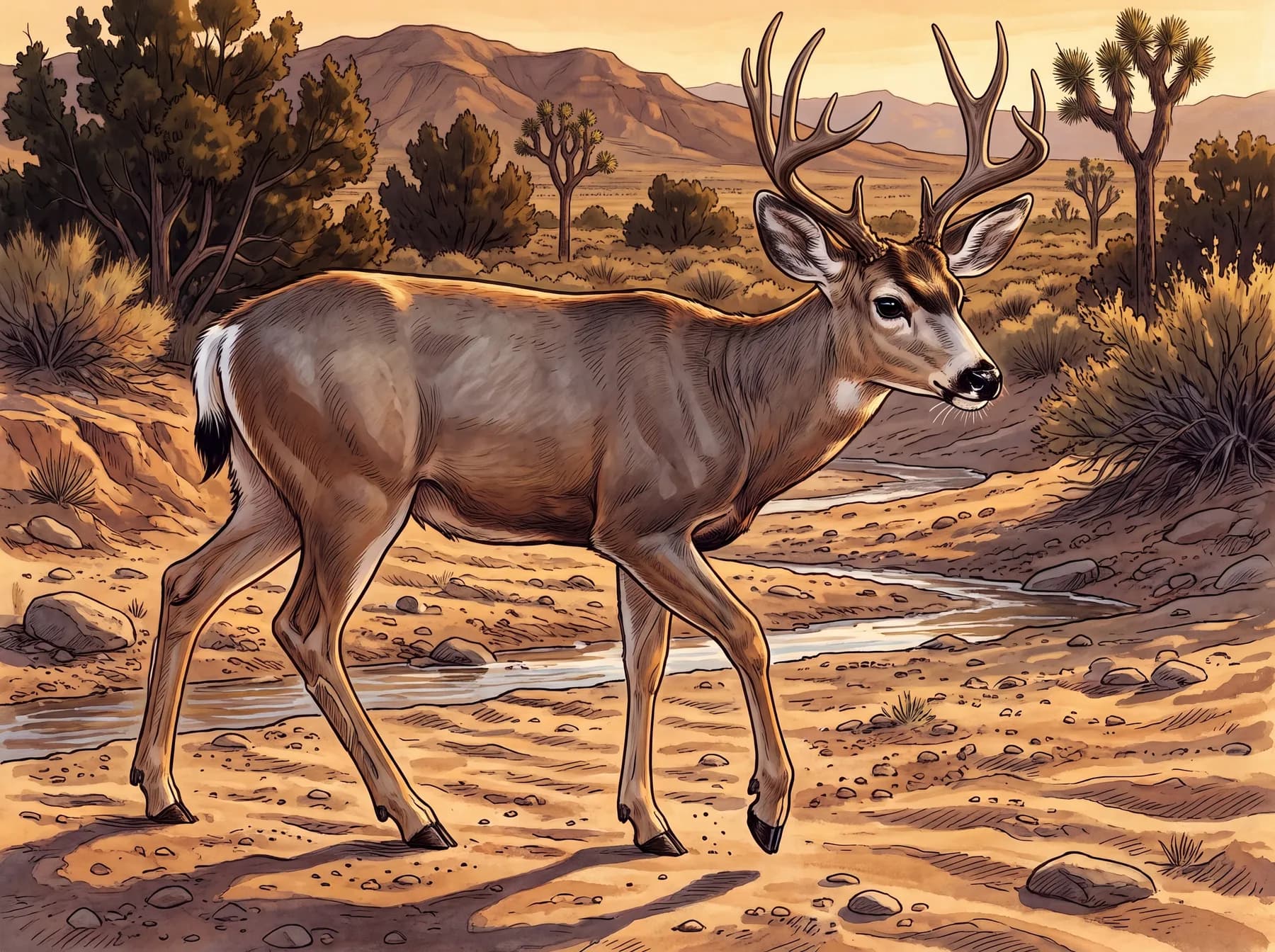
The desert mule deer does not leave for the summer. Unlike the mountain herds that ride the snow up and down the slopes, the deer of this country stay put and solve the heat in place, and the way they solve it is water. Through the dry months they pull in close to it, holding within about half a mile to a mile of a drink and no farther, then loosen back across the open ground once the rains take the pressure off.
The name is about the ears. The species name means half-mule, for the oversized ears that catch sound at a distance. Whatever you may read, those ears are not a radiator; nobody has shown a mule deer sheds meaningful heat through them, and the animal's real defenses against the sun are shade and panting. The ears are for hearing you coming.
Follow the deer and you are really following the washes. One Arizona study found that the dry drainages make up only about 3 percent of the ground yet held the deer nearly 30 percent of the time. The washes carry the green (the browse, the shade, the little damp), so a habitat that looks like a thin branching thread on a map is most of the animal's world on the ground.
In a genuinely dry summer, some individuals have been tracked walking as far as twenty miles to reach standing water, then turning around and coming home within weeks of the first rains. That is the exception, not the rule; most days a deer shifts only a mile or so to water and straight back. But it shows how far the animal will stretch before it breaks, and that it treats far water as a place to visit, never to move to.
When it goes, it stots — all four feet leaving and landing together, a stiff bounce that looks inefficient until you watch it clear rock and brush and pivot in a single jump. Biologists have shown the stot works as terrain engineering; the older idea that it is a show-off signal to a predator comes from gazelle research and has never been tested on mule deer. Read the tail as it bounds: white, with a clean black tip, which is what separates it from a white-tailed deer.
Learn the washes before you learn the deer. Find where the green threads run, and you have found where it will be.