Mammals
Nearly all of them move after dark, and most are somebody's dinner.
Key
subtitle = binomial (scientific name)
Carnivores & Predators
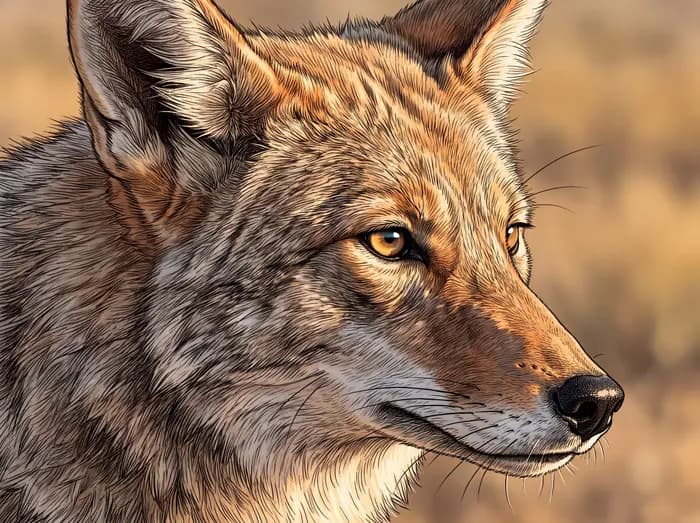
Coyote
Canis latrans
Count the coyotes you hear and you'll count high — a pair throws its voice like a crowd. And it isn't a newcomer filling the wolf's gap: in the West it was here first.
Read more →
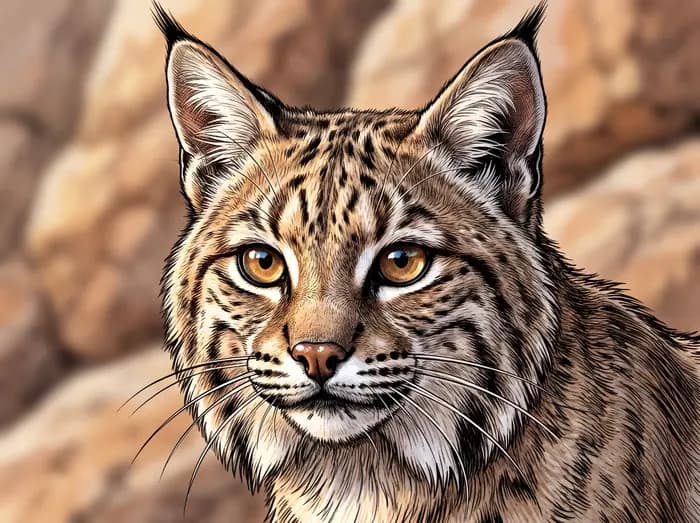
Bobcat
Lynx rufus
House-cat build, two or three times the size — and its range breathes with the weather. One female's shrank from 20.2 to 11.9 square km when the heat came. It kills mouse to deer.
Read more →
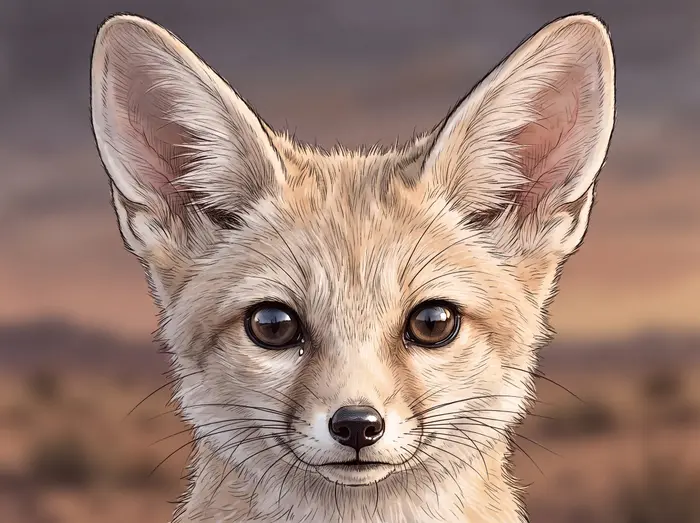
Kit fox
Vulpes macrotis
The carnivore that visits desert water most is the one fox that needn't drink — 1,242 of two-thousand-plus camera visits. Coyotes are its reaper; it keeps 11-plus dens to stay hidden.
Read more →
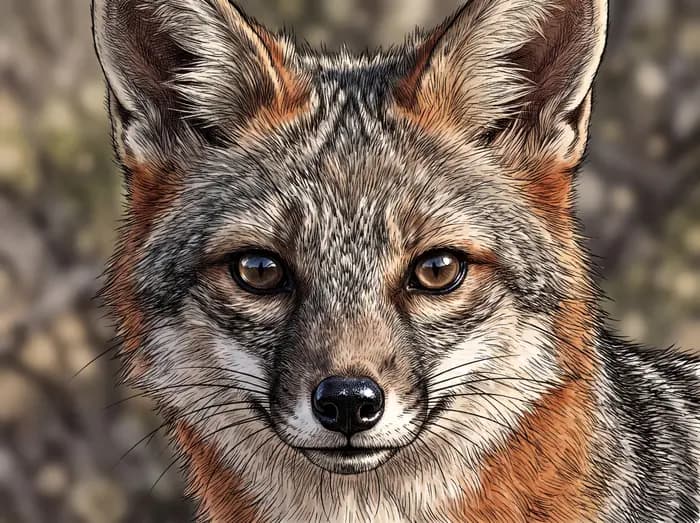
Gray fox
Urocyon cinereoargenteus
The only wild dog in North America that truly climbs — hooked, half-retractile claws; one was recorded 15 ft up a saguaro. Not the open-flat animal here: it leans on brushy washes and rock.
Read more →
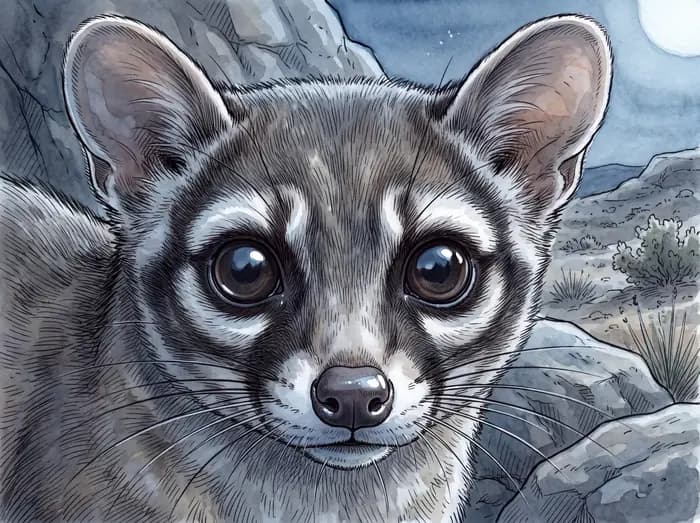
Ringtail
Bassariscus astutus
Arizona's state mammal, and almost nobody sees it. A nocturnal rock-climber whose hind feet spin 180° for headfirst descents. About five research-grade records exist for the whole county.
Read more →
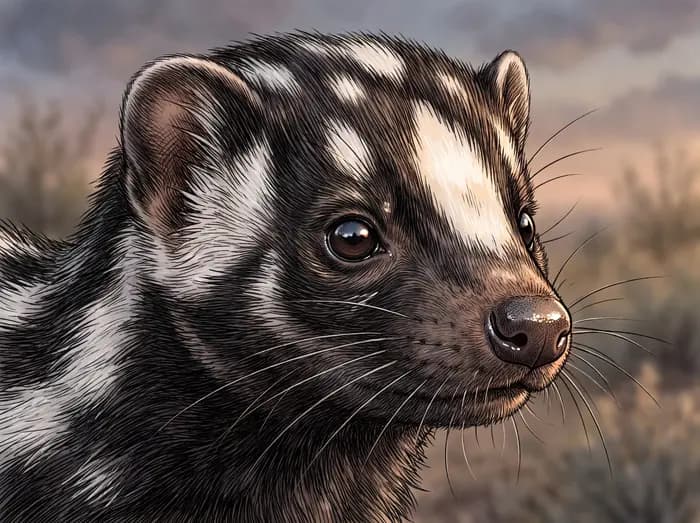
Western spotted skunk
Spilogale gracilis
The handstand is a bluff — the real spray comes from a horseshoe crouch, both ends aimed at once. A pound of stripes broken into spots, and half a year pregnant before the pregnancy implants.
Read more →
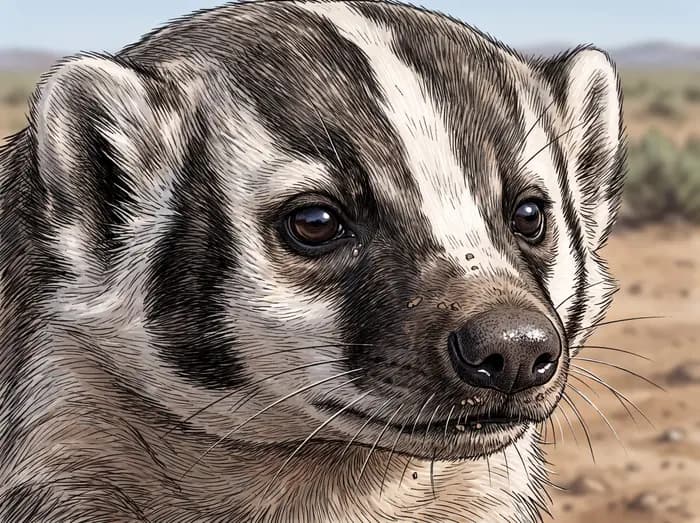
American badger
Taxidea taxus
It hunts by out-digging its prey underground. One Alberta badger plugged 23 squirrel tunnels with 37 carried objects — a documented tool user. On this ground, look for the dig, not the digger.
Read more →
Hoofed & Large
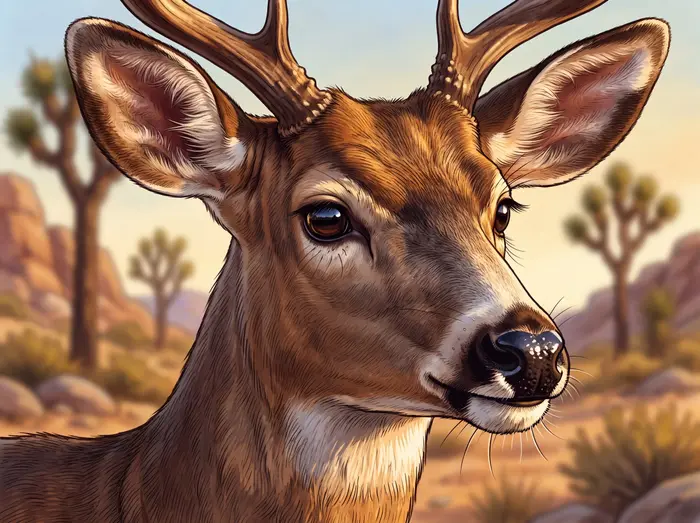
Mule deer
Odocoileus hemionus
A desert deer that doesn't migrate — it just tightens to water in the heat and scatters with the rain. The washes are 3% of the ground and hold it 30% of the time.
Read more →
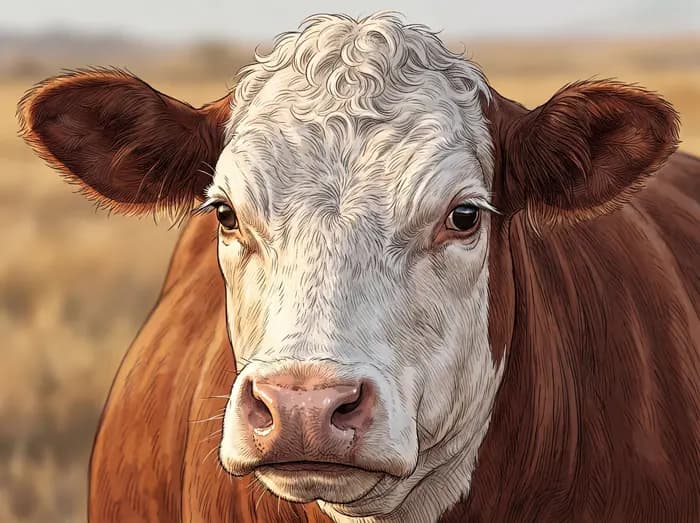
Free-range beef cattle (Hereford / Hereford-cross)
Bos taurus
This is open range — a fence-out state. Cattle drifting onto an unfenced garden is legal; the remedy is a lawful fence, which is why here the garden gets fenced, not the cows.
Read more →
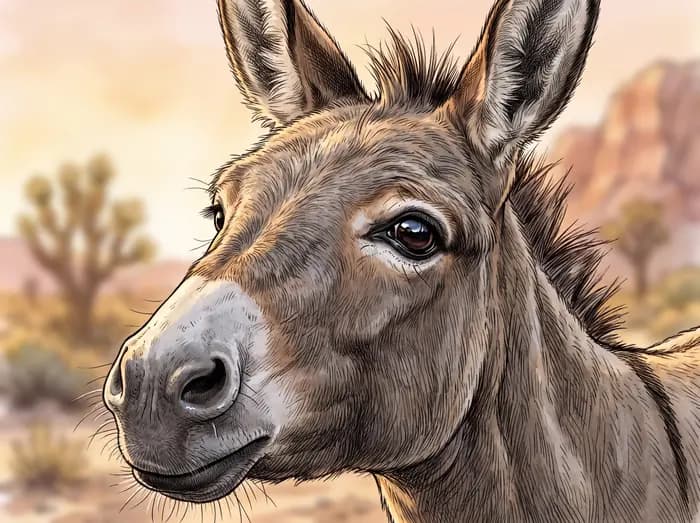
Feral burro
Equus asinus
It digs wells to groundwater with its hooves, and 57 other species drink from them. It is also about ten times over the target herd size here, and the damage is real. Hold both.
Read more →
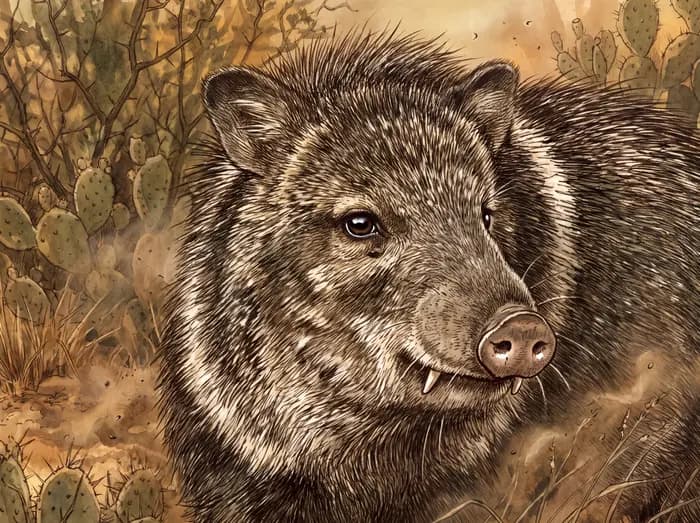
Javelina
Dicotyles tajacu (= Pecari tajacu)
Not a pig but a peccary, and the musky herd that never breaks up isn't just sociable — it's a thermostat. Here it's a daily fixture, not a maybe.
Read more →
Rabbits & Hares
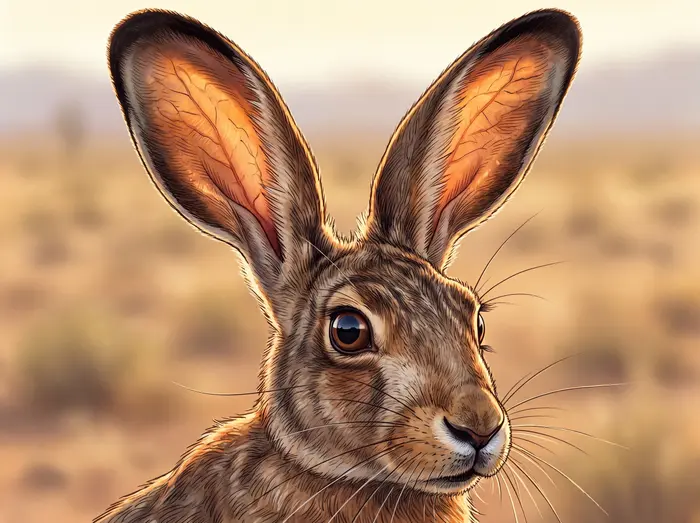
Black-tailed jackrabbit
Lepus californicus
A hare, not a rabbit — born furred and running. Its big ears shed more than 100% of its body heat at 30°C by convection, until the air runs hotter than the hare and the cooling reverses.
Read more →
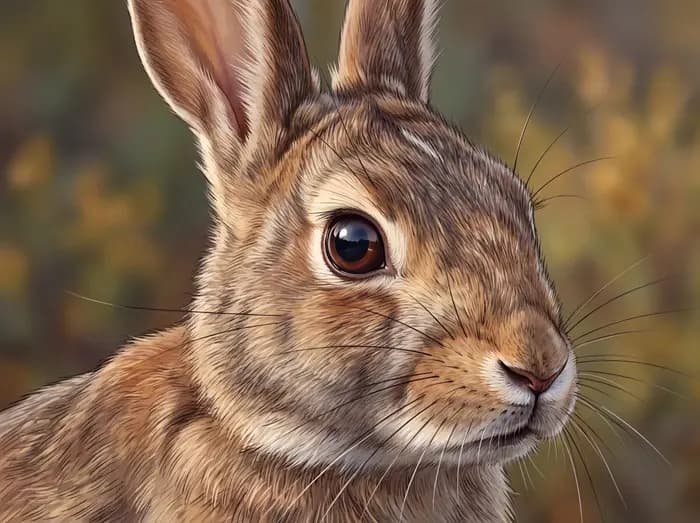
Desert cottontail
Sylvilagus audubonii
It eats its food twice — passing plants once, then re-eating the soft night pellet to run them through the fermentation vat again. In a hard year the mother can reabsorb her own unborn young.
Read more →
Rodents
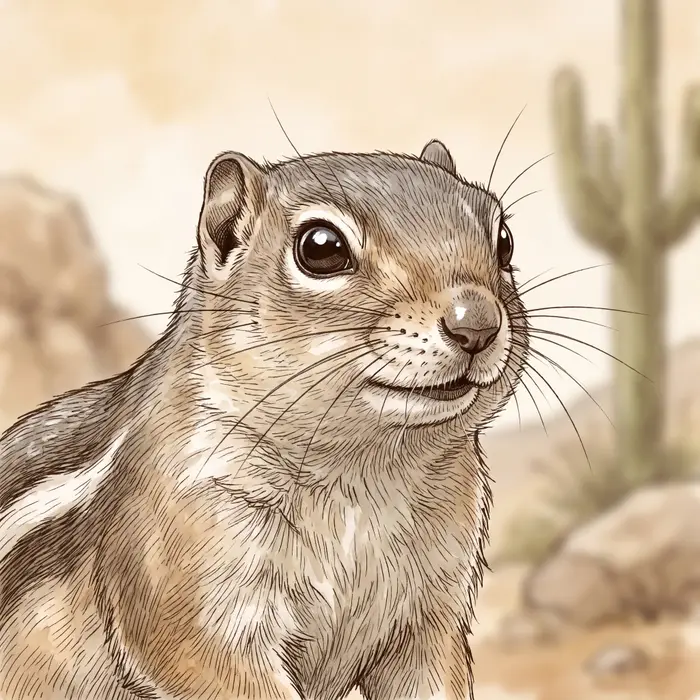
Harris's antelope squirrel
Ammospermophilus harrisii
The range map calls it the wrong squirrel; records 13 km off overrule the map. Out at midday when the rest are underground, and its mixed black-and-white tail settles the name.
Read more →
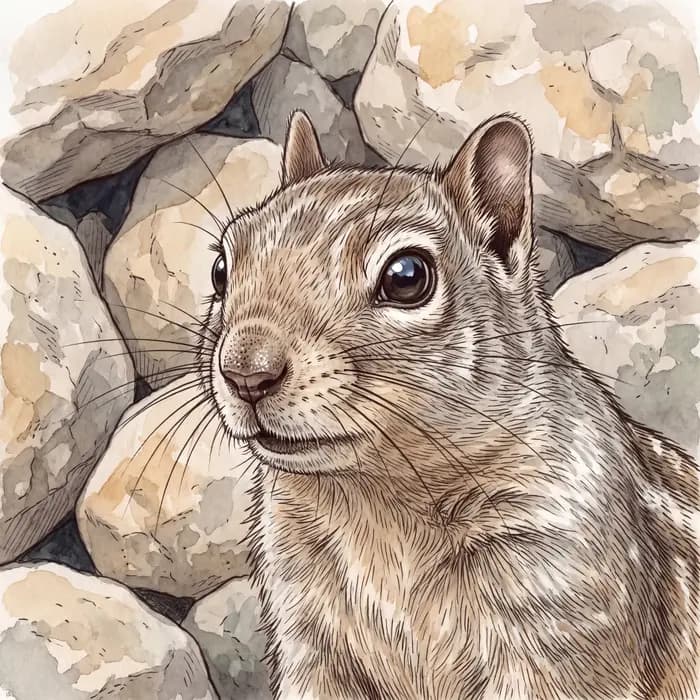
Rock squirrel
Otospermophilus variegatus
Its blood blunts local rattlesnake venom, but telling a rattler from a harmless gopher snake is learned, not inborn — and it re-tunes its fur to the sun each season.
Read more →
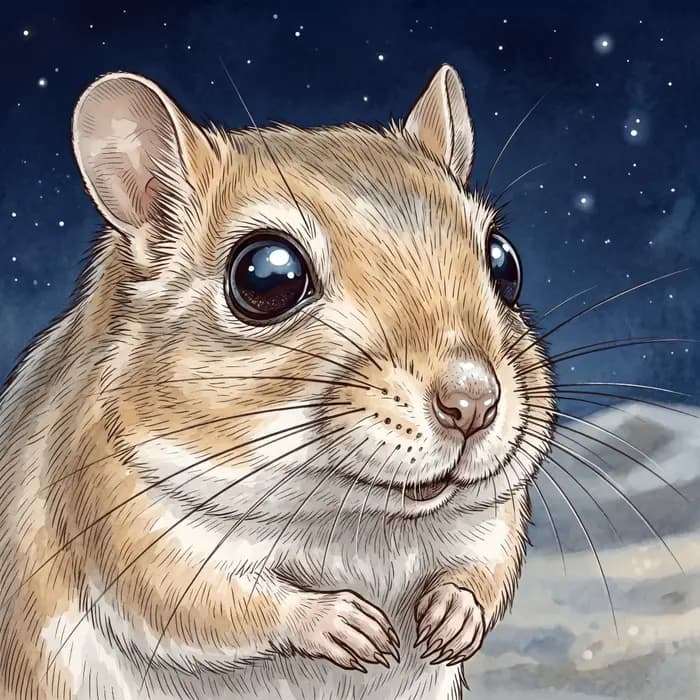
Merriam's kangaroo rat
Dipodomys merriami
It essentially never drinks. A Merriam's kangaroo rat burns dry seeds into the water it needs, wrings its urine to five times a human's limit, and hoards its cache in a humid burrow.
Read more →
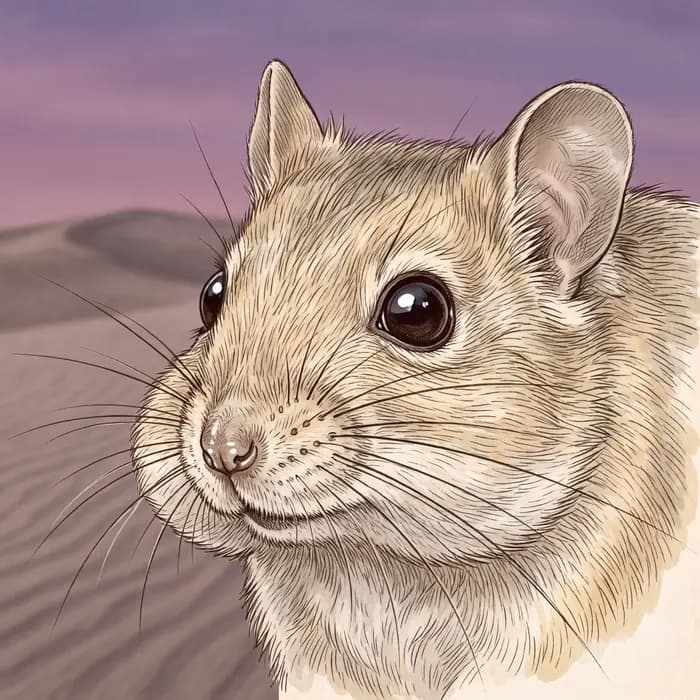
Arizona pocket mouse
Perognathus amplus
A silky mouse that never drinks: it wrings water from dry seed and banks the rest underground. Its buried pantry is found by smell, on the darkest, moonless nights.
Read more →
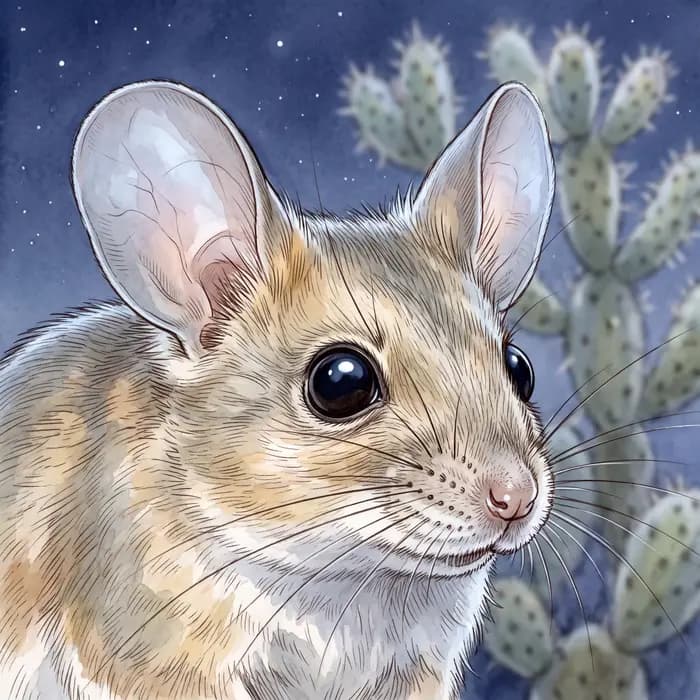
Cactus mouse
Peromyscus eremicus
A desert mouse that survives the hottest weeks by shutting down, and can die of cold. Dehydrated, it goes nearly anuric: 3 days, 23.2% of its body weight lost, no kidney injury.
Read more →
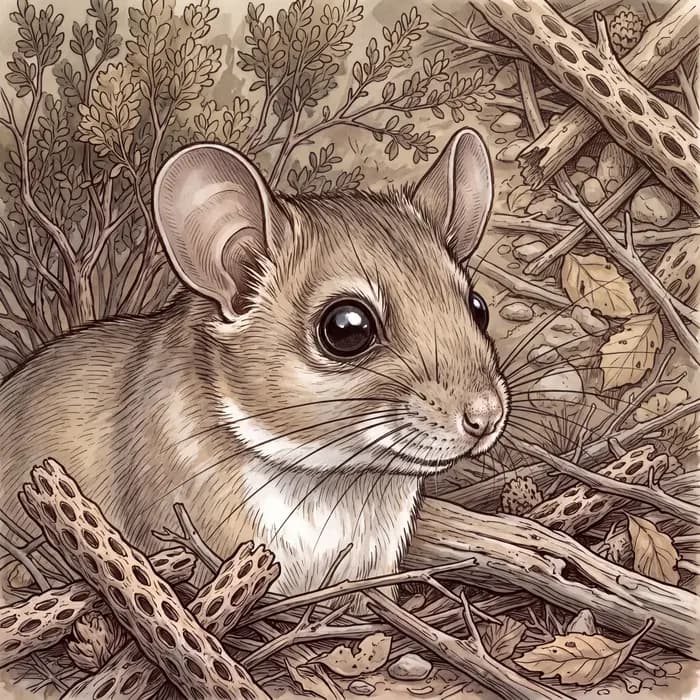
White-throated woodrat (packrat)
Neotoma albigula
A stick heap glued with crystallized urine that reads back fifty thousand years. The living animal rarely needs to drink: it takes water from cactus and lets gut bacteria disarm the poison.
Read more →
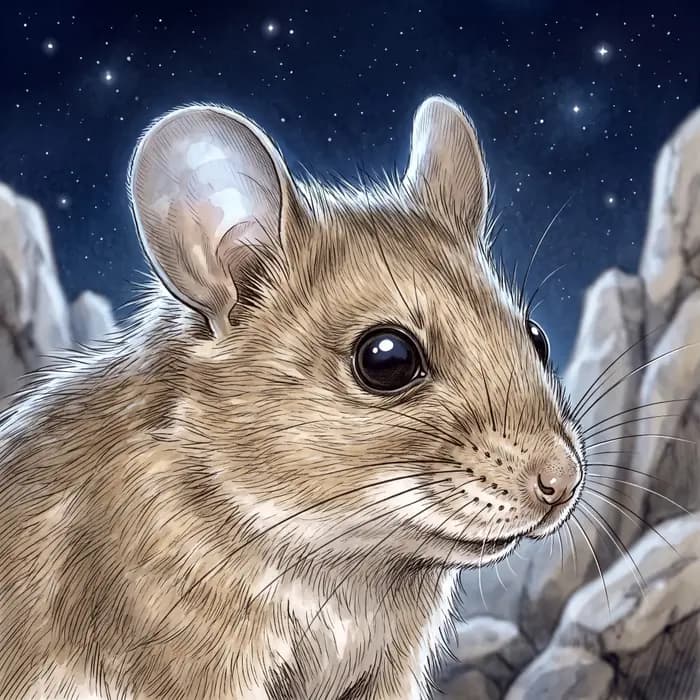
Canyon mouse
Peromyscus crinitus
A desert mouse whose range is drawn by rock, not plants, and that can live on bare stone with no water to drink. The tell is the long, two-tone, tufted tail.
Read more →
Bats
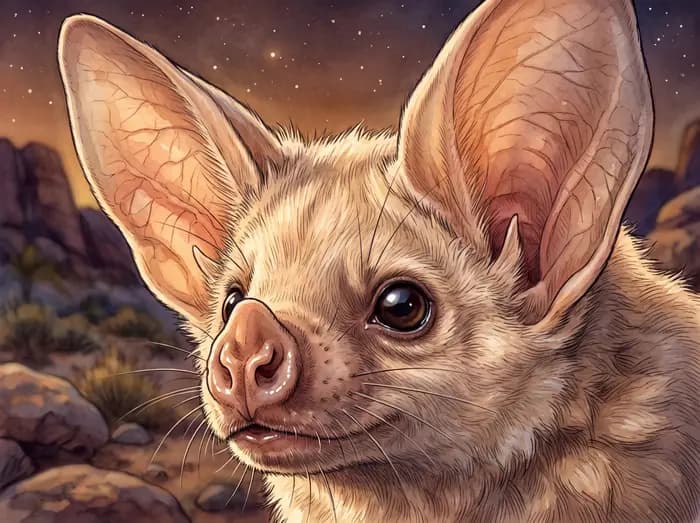
Pallid bat
Antrozous pallidus
A pale desert bat that hunts crawling prey on the ground by ear, not sonar. It takes the Arizona bark scorpion, stung repeatedly, and the venom does not stop it.
Read more →
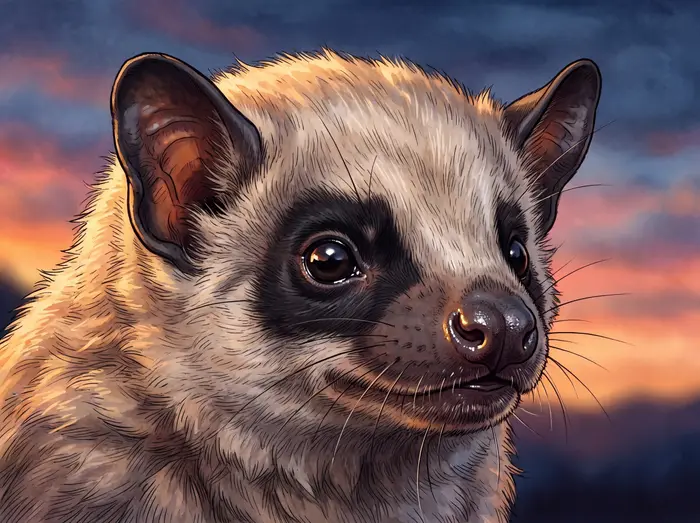
Canyon bat
Parastrellus hesperus
The smallest bat in the United States, 3 to 6 grams, and the one you can watch in daylight, often out 45 minutes before sunset. Pale body, sharp black mask, short blunt ears.
Read more →
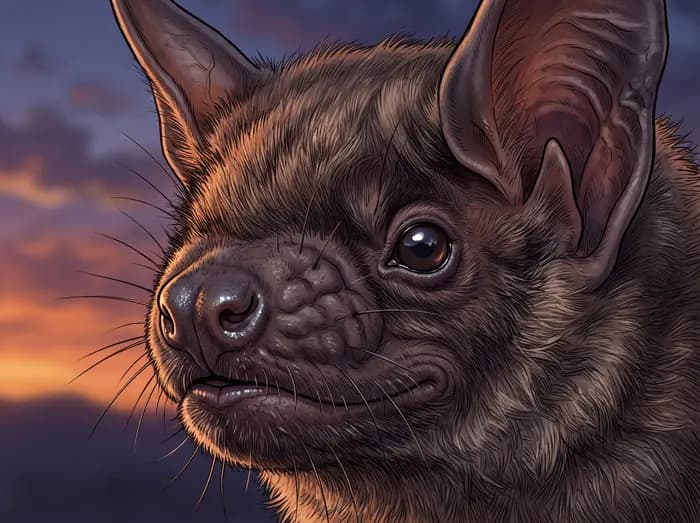
Mexican free-tailed bat
Tadarida brasiliensis
The fastest bat clocked in level flight, better than sixty miles an hour, and it climbs past ten thousand feet to hunt moths on the night wind. Here in summer, gone to Mexico by winter.
Read more →
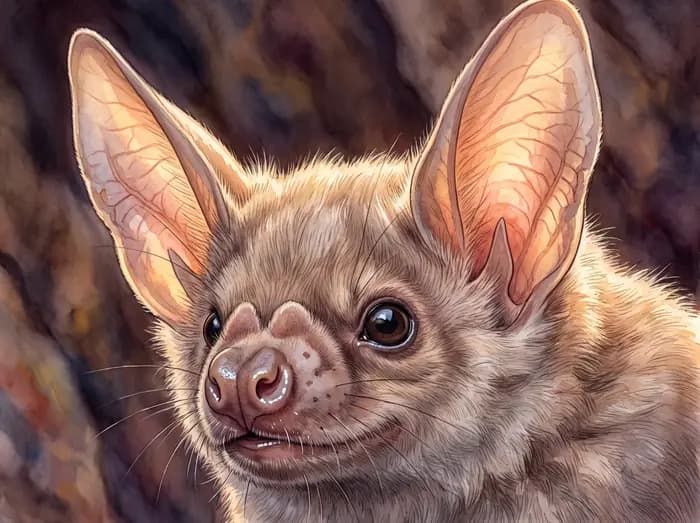
Townsend's big-eared bat
Corynorhinus townsendii
A moth specialist that hunts on echolocation too faint for a moth to hear. Enormous ears, two lumps on the snout, and a colony that abandons its roost the moment it is found.
Read more →
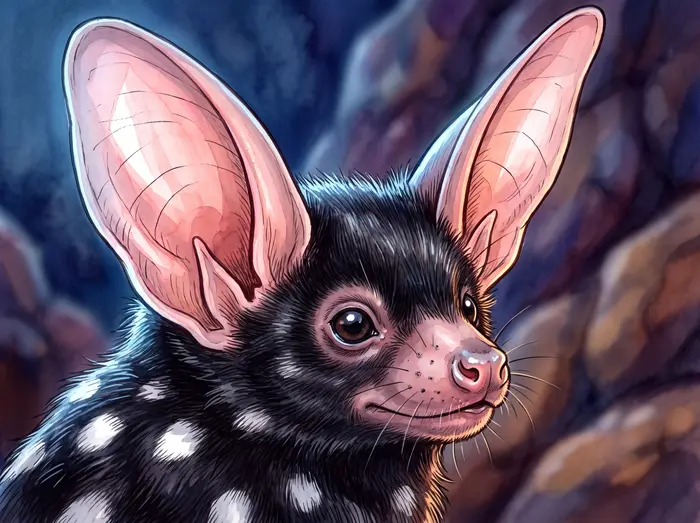
Spotted bat
Euderma maculatum
The bat you hear before you see. Its calls drop low enough for human ears, a metallic click overhead. It roosts alone on cliffs, jet-black with three white spots and the biggest ears of any US bat.
Read more →
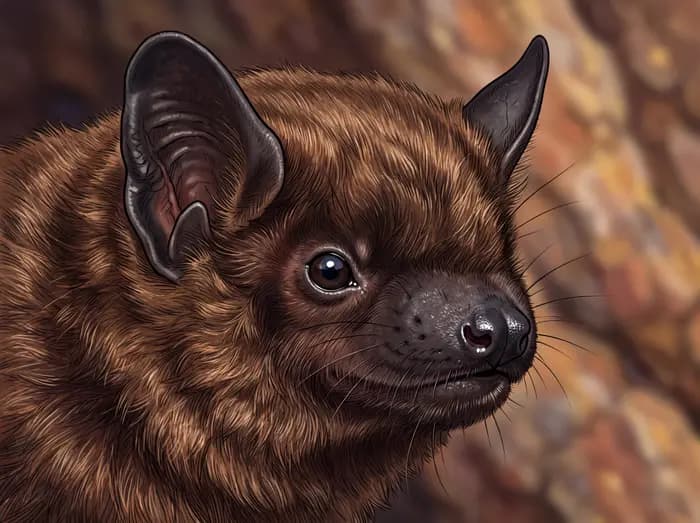
Big brown bat
Eptesicus fuscus
The tough generalist of the desert bats: it cracks beetle shells, sleeps in a rock crack or a building eave, and hunts warm winter nights when almost nothing else is flying.
Read more →
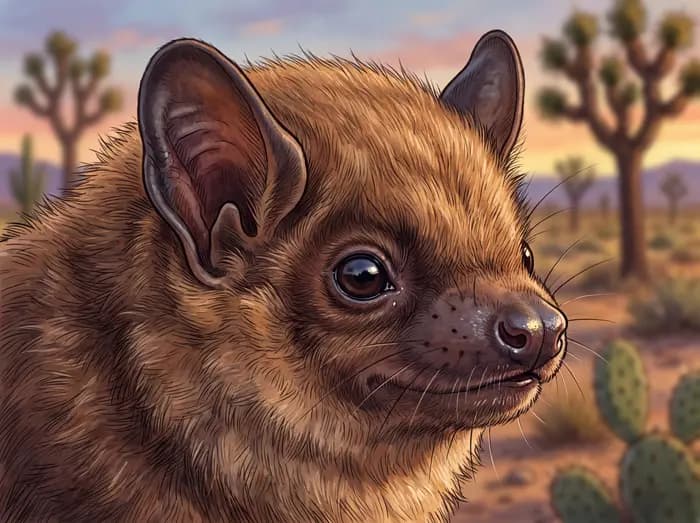
California myotis
Myotis californicus
One of the commonest bats in desert scrub, and nearly impossible to name, even in the hand. Slow, fluttery, low over the wash, well after dark. The very small feet are the tell.
Read more →