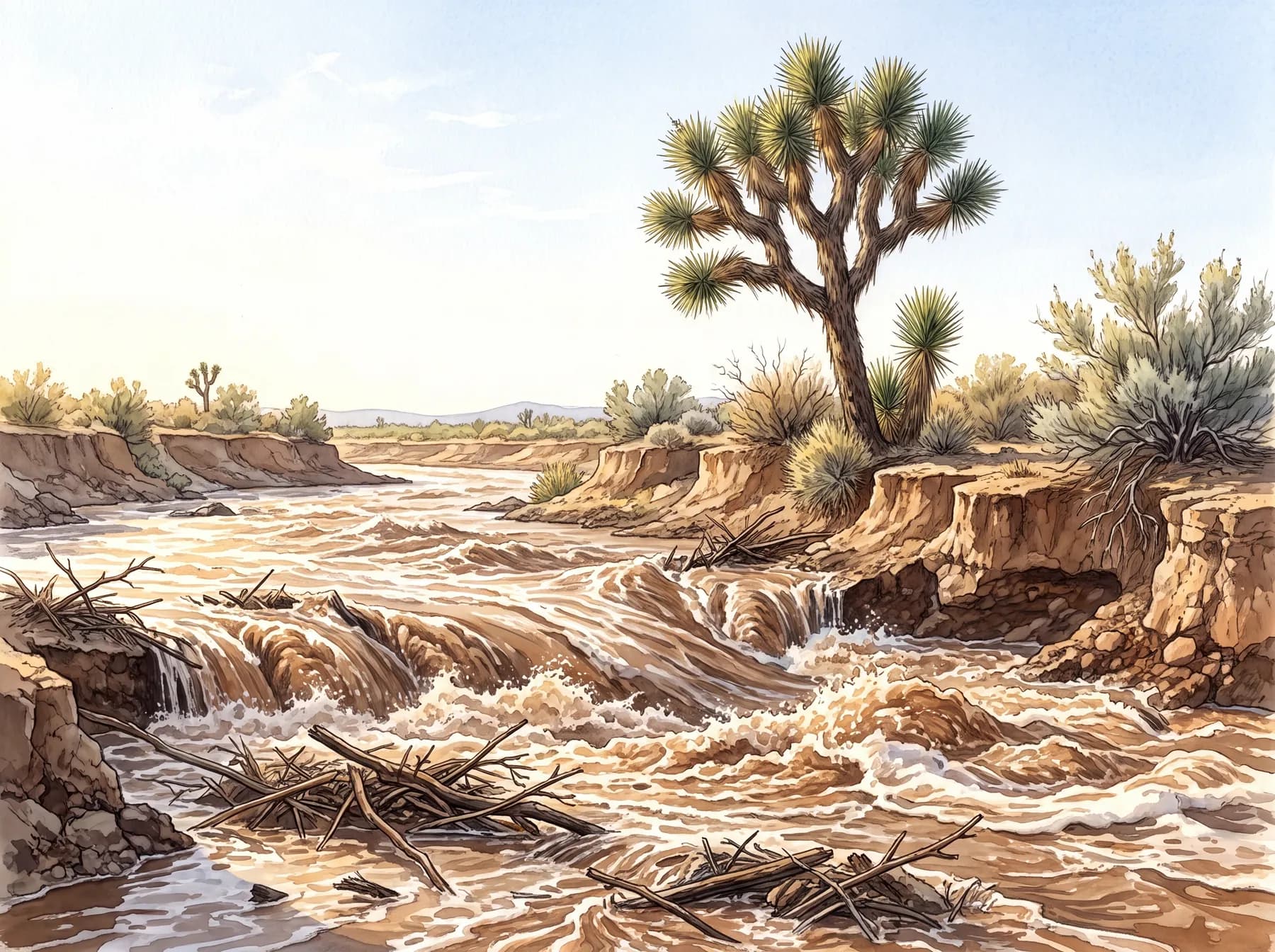
The deadliest weather in this desert is water, and it usually arrives when the sky overhead is clear. A flash flood is a sudden wall of water racing down a normally dry channel, and the storm that made it may be miles upstream, out of sight, on the mountains. The wash was dust an hour ago; now it is a brown torrent, and the change took minutes.
The reason the desert floods so fast is that the ground refuses the rain. Baked soil, the cemented caliche layer under it, the tight-packed desert pavement, and the thin dry cover all shed water instead of soaking it in. So a hard monsoon downpour runs off almost whole, gathers into the channels, and stacks down the slope of the bajada into a surge far larger than the rain that fell where you are standing. Dry ground to torrent, with almost none of it absorbed on the way.
The water is not clean rain. It comes down loaded with mud, sand, rock, and torn brush, chocolate-brown and heavy, dense enough to move boulders and float a truck. That freight is exactly what re-cuts the wash, scours the banks, and rearranges the channel; the flood is the tool the desert uses to carve its own drainage. The wash you walk in dry is the record of the last time it ran.
The trap is the clear sky. Because the rain that feeds the flood can fall far upstream, the danger is not overhead and gives no local warning. People die in the desert stepping into or driving across a wash that is dry, or barely wet, when the wall arrives from somewhere they could not see.
So the rules here are simple and not negotiable. When storms are anywhere upstream, stay out of the washes, do not camp in them, and never drive into flowing water. Most desert flood deaths are people in vehicles who thought the water was shallow. It is moving, it is loaded, and it is stronger than it looks.
Read the wash before you trust it: debris caught high in the brush is how high it has run before.