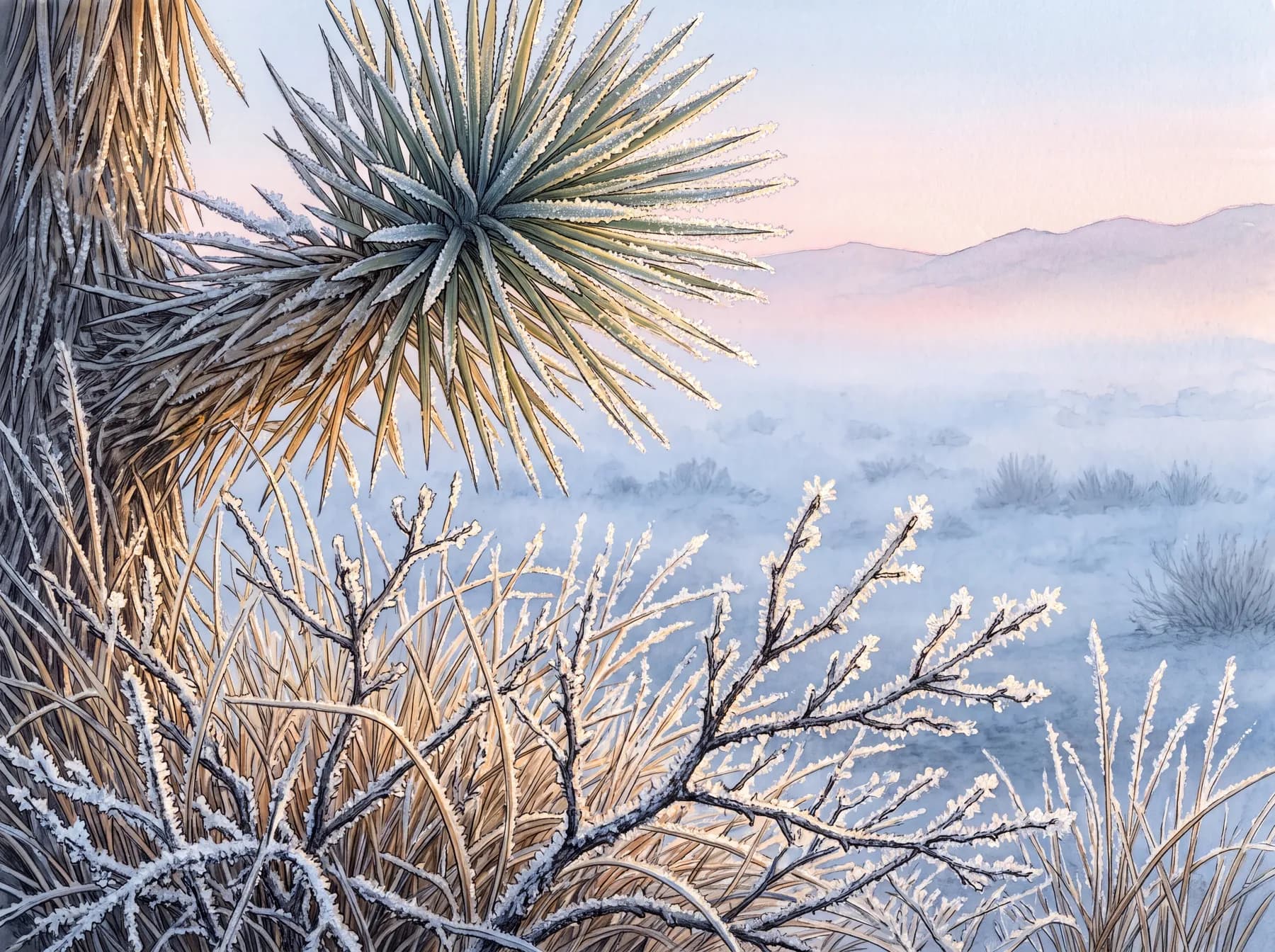
A desert is supposed to mean heat, so the hard winter freeze surprises people who only know the summer of the place. Up here this is high desert, and clear winter nights here drop below freezing regularly, furring the twigs and grass with frost by dawn. The cold is not a fluke; it is the same clear, dry air that runs the summer, working the other side of the year.
The mechanism is radiative cooling. With little water vapor to trap heat, the ground on a clear, still night radiates its warmth straight out to space and the surface cools below even the air temperature, which is why frost can form on the grass when the official low is only near freezing. Frost itself is water vapor freezing directly onto surfaces that have chilled below freezing, so a low sun the next morning lights a whole field of crystals before they melt off.
The colder truth is where the cold settles. Dense cold air drains downhill at night and pools on the flats and in the basin bottoms, so the open flat becomes a frost pocket while the slope above it stays warmer. The freeze on the low ground also lasts longer, and that is not a small detail; it is the exact reason cold-sensitive plants like the saguaro grow up on the warm slopes and vanish from the cold flat below. The plants have already mapped the drainage.
For a homestead that turns into practical knowledge. Because cold pools low, a few feet of rise onto a slope can buy a frost-free spot beside a frosted one, which decides where a tender tree survives and where it burns off. The slope is a temperature map if you learn to read where the white gathers.
So the desert year is not one long heat. It is a swing wide enough to hold both the summer that can kill you with heat and the winter night that can kill a citrus tree, sometimes only weeks apart.
At first light, read the frost: it settles on the low flat and skips the warmer slope, and the plants already know it.