We can tell you, to the hour, how cold it gets at the nearest weather station. We cannot tell you how cold it gets on this land — and the reason turns out to be the most interesting thing on the property.
By day it is easy. Sunlight stirs the air into one big convecting pot, the station and this parcel sit in the same pot, and being a few hundred feet lower simply makes this ground a degree or two warmer. You can do that arithmetic and you can trust it.
At night the pot stops stirring. Under a clear desert sky the ground throws its heat straight out into space, the air lying on it goes still and heavy and cold, and it stops talking to the sky altogether. Cold air is dense, so it slides off the high ground and runs downhill. And now being lower no longer means being warmer. It can mean precisely the opposite, and no amount of arithmetic will tell you which.
Here is the part nobody admits. The weather station is doing exactly the same thing. It is a thermometer standing a couple of metres above a graded, open, treeless airfield, which is very close to the most efficient cooling surface a person could build. Its average freeze lasts a little over four hours and breaks at sunrise, which is the signature of a patch of ground busily chilling itself. That is not a neutral reference point.
We measured what could be measured. This parcel is not a frost hollow: fill the terrain with water in a computer and none of it collects here, and the cold air coming off the hill keeps running for miles without finding anywhere to stop. That rules something out. It does not hand you a number.
Every map you can buy will hand you one anyway. The great climate models draw the world in squares twenty miles across, which means this land and that weather station fall inside the same square and are reported as the same place. They will tell you, with total confidence, that this ground is the warmer of the two. They are guessing, and on a clear night in January they may well be guessing wrong.
But something out here has already run the experiment, for a century, without being asked to.
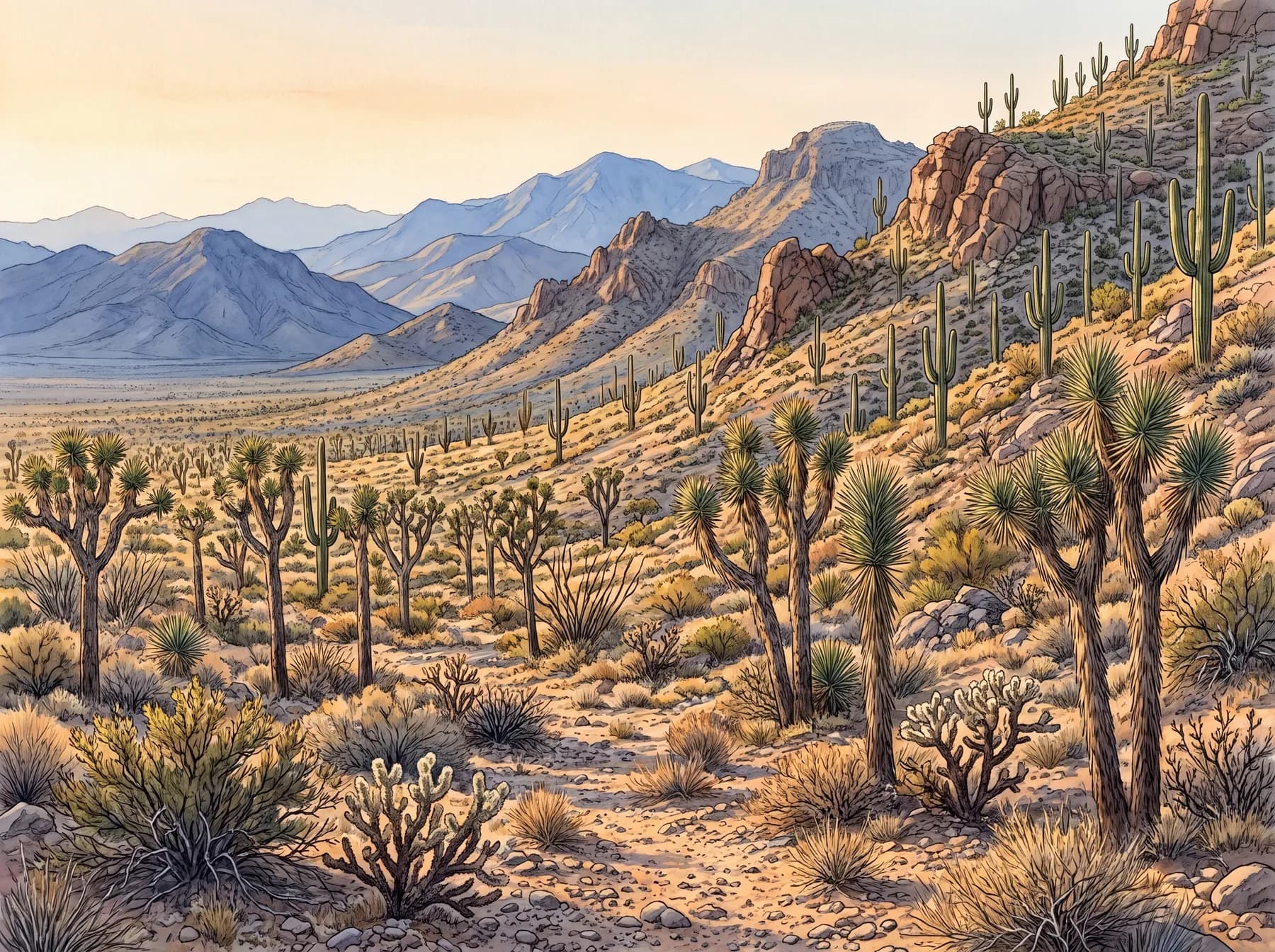
The saguaros are on the hill and not on the flat. A saguaro is not killed by how cold a night gets; it is killed by how long the cold lasts, and it dies somewhere past a day of it. Every winter since long before anyone thought to build here, they have been standing out in exactly the weather nobody measured, and the ones on this flat did not make it.
They already know the number. They simply cannot write it down.