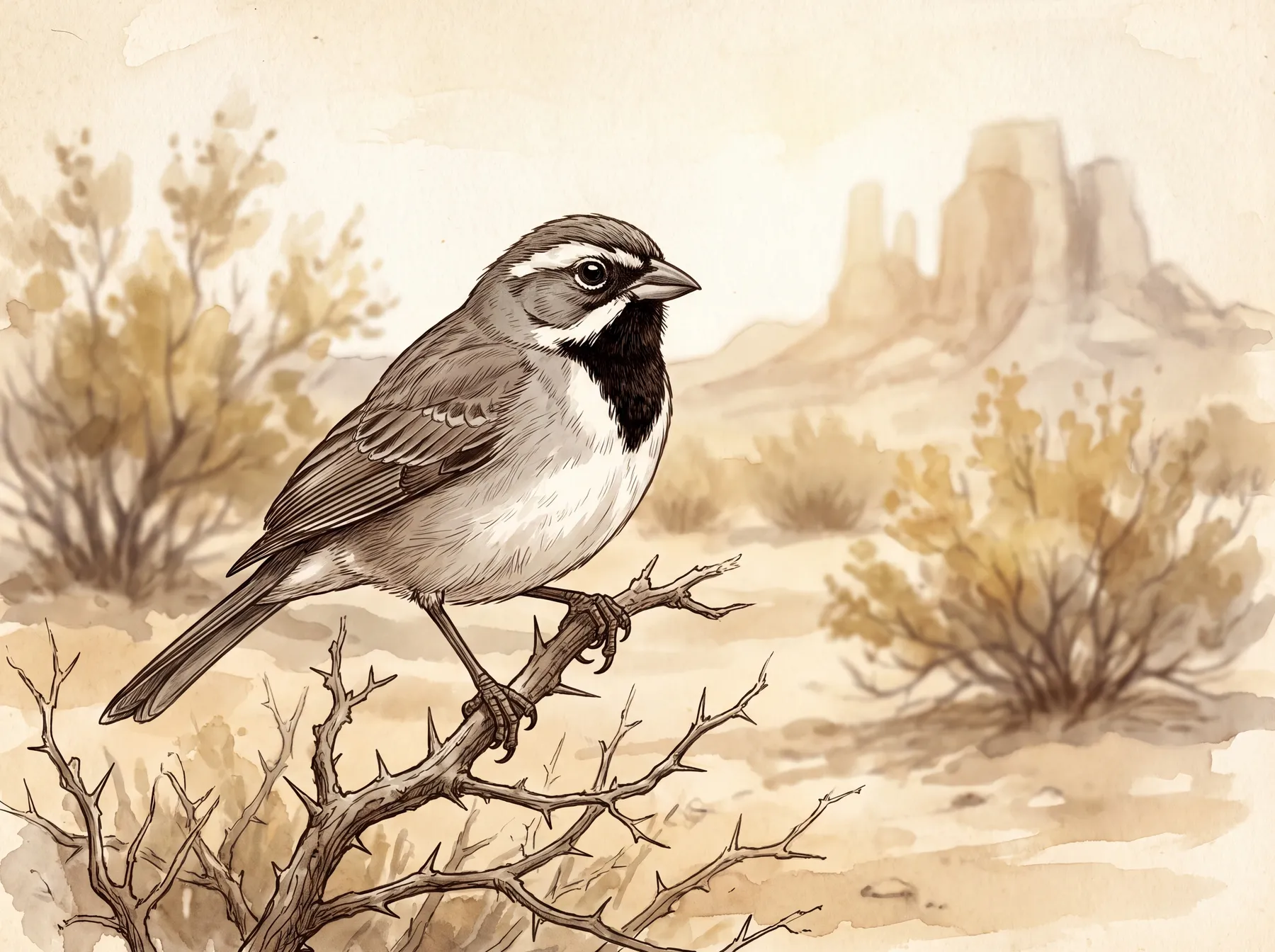
The tidy story about this sparrow is that it does not need to drink. In a lab, thirteen of eighteen birds ate nothing but air-dry seed, nine percent water and no dish to sip from, and held their weight for over a month; several even gained. On that dry diet it outperforms every other seed-eater measured in North America, matched only by a few salt-marsh Savannah Sparrows. The Southwest nicknames it the desert's own sparrow, and it looks the part: a bird that has opted out of the water problem.
Then someone watched it at a spring. At a desert waterhole in southern California, researchers counting visits from dawn to dark found the sparrows drinking, and drinking more as the year dried out: thirty visits in early August, seventy-two by mid-September, eighty-seven by October, a hundred and forty-three on a single day in November. They came even on a morning that never climbed above nine degrees. The bird that can live a month on dry seed was, with a spring in reach, drinking as hard as anything at the water.
The seed is the catch. Offered water in the lab, those same birds drank about thirty percent of their own weight in a day; going without is something they can do, not something they prefer. And the drinking tracks the menu. Of seventeen stomachs the researchers opened, the September and October birds, the ones crowding the water, held nothing but dried seed. Then on the seventeenth of November the first rain fell, and within two weeks not one sparrow was coming to the spring, though it stayed the only surface water for some distance around. The stomachs said why: after the rain they carried green shoots along with seed, and birds caught in January had their bills stained green from cropping new grass. A seed is dry, a fresh sprout is mostly water, and an insect is wetter still. The sparrow drinks when it is down to seed and quits the day the desert hands it something wetter to eat.
Two tricks stretch whatever water it does take in. It dries out its own waste: droppings that normally run about eighty-one percent water fall to fifty-seven when drinking water is withheld, so less of it leaks away. It also tolerates salt at a level that should sicken a bird this size. It can drink water almost as briny as the sea and still keep its weight, and its kidney concentrates salt past what the ocean carries. One bird's urine measured seven hundred milliequivalents of chloride per liter, saltier than seawater, and readings above five hundred were routine. That tolerance lets it use water a choosier bird would walk away from.
Near this bajada it should be a resident, nesting through the warm months across the Joshua-tree and blackbrush flats, though the high desert here sits close to the northern edge of its year-round range, where winter numbers can thin. The young make the whole strategy plain. At that California spring, fledglings out of the nest but still fed by their parents never once came to drink; they were being handed insects, and drinking their food. We have not confirmed the bird on this ground yet, and every one of those waterhole counts comes from a California spring, not from here.
The face is the whole identification, and it is the mark you check first: a jet-black throat bracketed by two clean white stripes, one over the eye and one along the jaw, set on a plain gray head.
Nothing else on these flats wears that black bib between two white lines.