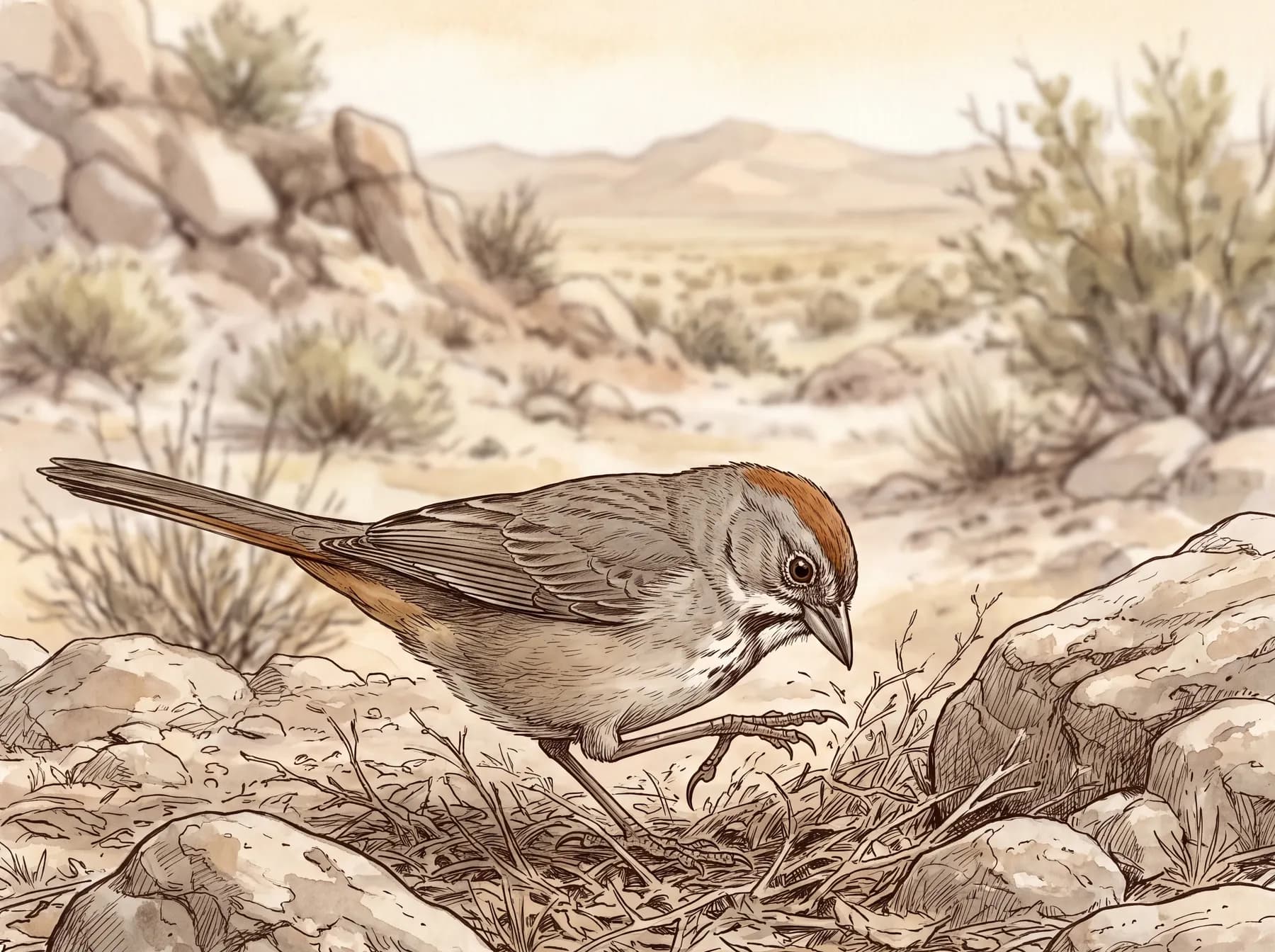
Learn one sound and this bird will announce itself before you find it: a sharp, two-footed rummage in the dead leaves under a shrub. A canyon towhee feeds by jumping forward and kicking back with both feet at once, flinging the litter behind it, then leaning in to pick over whatever the kick uncovered. The whole towhee family works the ground this way. It is neither delicate nor quiet, and once you know the noise you will place the bird by ear while it is still hidden in the blackbrush.
What sets this towhee apart from most birds on the page is that it does not leave. It does not migrate. A pair holds one permanent territory through the whole year, often for years, and both sexes defend it; the species is described as so sedentary it rarely moves even a short distance from where it nests. Where a great many desert birds are a season's visitors, this one commits to a single patch of rocky, brushy ground and stays.
Holding a pair together takes upkeep, and you can hear it. Several times a day the mated pair performs a squeal duet, a loud accelerating run of squealing chips and rattles given by both birds at once. It comes most often when the two reunite after a spell apart or move between feeding sites, and researchers read it as the maintenance that keeps a year-round bond from fraying.
Which brown bird matters here, because this is the edge of the towhee's range and it is easy to name wrong. On a dry rocky slope up on the bench, a drab towhee is the canyon towhee. It is not the Abert's towhee, which wears a black face around the bill and keeps to the mesquite bottoms and the Colorado River lowlands. It is not the California towhee either, which does not cross into Arizona at all. Canyon towhee turns up on the special-status list for a Joshua-tree and juniper Important Bird Area in interior Mohave County, so the habitat here fits — though presence tracks rocky, brushy cover rather than the open creosote flats, and we have yet to see one here.
Its living is a cheap one, and that is the point. It eats mostly small seeds, grasses and pigweed and chickweed and lupine, adds grasshoppers and spiders in summer, and swallows grit to grind the seed in its gut. It also reads the rain: attentive to water, it can nest twice in a year, timing its broods to the winter wet and the summer monsoon. Being dull and being cheap is a workable way to hold dry country that would starve a fussier bird.
The plumage is nearly all the field mark you get, and it is spare: earthy dust-brown above, paler below, a rusty cap, and a single dark smudge on an otherwise plain breast. For the clincher, look under the tail.
The undertail coverts are warm cinnamon, and on a bird this plain that quiet patch of color is the surest thing you will read.