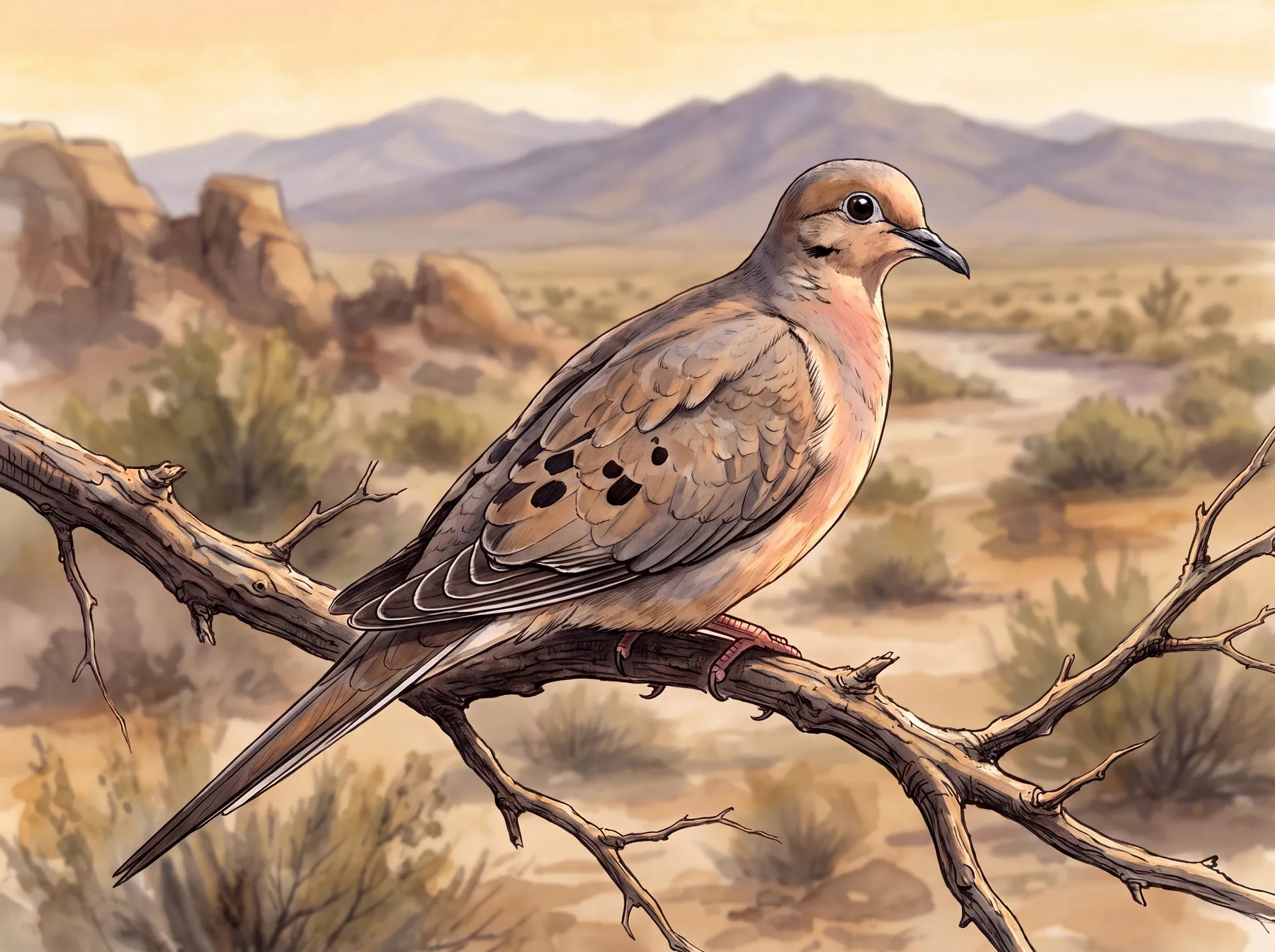
A mourning dove eats almost nothing but seed. More than 99 percent of its diet is seed, and it can put away up to a fifth of its own body weight in a day; one recorded crop held 17,200 bluegrass seeds at once. A seed specialist that dry looks like a bird that should have given up on water. The dove has not. It drinks nearly every day, and it will fly a long way to do it.
Watch one at water and you see the trick that makes the trip worth it. Most birds take a billful and tip the head back to let each mouthful run down the throat. A dove keeps its head down and pumps, pulling water straight up as though through a straw. The whole pigeon family drinks this way, a method shared with the sandgrouse and almost nothing else. In the desert that habit earns its keep: a bird that pumps water straight up can drink its fill fast, so a hard flight to a brackish spring still pays.
The dove can also drink what most birds cannot. Doves can hold a positive water balance on water up to roughly a quarter as salty as the sea, and only start losing ground above that. Popular accounts often round the figure up to half; the measurements behind it do not go that far. Even so, a quarter of seawater is brackish enough that a saline desert spring a fussier bird would refuse is, to a dove, an ordinary drink.
It lives here year-round, though its numbers should rise through the warm months as breeding birds move down from the north. When it nests, both parents feed the squabs a substance called crop milk, a secretion sloughed from the wall of the crop and produced by the male as well as the female. The young are fed on it for their first three or four days, before they move to seed.
The sound a dove makes leaving is not its voice. When it flushes, its wings whistle, a thin note made by the feathers themselves. Coleman found that the whistle of a startled bird is acoustically different from the whistle of a calm one, and that playing the startled version back put not only other doves on guard but northern cardinals and house sparrows nearby. A dove thrown into the air broadcasts an alarm that other species have learned to read.
We've yet to note one on the parcel; the Joshua-tree flats at 3,050 feet are ordinary dove country.