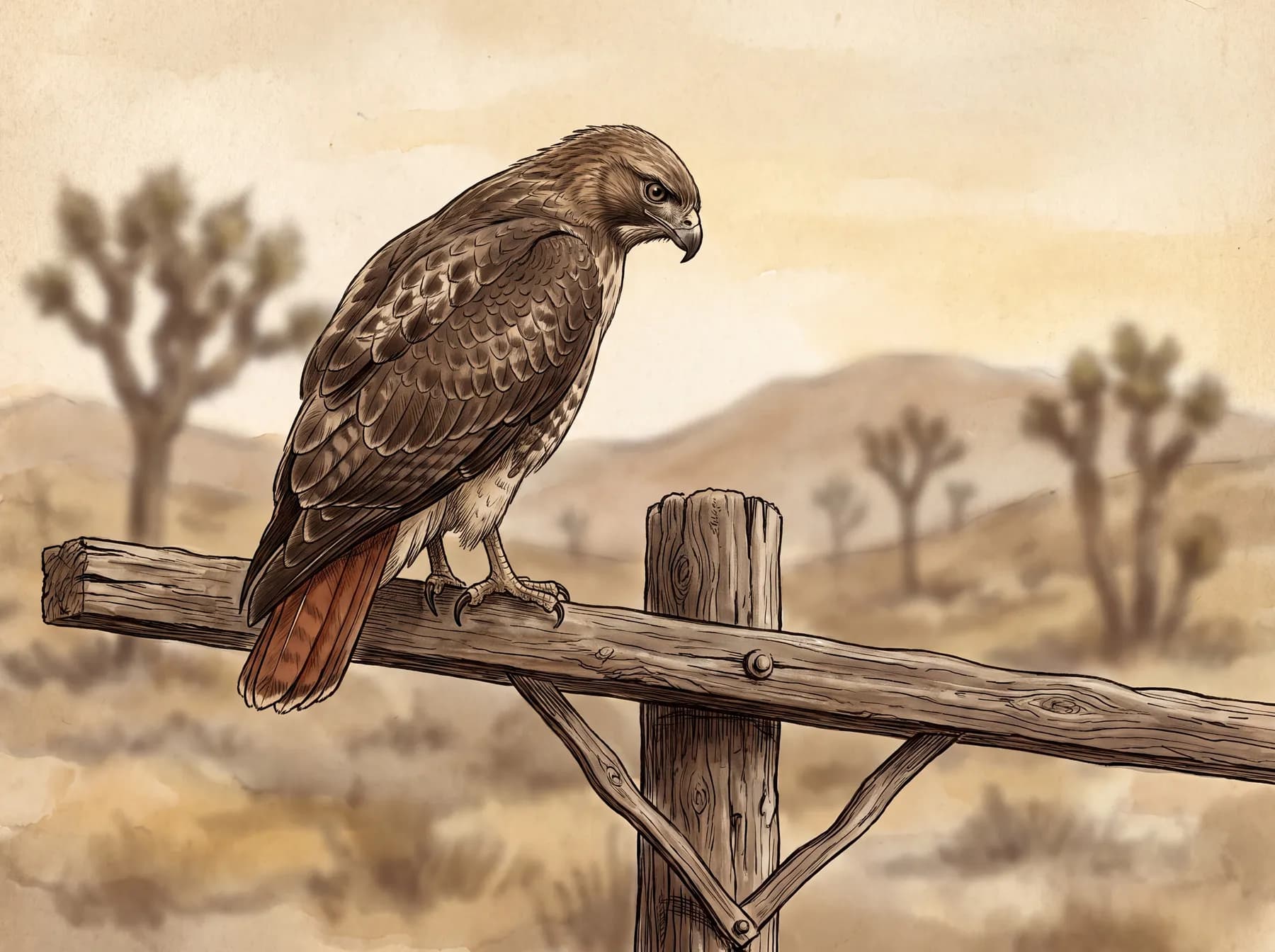
You already know this bird's voice, even if you have never knowingly seen the bird. That long, hoarse, falling scream dubbed over every hawk and eagle in the movies is a red-tailed hawk. Cornell's ornithologists say it plainly: whenever a raptor appears on screen, whatever the species, the cry on the soundtrack is almost always this one. The real call is a raspy kee-eeeee-arr that runs 2 to 3 seconds, usually given while the bird is soaring.
The substitution happens because the bird everyone pictures making that sound cannot. A bald eagle's actual voice is thin and stuttering, closer to a squeaky chatter than a war cry; one wildlife center calls it a seagull with laryngitis. So the sound most Americans file under eagle, the sound of the flag and the open sky, was borrowed decades ago from this hawk and never given back.
That the scream comes from a soaring bird is the part worth following, because soaring here is close to free. A red-tail has broad wings built to ride thermals, the columns of warm air that rise off ground the sun has been hammering all day. Bare desert makes strong ones. The same heat that drives you into the shade is the lift that holds the hawk up for almost nothing, letting it hang and circle and read the ground below for as long as the afternoon lasts.
Soaring is how you notice it, but not mainly how it hunts. Its preferred method is patience: watch from a high perch, a pole, a snag, a lone yucca, a ridgeline, then drop on whatever moves below. It is not particular about what moves, either. Roughly 80 to 85 percent of its diet is small rodents, with voles, rats, ground squirrels, and cottontails the staples and snakes, lizards, and other birds filling the rest. A red-tail on a pole is quietly working the rodents off this ground for free.
It can afford that patience because it sees what you cannot. Cornell likes to say a red-tail can pick a mouse out of the ground from 100 feet up. Its eyes are sharper than ours, though how much sharper is worth holding loosely: this guide's golden eagle page already takes apart the eight-times-human figure people like to repeat, and the acuity anyone has actually measured in a raptor falls well below it. Sharper than us, then, and by a margin nobody has pinned down.
None of this is exotic. The red-tail is probably the most common hawk in North America, and this country gives it exactly what it asks for: open ground to hunt over and high perches to hunt from. It is a year-round resident on this bench, not a seasonal visitor, though northern birds push south in winter and add to the local count rather than replace it. The honest gap is small but real: we have not yet logged our own, only every reason to expect one overhead.
When you do look up, the plumage will not settle it, since western red-tails run from pale to rust to nearly black. Look for two marks instead. On an adult, the tail is brick-red above, the field mark the name promises, though a young bird wears a brown, finely barred tail that does not show it yet. Lower down, a band of dark streaks crosses the pale chest, the belly band a perched or passing hawk carries either way.
Watch a broad-winged bird tip into a rising circle and hold it without a wingbeat. If the tail flares red, the name is settled.