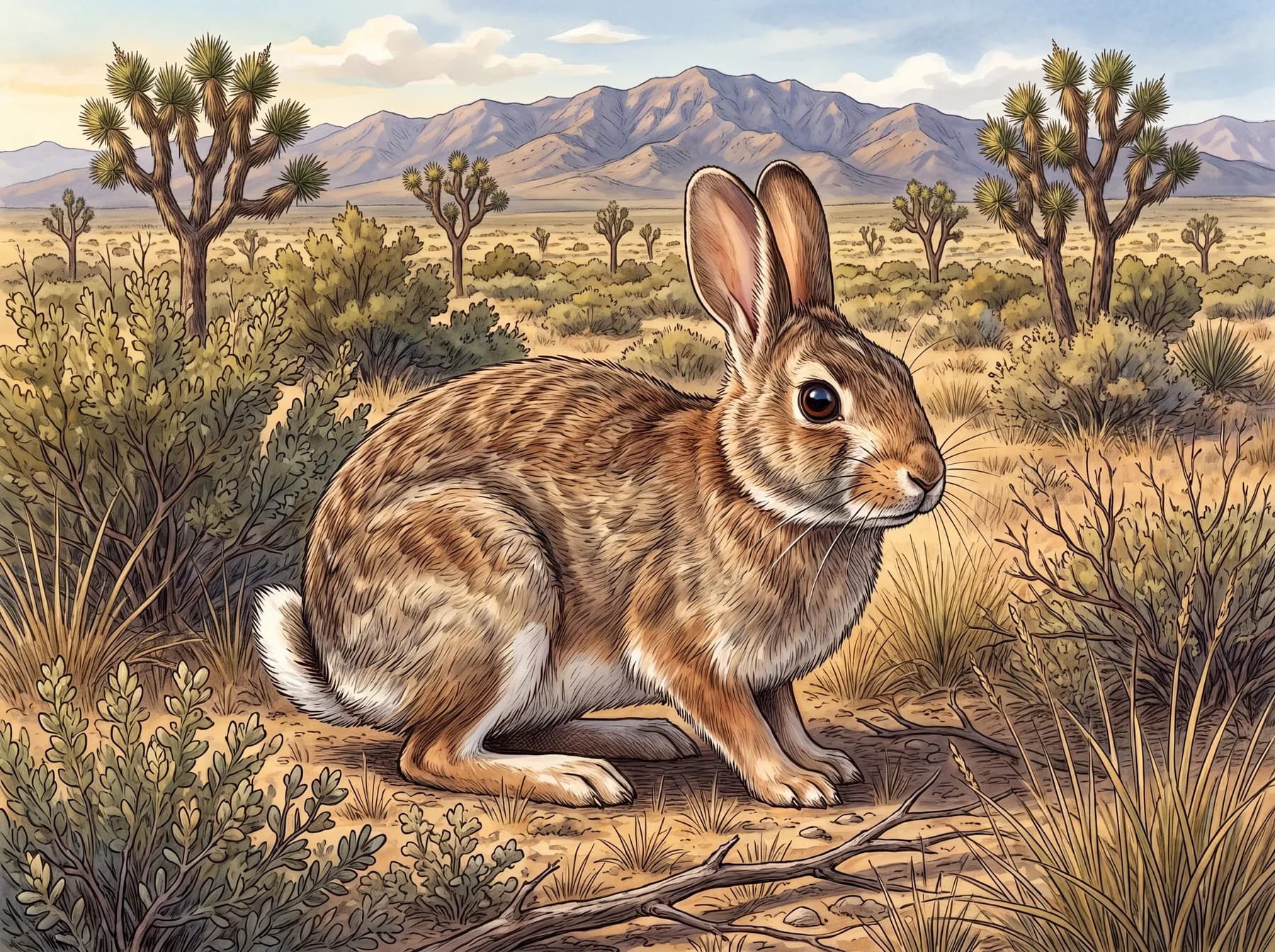
The desert cottontail eats most of its food twice, and has to. Desert plants are poor, fibrous stuff, so the rabbit runs them through a fermentation chamber, passes them as a soft pellet while it rests, then eats that pellet to send the yield through a second time. This is not a quirk. Block a rabbit from re-eating the soft pellet and its ability to pull protein out of its food roughly halves — in feeding trials it fell from about 74 percent down to around 50.
That second pass is how a small animal that never drinks free water makes a living on plants that would starve a less thorough gut. The soft night pellet is a different substance from the dry droppings you find by day: richer in protein, lower in fiber, a concentrated re-dose rather than waste. The rabbit is, in effect, farming one mouthful of dry brush twice.
Its other adjustment to a hard country is grimmer. The desert cottontail is less fecund than its cousins to begin with, running a few litters a year of about three young apiece, and in a bad year a pregnant female can reabsorb some of her own developing young rather than spend herself on a litter the land cannot feed. It is a brutal kind of arithmetic, and exactly the kind a place like this rewards: cut the loss early rather than carry it to term and lose both.
For all that, it is more athletic than it looks. Unusual among cottontails, it will climb into a low tree or a brush pile, and it swims. Flushed, it freezes flat or bolts in a zig-zag with the white underside of its tail flashing, fast and jinking, hard for a hawk to hold a line on. The long, thinly furred ears are the local tell, longer than an eastern cottontail's and easy to see through.
The soft pellets are the ones you never find, because it eats them. The dry droppings are only ever half the meal.