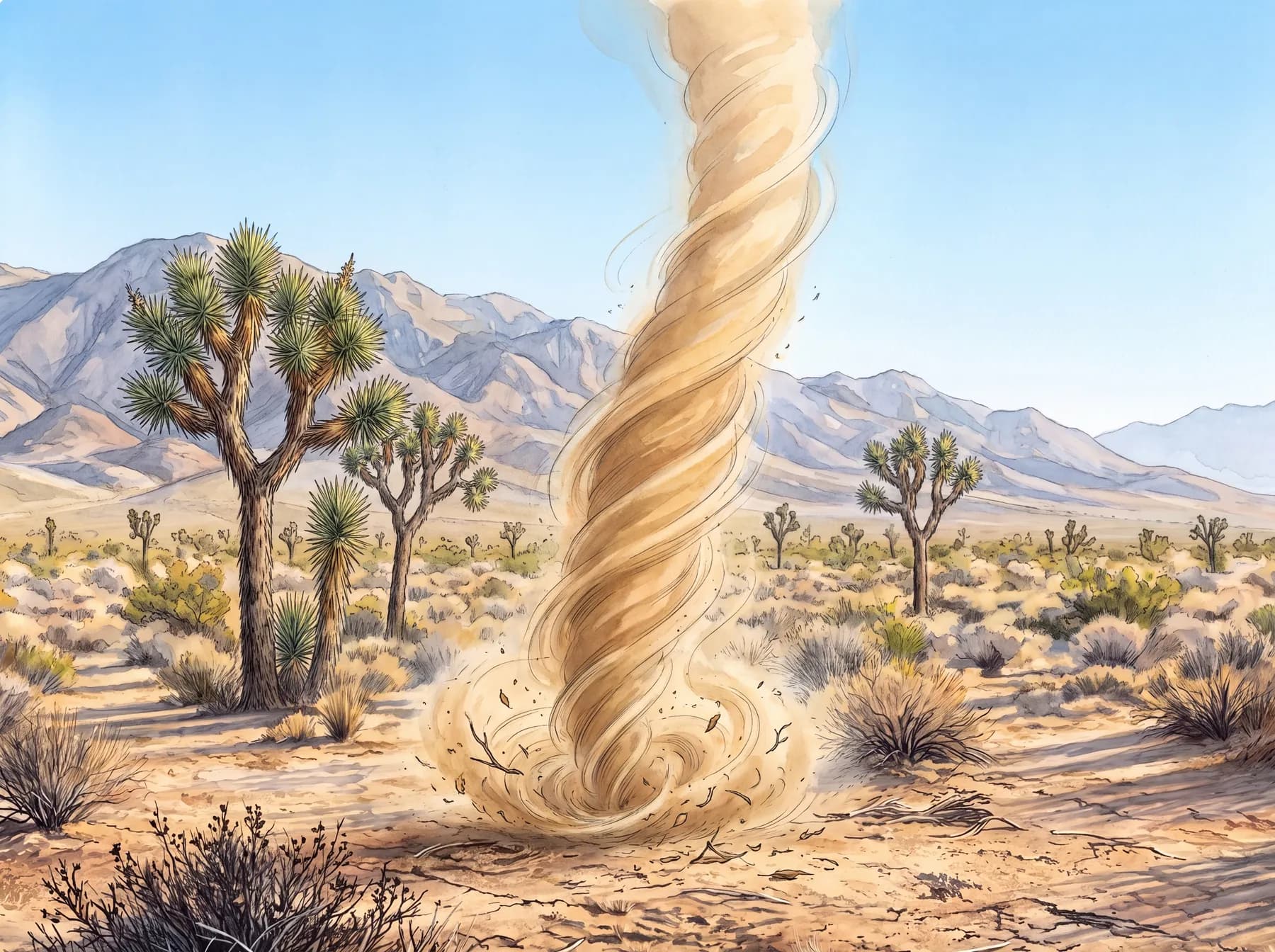
A hot, calm, cloudless afternoon, and the flat can suddenly spin. A dust devil is a small rotating column of rising air made visible by the dust it lifts, a spinning vertical vortex that climbs off the open ground with no storm anywhere in sight. That last part is what sets it apart from every other dust event here: it needs no thunderstorm, only sun and bare ground.
Ground heating is the entire engine. Strong sun warms a thin layer of air against the surface until it is much hotter than the air just above it, and that superheated air breaks upward in a plume; if the rising column starts to rotate, the spin tightens into a vortex that sucks up dust and stands it into a visible pillar. They form best at the seam between surface types, where a bare dirt patch meets asphalt, or a dirt road runs beside vegetation, because the heating contrast there is sharpest.
The clearest way to hold it in mind is by its shape and its sky. A dust devil is a slender, upright, spinning column under a clear sky in light wind. A wall of advancing dust is a haboob, a different and far larger thing, and a downward slam that fans out is a microburst. Column under clear sky, wall or slam under a storm; the sky tells you which you are watching before the shape does.
It is also, unlike its cousins, a fair-weather sign. It marks the hottest, stillest part of a clear desert day, the moment when the ground is doing the most work the sun paid for, turning heat into motion. Most are small and harmless, spinning across the flat for a minute and collapsing; a large one can knock things over, but it is rarely the threat a storm event is.
And it is genuinely upside down from a tornado, which is the confusion worth clearing. A tornado descends from a storm cloud, a top-down funnel. A dust devil builds from the ground up, a bottom-up vortex with no parent storm at all.
A slender spinning column of dust under a clear sky is the ground turning a blazing afternoon into a whirlwind.