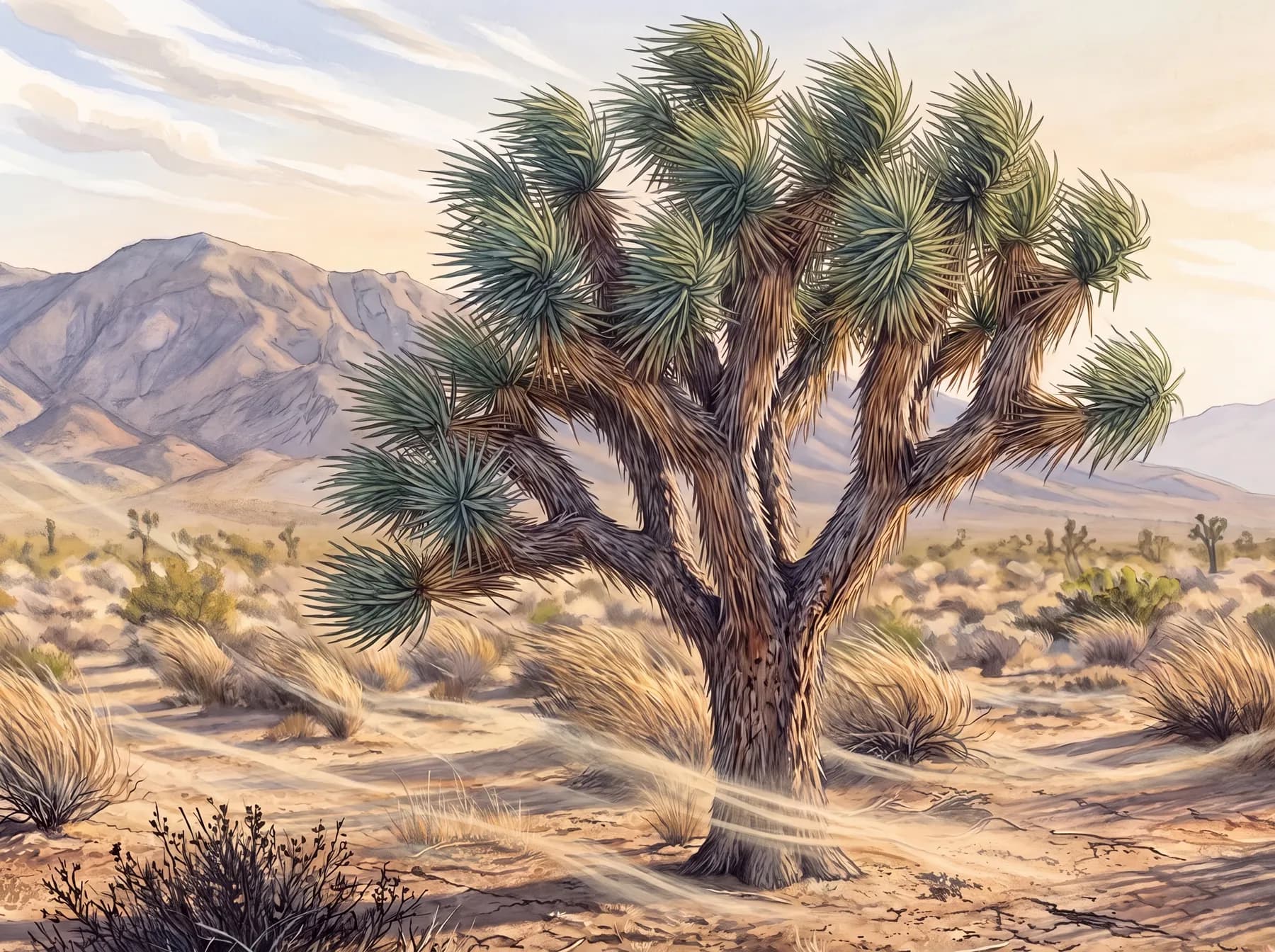
Wind here is easier to read than to see. On open, sparsely covered desert there is little to slow the moving air, so it runs with a clear reach across the flat, and you know it less by the thing itself than by everything it has rearranged: vegetation combed to one side, sand heaped on the lee of every obstacle, low ribbons of dust skimming off the bare patches. The motion is the subject, and it signs its name in what it leaves.
That open run gives the wind a real job in shaping the ground. It moves the desert's loose sediment, and the region's whole dust-and-sand budget rides on it: the fine dust that sifts down under a desert pavement, the material that feeds a wall of dust, the sand piled against a shrub, all carried by the everyday wind plus the violent gusts of the monsoon. The land you stand on is partly a record of which way the wind has been blowing.
There are really two wind modes here, and they behave differently. One is the steady, broad, prevailing wind driven by pressure across the region, directional and more or less patient. The other is the violent local burst: the outflow gust front of a monsoon storm, and the small fair-weather thermal vortex of a dust devil spun up off hot ground. The regime is the whole range between the calm afternoon and the storm slam.
The part that matters most to living things is that wind is a drying force, not just a moving one. Moving dry air pulls moisture out of soil, out of open water, out of a leaf, faster than still air does, which is part of why desert plants run small, tough, waxy, or hairy leaves that give the wind less to take. The wind is one of the reasons the ground is as thirsty as it is.
So there is no single object to point at for this one. You read the wind in the combed brush, the sand tails, the dust off a graded pad, and the direction those all agree on.
Watch which way the shrubs lean and the sand piles. That is where the wind has been going, written in the ground.