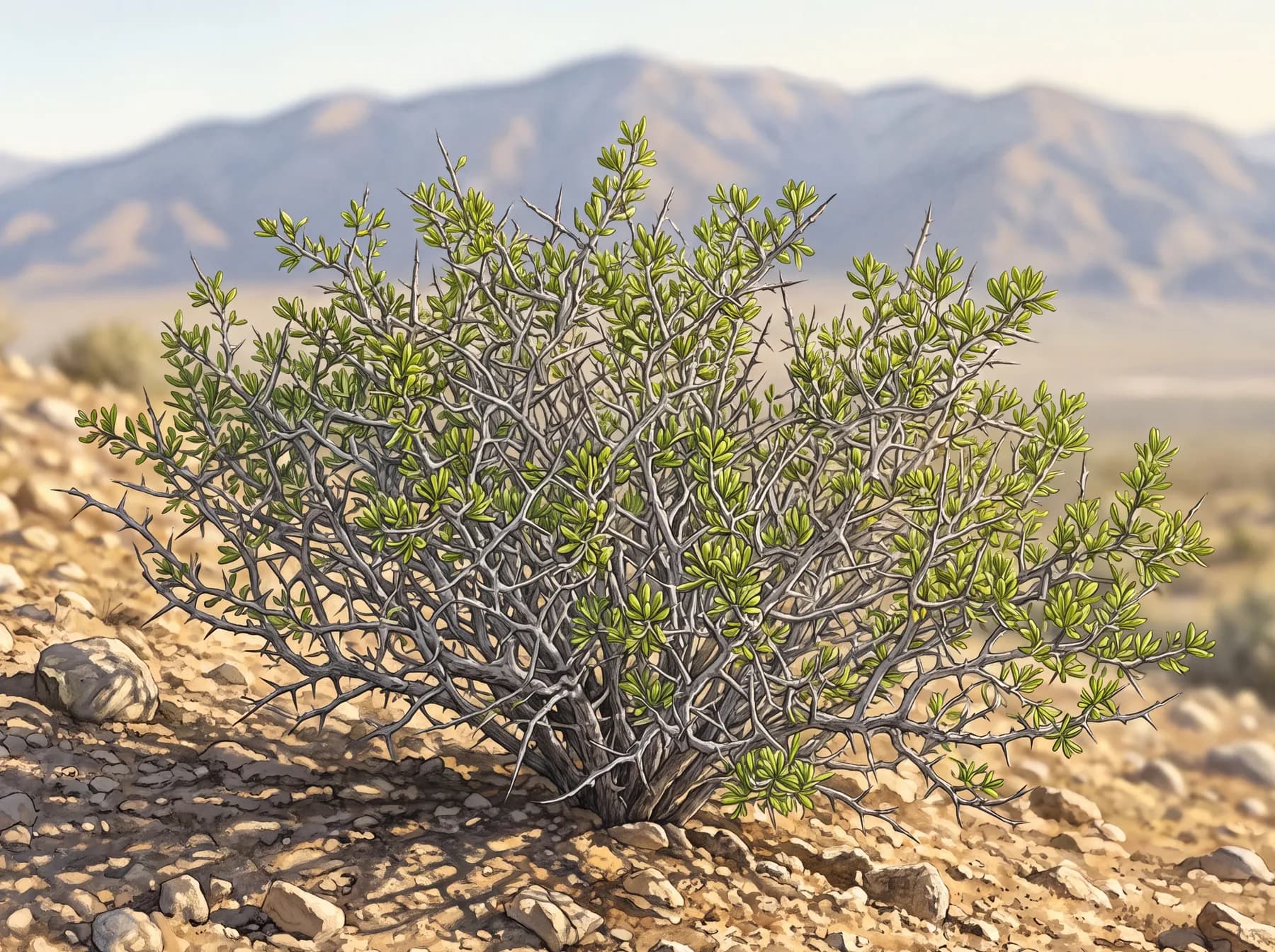
The name is a promise the plant does not keep. Desert almond is a true almond, close kin to the one in the grocery bag, and its seed will poison you.
It is a Prunus, the same genus as cherry, peach, apricot, and the domesticated almond. That last relative is the trap. The sweet almond we eat is a rare genetic accident, a plant that happened to lose its bitterness, while nearly everything else in the genus keeps a cyanogenic seed. This shrub kept its. Bitterness here is not a flavor to work around. It is the warning, and it means the seed carries too much cyanide to eat. No preparation on this bajada turns it into food.
Which leaves a better question: what did the desert do to a stone-fruit tree to end up with this? The answer is mostly subtraction. Where a peach grows a fist of sweet flesh to bribe an animal into carrying its seed, desert almond makes a dry, fuzzy drupe about 1 cm long, ovoid and light brown, with almost no flesh on it — a stone fruit with the fruit nearly deleted. The leaves shrank as well, down to narrow blades 5 to 20 mm long, bundled in fascicles on short woody spurs along the twigs.
Then, when the real heat arrives, the plant drops even those. Desert almond is drought-deciduous. It leafs out, flowers, sets its dry stones, and by high summer stands bare and gray and seemingly dead. It is not enduring the season. It is sitting it out, spending nothing, waiting for the water to come back.
Bare, it turns into its own field mark. Look for a stiff, intricate tangle of rigid gray twigs forking again and again at wide angles, each small branch tipped with a thorn. That divaricate, spinescent habit (a shrub built like a snarl of thorned wire, seldom taller than a person) is the lock, and up close you find the leaf bundles riding their short spurs. No other shrub here holds that shape. It favors dry rocky slopes and the gravel margins of washes, and this bajada sits well inside its range, which runs across Arizona, Nevada, eastern California, and Utah, nearly all of it below 7,000 feet.
For a few weeks in early spring the snarl softens. Small white flowers, petals only about 3 mm across, open along the twigs in March, and they open early, before most of the desert agrees the season has begun. The Xerces Society lists desert almond as of special value to native bees for that reason: it sets a table when little else is serving. It feeds what eats it, too. It is a recorded larval host for the pale swallowtail and for tent caterpillars, so the same thicket that looks like nothing in July was a nursery in spring.
Wild almond, wrong almond. Find the gray thorned thicket, read the fascicled leaves and dry hairy stones, and leave the stones on the ground.