Flora
Slow, stubborn, and built to outlast a drought that kills everything else.
Key
subtitle = binomial (scientific name)
Trees & Tall Woody
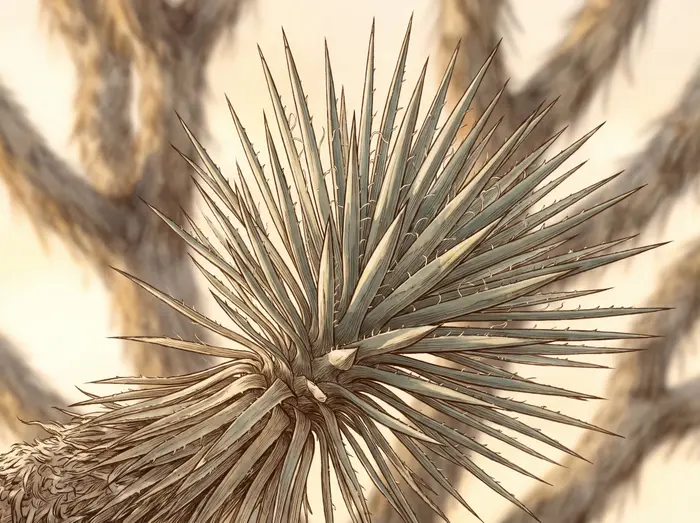
Joshua tree
Yucca jaegeriana
The eastern Joshua tree, Yucca jaegeriana — an inch or two of growth in a good year, locked to a single moth for its seed, and still dispersing for a ground sloth gone since the Ice Age.
Read more →
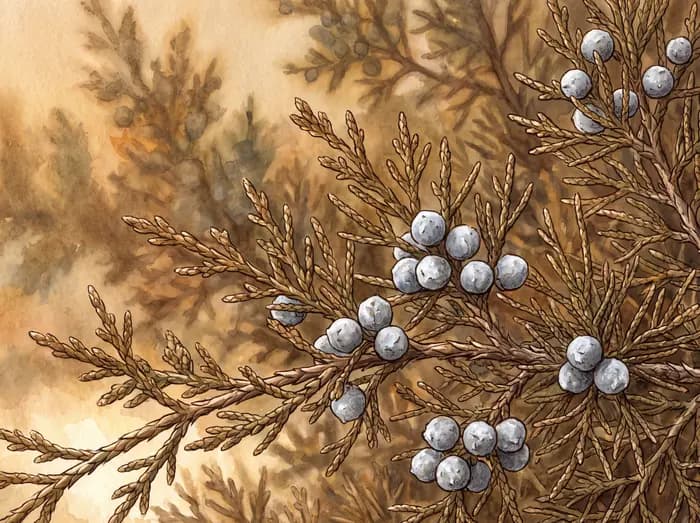
Juniper
Juniperus californica
That grey dead limb on a living juniper isn't the tidy self-amputation you're told. Its plumbing walls off drought to the outer shoots, but hard drought also just kills branches outright.
Read more →
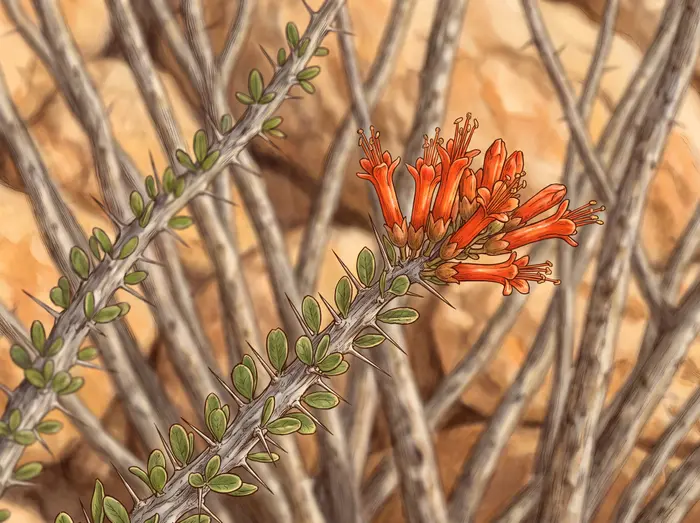
Ocotillo
Fouquieria splendens
The elevation table says it could grow at 3,050 feet; the cold and the plant community say no. A warm-lowland plant of scarlet whip-canes you meet downhill, not up on this blackbrush bench.
Read more →
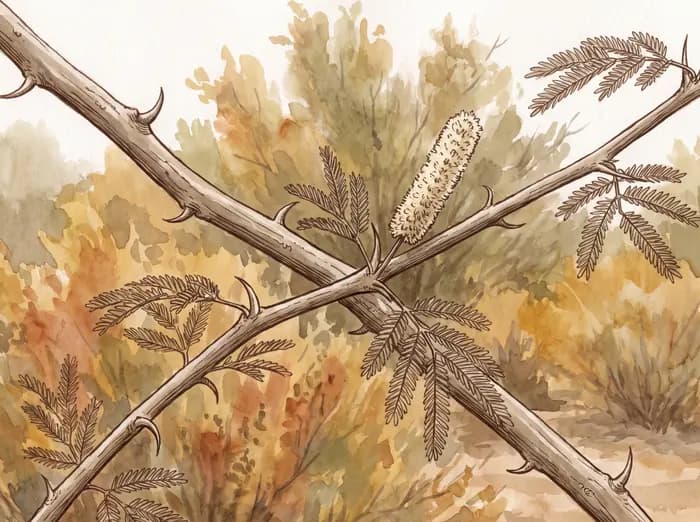
Catclaw acacia
Senegalia greggii
Named wait-a-minute bush for the backward-hooked thorns that catch and won't let go. The quieter trick is underground: roots past 18 feet, tracking the wash for water.
Read more →
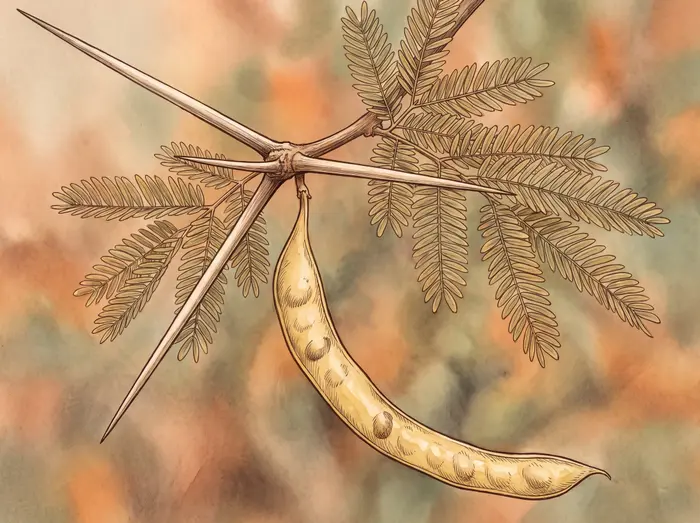
Honey mesquite
Prosopis glandulosa
A legume with the deepest roots in the desert, drinking groundwater no other plant here reaches. Its pods fed people for millennia, and it works nitrogen from the air into starved ground.
Read more →
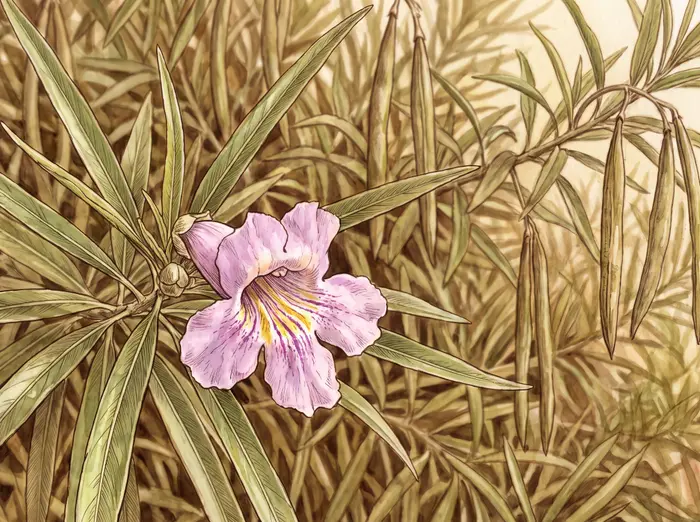
Desert willow
Chilopsis linearis
Not a willow but a catalpa relative in disguise; its pink trumpets are set by bumble bees, not the hummingbirds that visit. Standing in a dry wash, it marks water under the sand.
Read more →
Shrubs
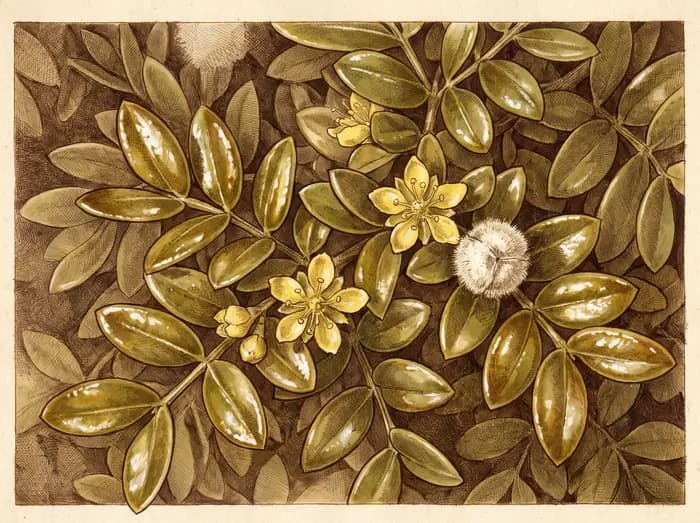
Creosote bush
Larrea tridentata
The smell of desert rain is this shrub, not the rain itself — resin releasing off every leaf when the drops land. It endures rather than wins, cloning outward into rings thousands of years old.
Read more →
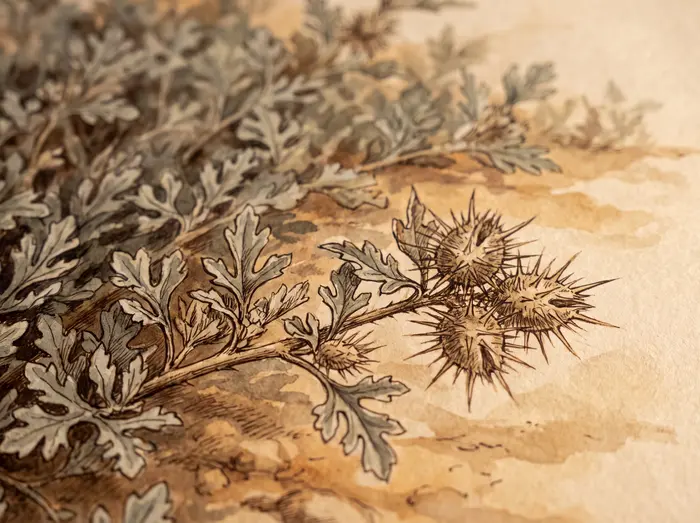
White bursage
Ambrosia dumosa
The gray, knee-high partner to creosote that most people never see. It nurses the next creosote generation, then drops its leaves and plays dead through drought.
Read more →
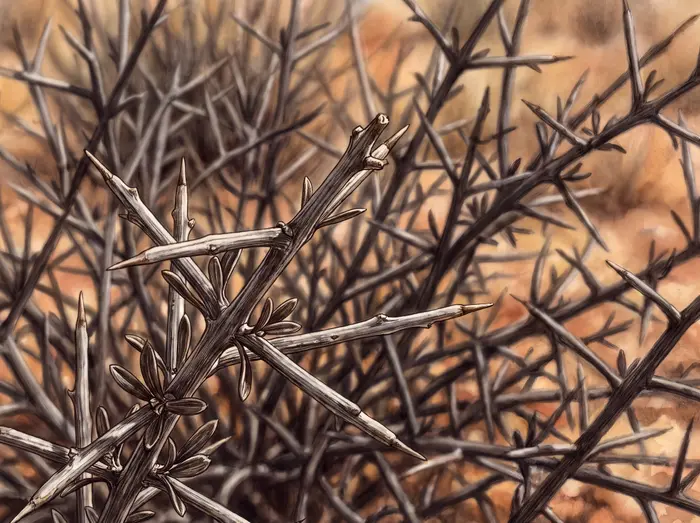
Blackbrush
Coleogyne ramosissima
The dark even shrub that names this whole community. Ecologists use its stands to draw the Mojave–Great Basin line on the map. Burn it and it does not come back for 60 years.
Read more →
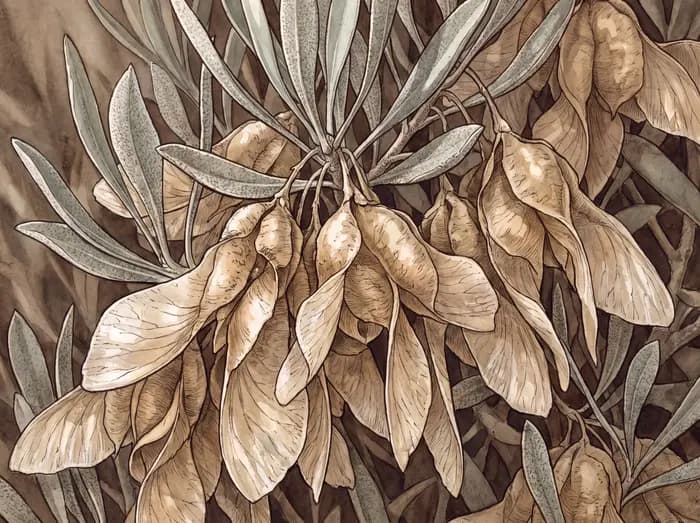
Fourwing saltbush
Atriplex canescens
Rub a leaf and gray dust comes off — that is salt the shrub pulled from the ground and set aside. Only the females wear the four papery wings that give it its name.
Read more →
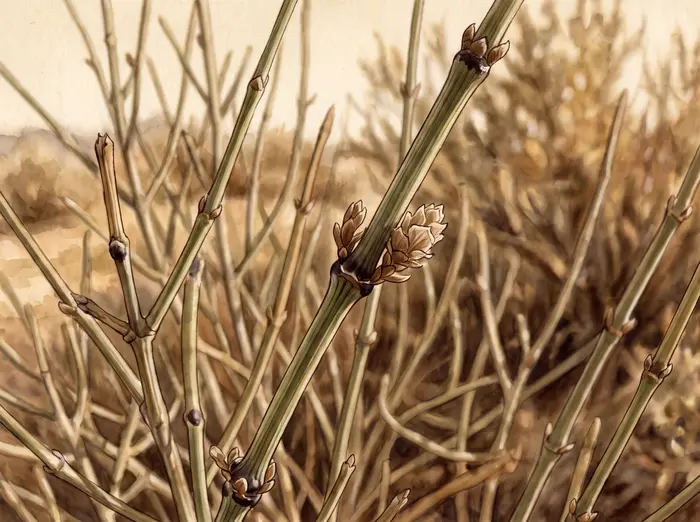
Mormon tea
Ephedra nevadensis
A leafless green broom on the worst ground, still green when neighbors brown out. It deleted its leaves and photosynthesizes with its stems. Called Mormon tea for a mild brew, not the drug.
Read more →
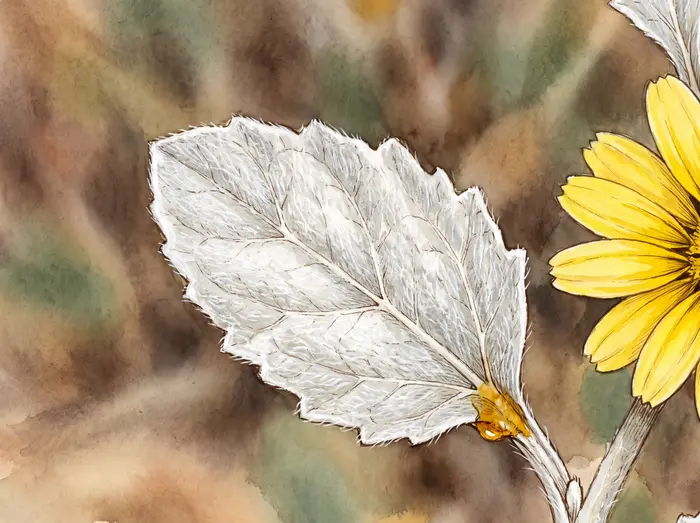
Brittlebush
Encelia farinosa
A gray mound most of the year, gold after a wet winter. Its white-felted leaves are a measurable sunshade, reflecting up to 70% of the light and running 5–10°C cooler. Warm rock only here.
Read more →
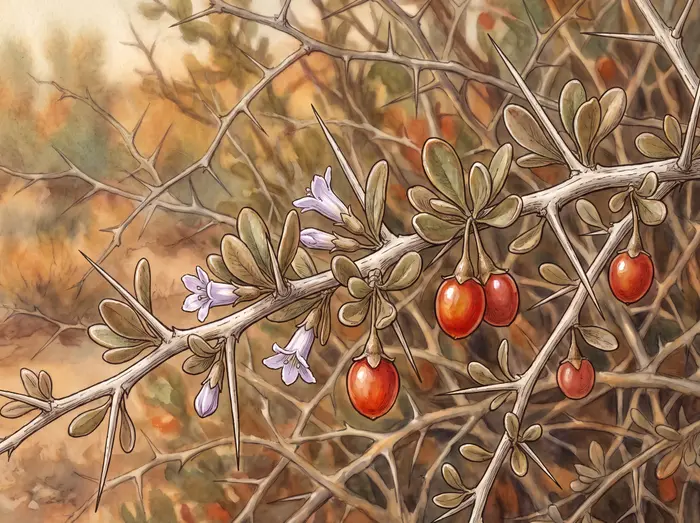
Anderson's wolfberry
Lycium andersonii
A desert cousin of the tomato and goji, hiding as a bare thorny skeleton most of the year — until rain, when it leafs out fast, sets small red berries, and turns edible if you know it.
Read more →
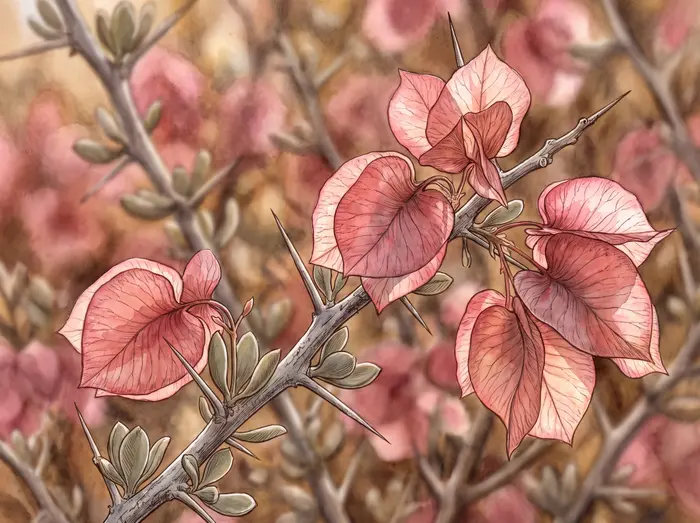
Spiny hopsage
Grayia spinosa
The pink that isn't a bloom. This saltbush wraps each seed in a papery wing that glows red, but only on the female plants; by midsummer it drops its leaves and stands as a bare spiny skeleton.
Read more →
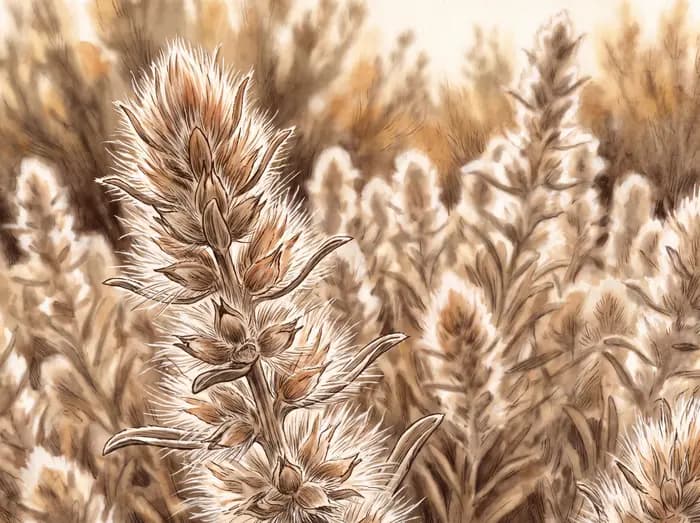
Winterfat
Krascheninnikovia lanata
Winterfat's white winter wool is two promises: a seed-carrying coat that names the plant, and browse that holds more than 10 percent protein when the grasses have quit.
Read more →
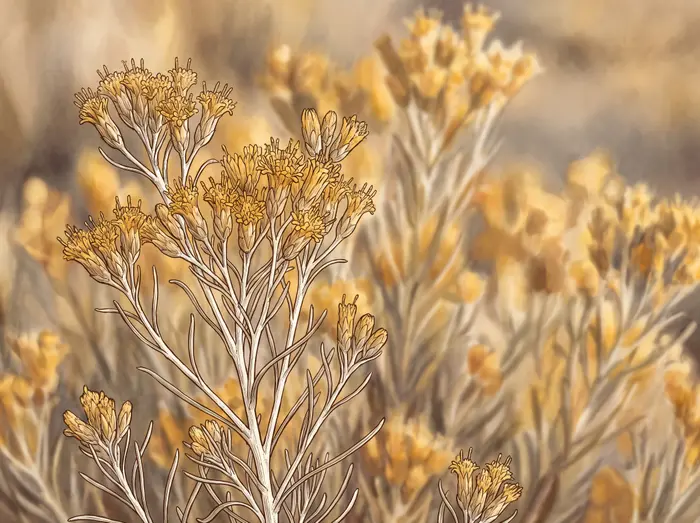
Rubber rabbitbrush
Ericameria nauseosa
The gray shrub that blooms gold when everything else has quit: one of the last nectar sources of the year, with real rubber in its felted, drought-hardy stems.
Read more →
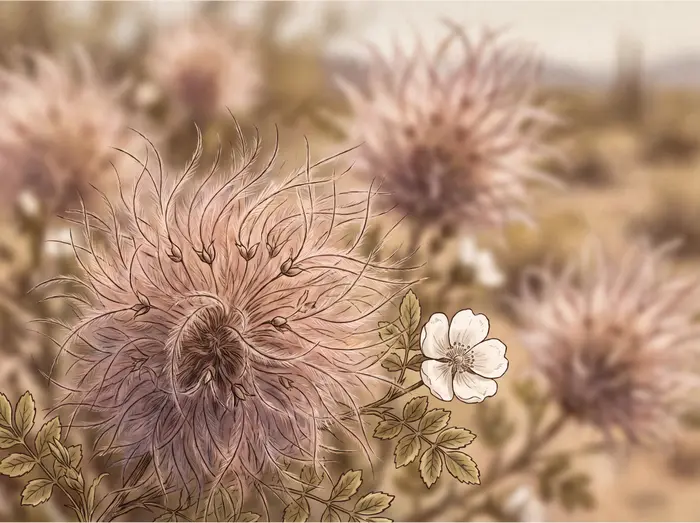
Apache plume
Fallugia paradoxa
It looks like a shrub holding pink smoke, and turns out to be a rose. The plumes are seeds built for the wind; the roots stay and hold the wash bank.
Read more →
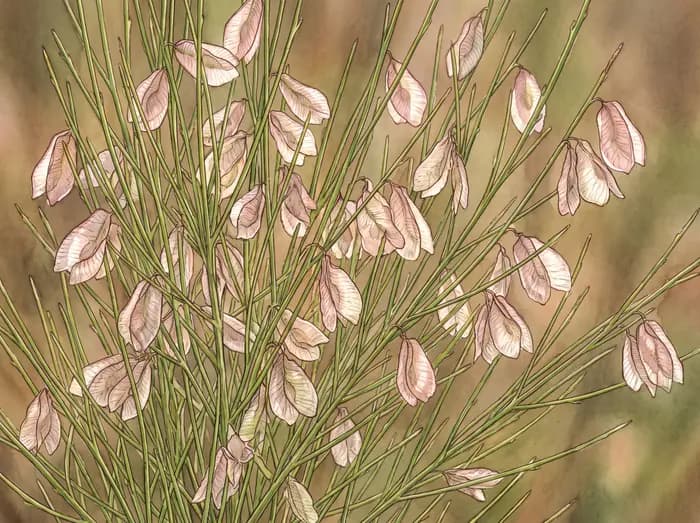
Cheesebush
Ambrosia salsola
Break a stem and smell your hand: sour, rancid, cheese gone wrong. A cheap green broom of a shrub, first onto scoured dirt, built to seed fast and hand the ground off.
Read more →
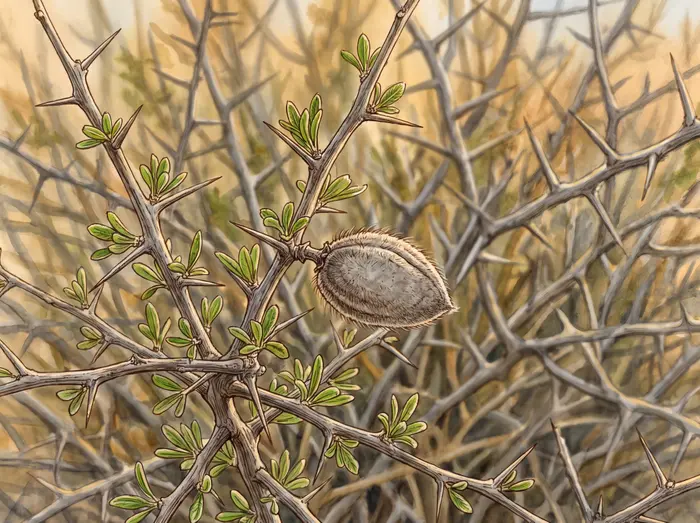
Desert almond
Prunus fasciculata
A true almond gone desert: a spiny gray thicket whose dry fuzzy stone hides cyanide. It drops its leaves to sit out the heat and blooms early, feeding bees when little else is open.
Read more →
Yucca, Agave & Succulents
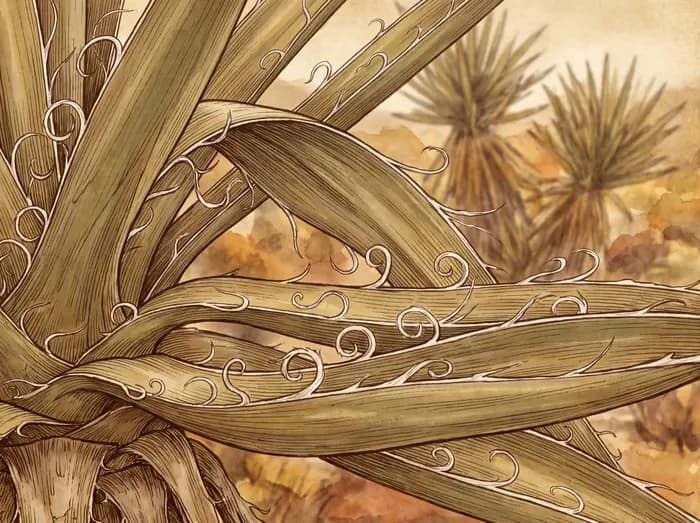
Mojave yucca
Yucca schidigera
The Joshua tree's lower, stiffer neighbor. The tell is at the leaf edge: coarse white fibers that curl off the margin, once pounded into cordage. The root lathers like soap.
Read more →
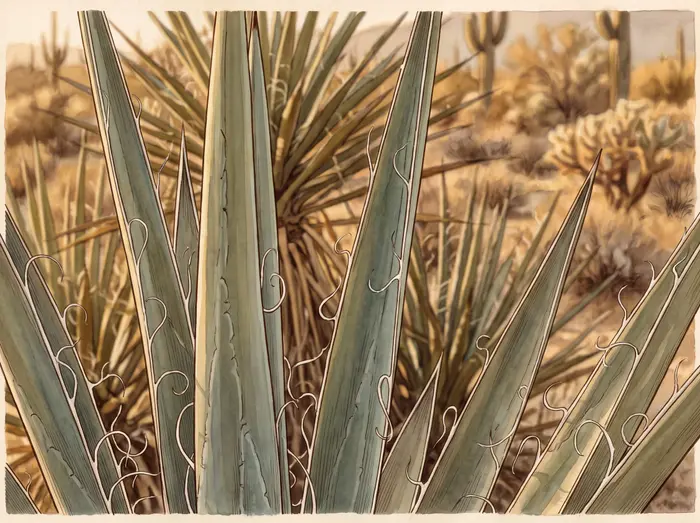
Banana yucca
Yucca baccata
The yucca that hands you a real fruit — a fat, sweet-potato-fleshed green banana. At this low edge its look-alike is Mojave yucca; the trunkless rosette is the tell.
Read more →
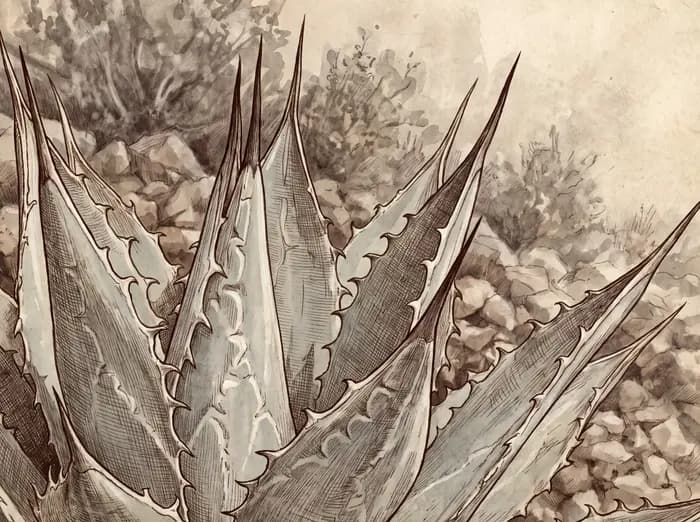
Utah agave
Agave utahensis
The northernmost agave on Earth, growing out of bare limestone. A small, armed rosette waits years, throws one tall flower wand, sets seed, and dies. Its roasted heart was desert food.
Read more →
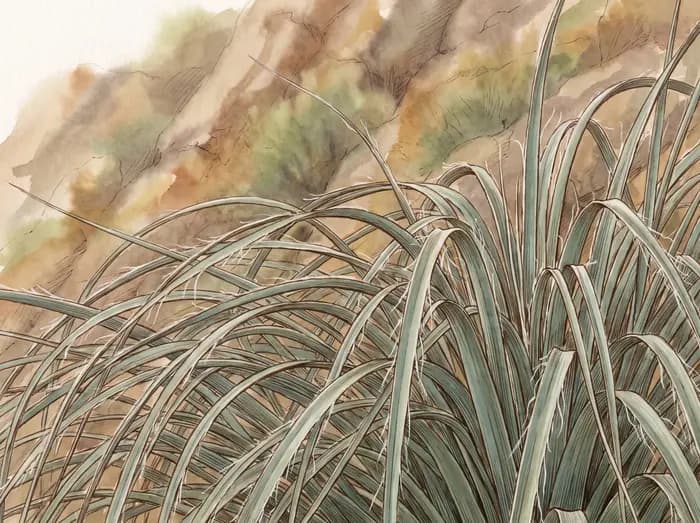
Bigelow's nolina (beargrass)
Nolina bigelovii
From a distance it is a yucca, and a yucca would stab. Nolina meets the same dry ground with flexible fiber instead of a spine: close your hand and nothing happens.
Read more →
Cacti
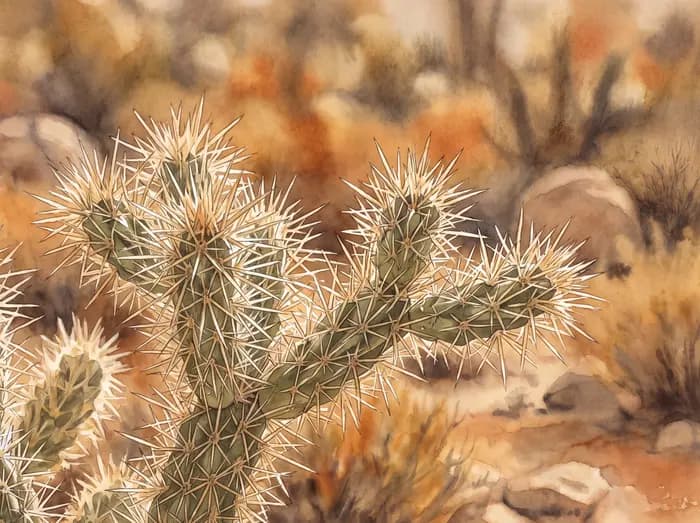
Silver cholla
Cylindropuntia echinocarpa
Catch it in low sun and the whole plant glows silver-gold: papery spine sheaths that are armor, shelter for the cactus wren, and, when a joint hitches a ride, the plant's way of walking.
Read more →
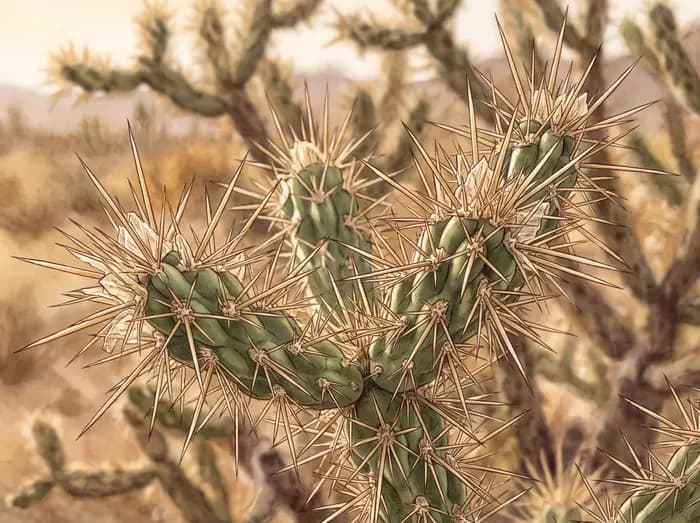
Buckhorn cholla
Cylindropuntia acanthocarpa
Loose barbed joints snap off, ride an animal, and root into a clone with no seed and no pollinator. The same spines a cactus wren weaves its nest down into.
Read more →
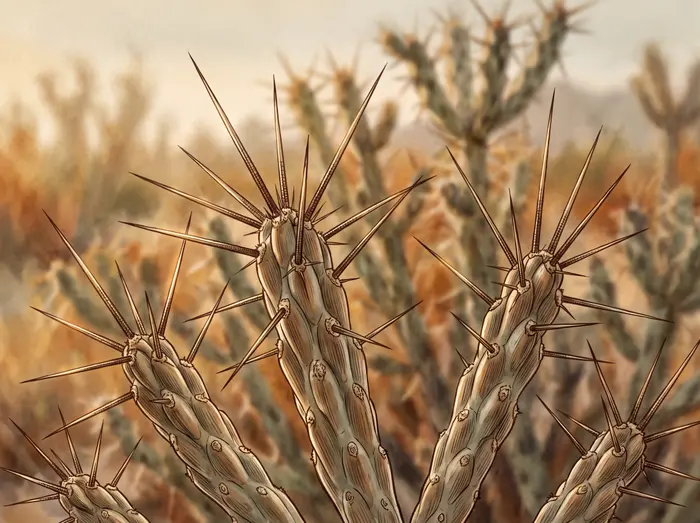
Diamond cholla
Cylindropuntia ramosissima
The thinnest cholla here: pencil-gray stems under a finger's width, diamond-patterned skin, one spine twice the length of any neighbor's. Easy to miss until you've backed into it.
Read more →
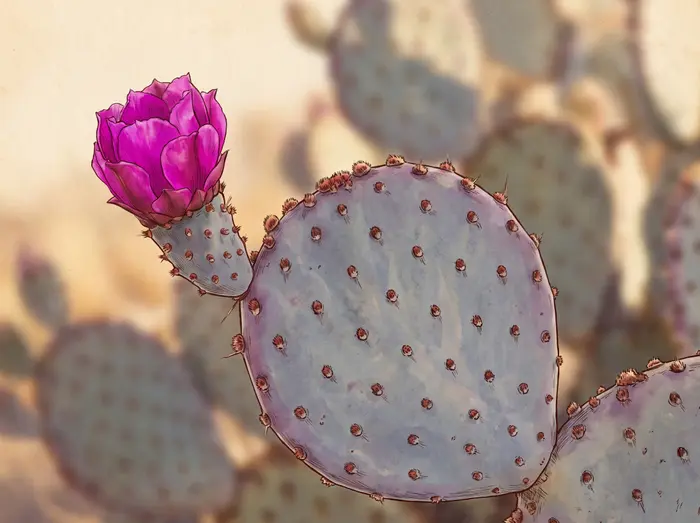
Beavertail prickly pear
Opuntia basilaris
No long spines is the trap: the flat blue-grey pad is dotted with barbed glochids too fine to pull out, and the shocking magenta flower of spring is the other tell.
Read more →
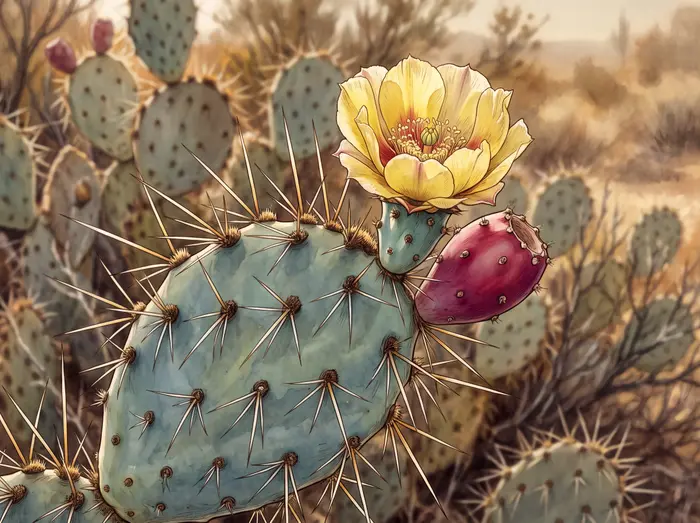
Engelmann prickly pear
Opuntia engelmannii
One of the Southwest's most common prickly pears, scarce here at the top of its range: a Sonoran pad that leans on the summer monsoon, with bird's-foot spines and a native bee behind its fruit.
Read more →
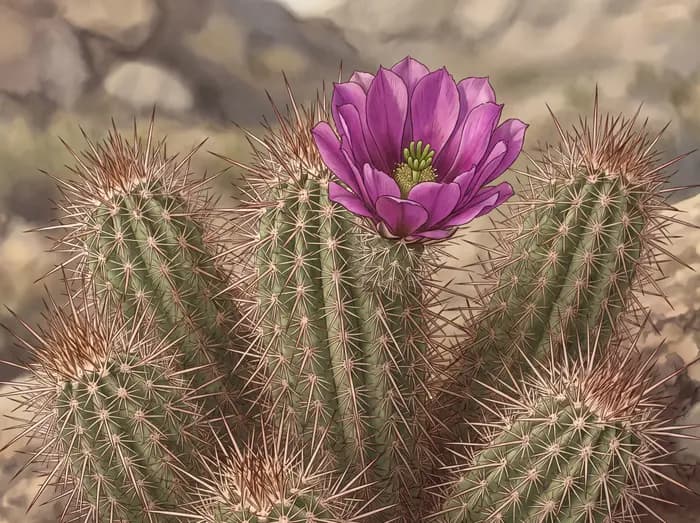
Engelmann's hedgehog cactus
Echinocereus engelmannii
A low clump of green stems in wildly variable spines, magenta blooms that reopen for days, and a red fruit desert peoples ate straight off the plant.
Read more →
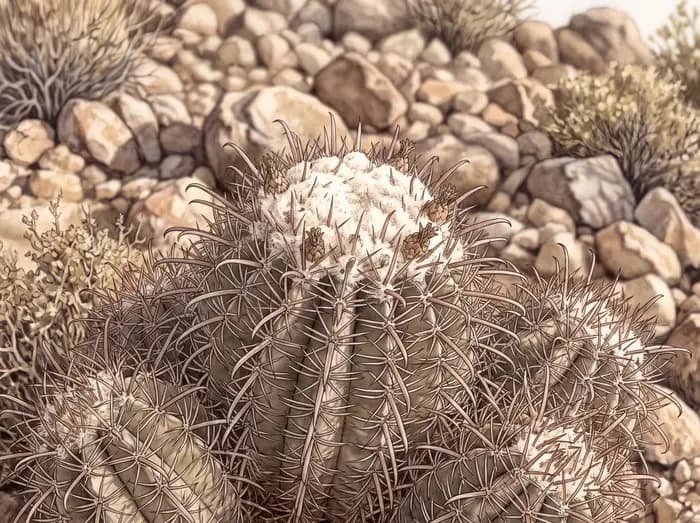
Cottontop cactus
Echinocactus polycephalus
A clumping barrel that grows a quarter inch a year and outlives a century. The white felt on each crown shields the soft growing tip, then holds the fruit — hence cottontop.
Read more →
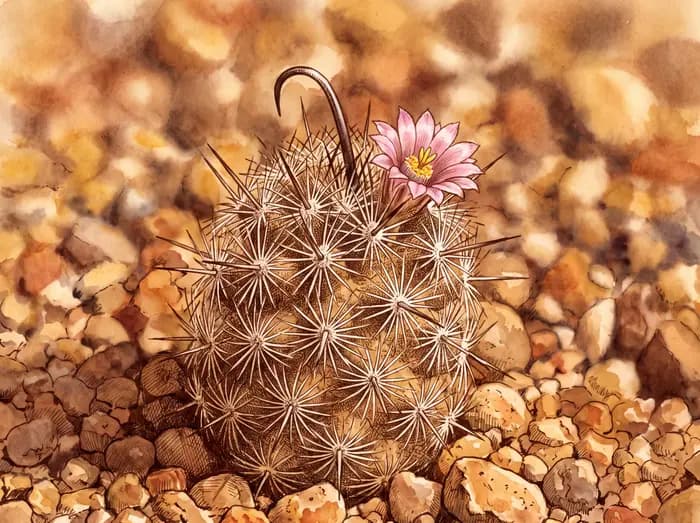
Fishhook cactus
Cochemiea tetrancistra
Barely two inches of cactus, hidden in gravel under a haze of white spines — and its one hooked central spine isn't for spreading seed. It's a lock, guarding the soft body underneath.
Read more →
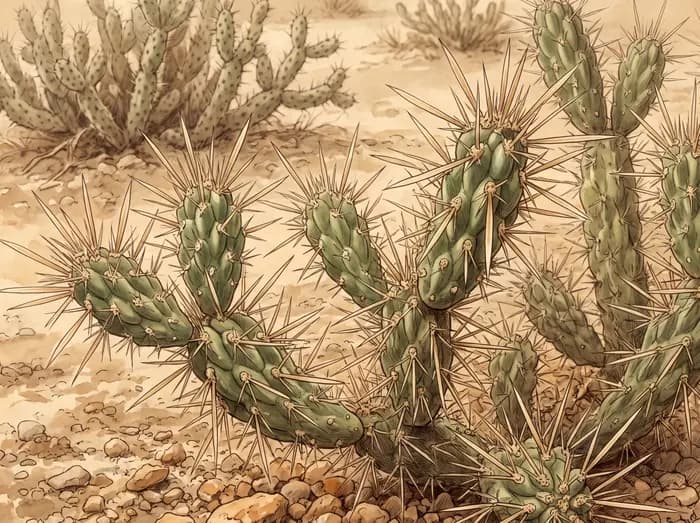
Club cholla
Grusonia parishii
Ankle-high "dead cholla" that reads as a pile of dead twigs — straw-white spines hiding a live cactus. The heap you'd file as debris is the one you step in.
Read more →
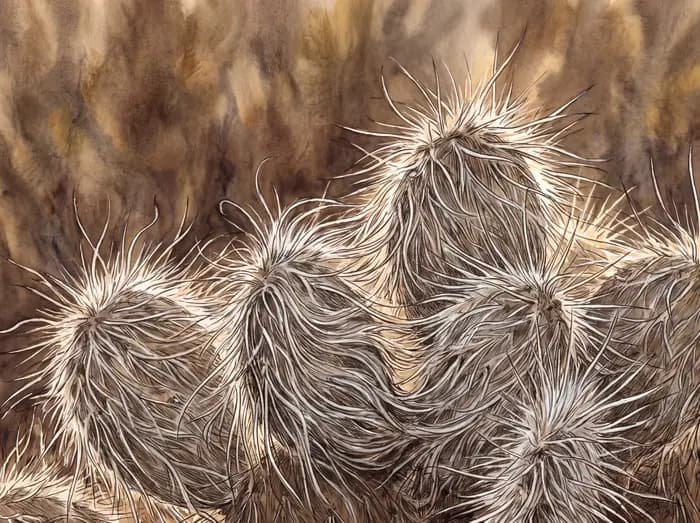
Grizzlybear prickly pear
Opuntia polyacantha var. erinacea
A prickly pear that looks fur-covered: dense long white-gray spines drape the pads like shaggy hair. The high-elevation prickly pear, dressed for the cold.
Read more →
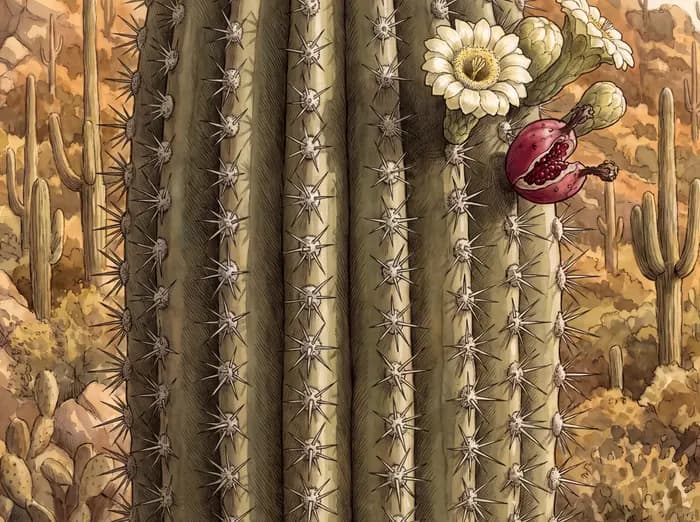
Saguaro
Carnegiea gigantea
The hills here are riddled with saguaro; the flat below has none. It is not the cold that stops them. It is the length of the cold, and that line runs right through this ground.
Read more →
Grasses
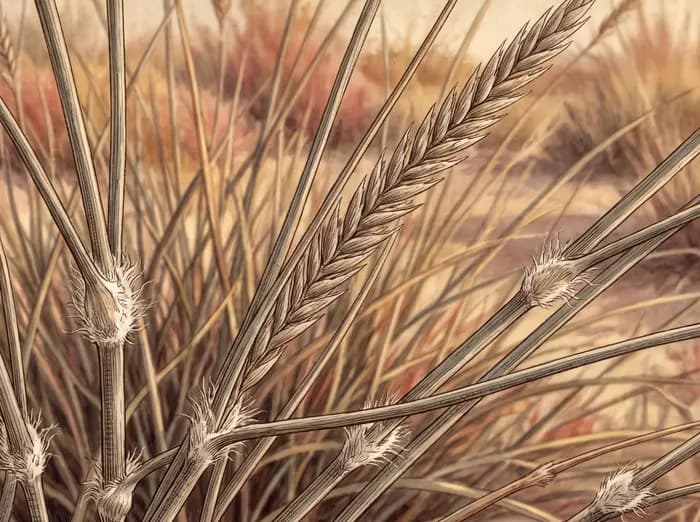
Big galleta
Hilaria rigida
The coarse grey grass whose stems snap solid, not hollow. It runs on the summer monsoon, spreads by rhizome, and holds sand down where finer grasses were grazed off long ago.
Read more →
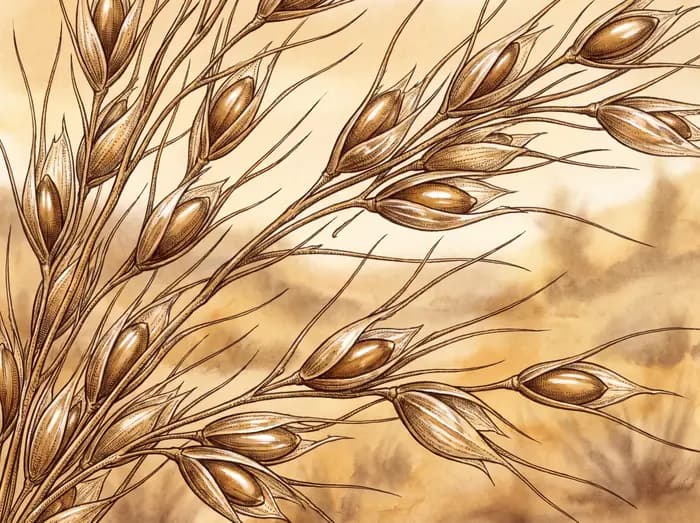
Indian ricegrass
Eriocoma hymenoides
Backlit in low sun it reads as pale smoke: an airy seedhead of hair-fine forked branches, each ending in one plump seed. A native bunchgrass whose grain fed desert people.
Read more →
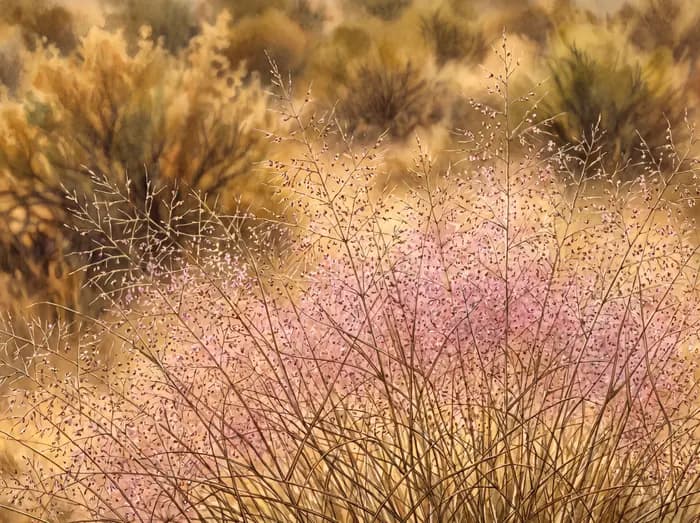
Bush muhly
Muhlenbergia porteri
A grass this palatable should have been grazed to nothing. Bush muhly survives by growing up inside armed shrubs — a creosote, a mesquite — and hazing the whole shrub over with see-through purple.
Read more →
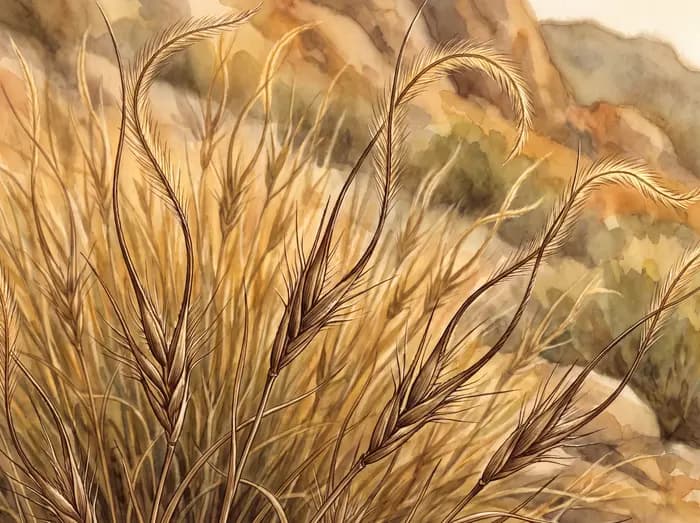
Desert needlegrass
Pappostipa speciosa
A native bunchgrass that plants its own seed — a bent, feathery awn that twists with the damp and screws the sharp seed into the soil. The same drill is why it lodges in a dog's ear.
Read more →
Wildflowers & Annuals — rain-dependent
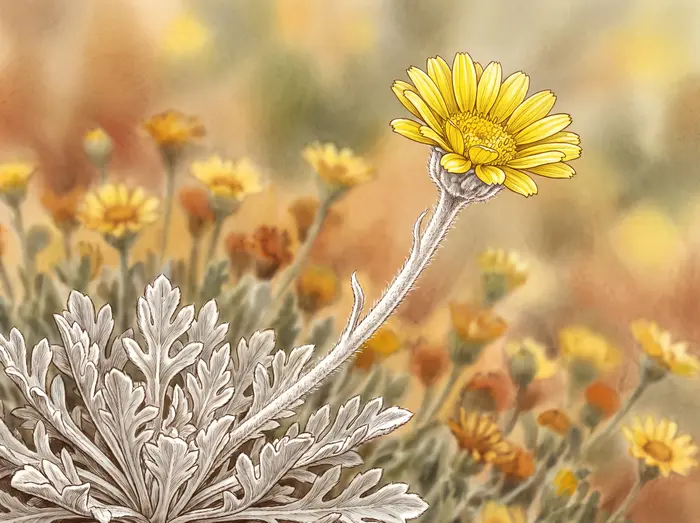
Desert marigold
Baileya multiradiata
A lemon-yellow daisy on a bare white stalk, blooming March to November straight through the heat. The silver wool is how it does it. Toxic to sheep and goats.
Read more →
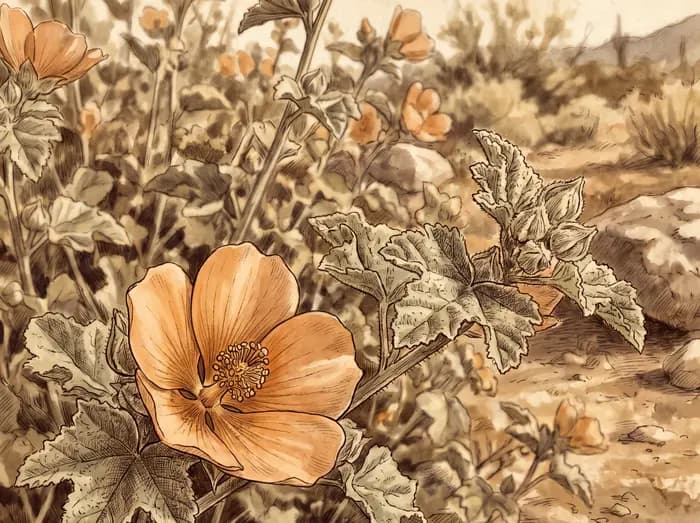
Apricot globemallow
Sphaeralcea ambigua
A thumb-sized apricot cup still flowering when the flats have quit, holding out for the specialist bee that nests in the same scraped, packed dirt the plant colonizes.
Read more →
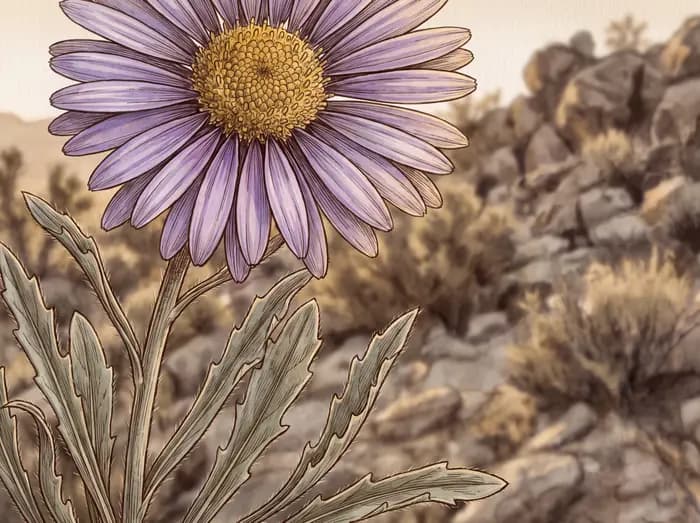
Mojave aster
Xylorhiza tortifolia
The biggest daisy on the poorest rocky ground: one lavender head on a bare stalk over a grey woody mound. It blooms to the rain, not the calendar, and can flower again in fall if the monsoon pays.
Read more →
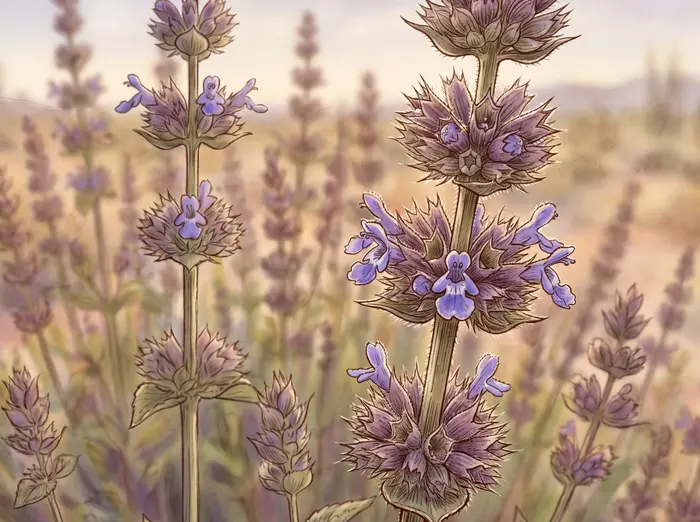
Chia
Salvia columbariae
A blue-flowered mint that spends the dry years as seed in the dirt. Its famous gel is really the seed's glue and armor. Native Salvia columbariae, not the store-shelf kind.
Read more →
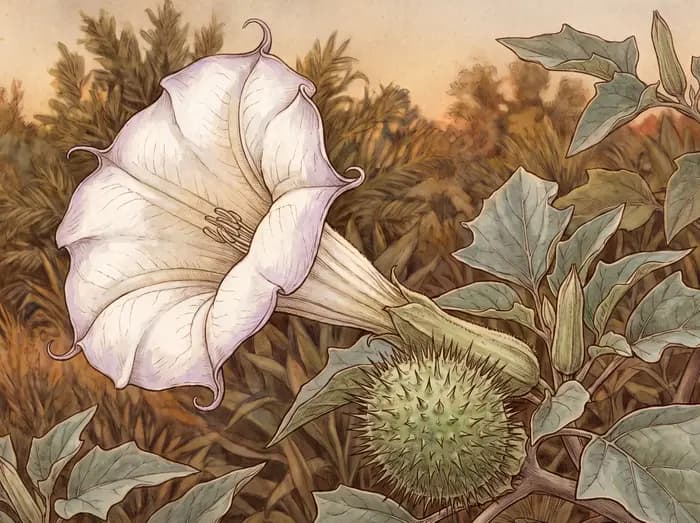
Sacred datura
Datura wrightii
A giant white trumpet that opens at dusk and is spent by mid-morning. It feeds a hawkmoth, is eaten by that same moth's young, and every part of it can kill you.
Read more →
Invasive & Nuisance
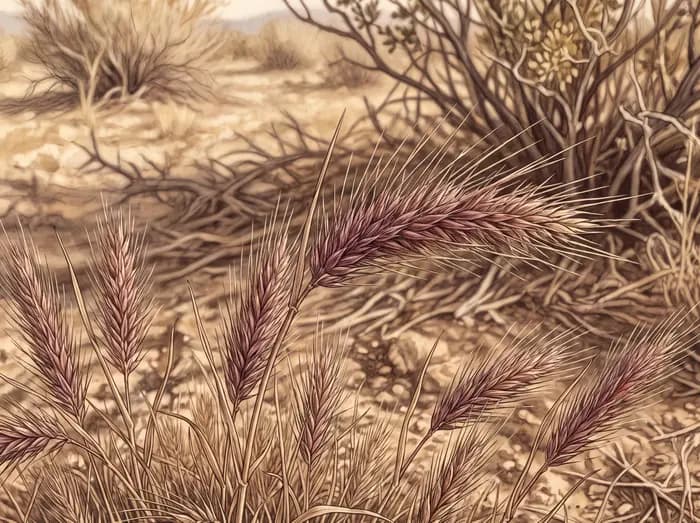
Red brome
Bromus rubens
Introduced from the Mediterranean, this ankle-high winter grass fills the bare ground between shrubs with fine dry fuel and carries fire through a desert that never used to burn.
Read more →
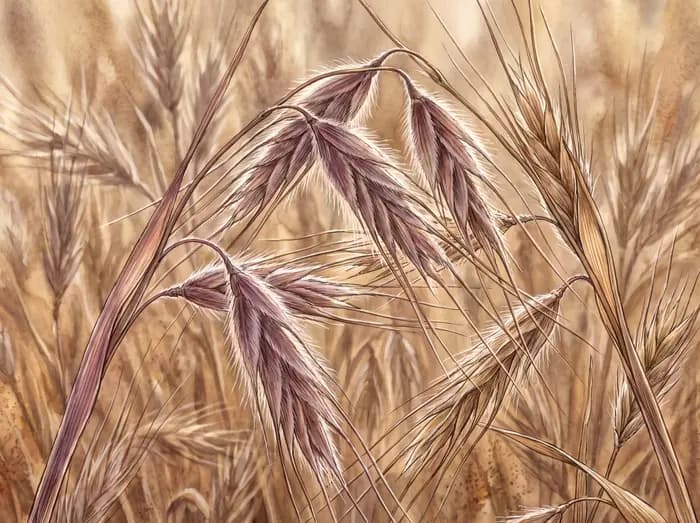
Cheatgrass
Bromus tectorum
An introduced winter annual that drinks the soil water before natives wake, then cures to fine fuel that carries fire across ground the desert never learned to burn. Soft, nodding one-sided head.
Read more →
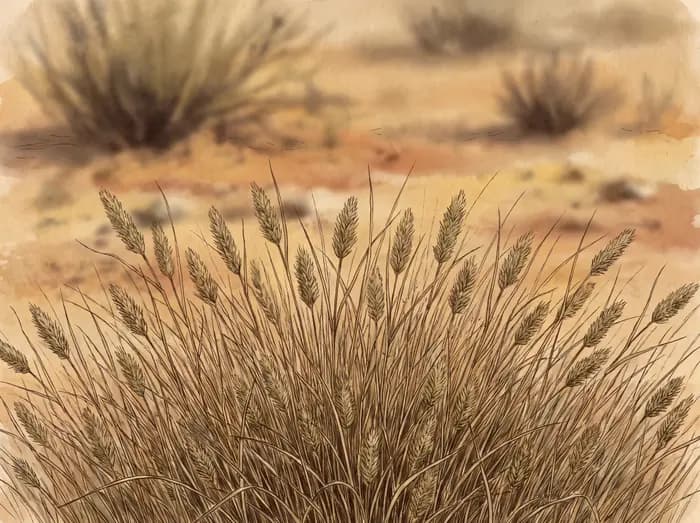
Mediterranean grass
Schismus barbatus
The smallest, most forgettable plant here, and the most dangerous. It fills the bare gaps between shrubs with fine kindling and turns a desert that rarely burned into one that does.
Read more →
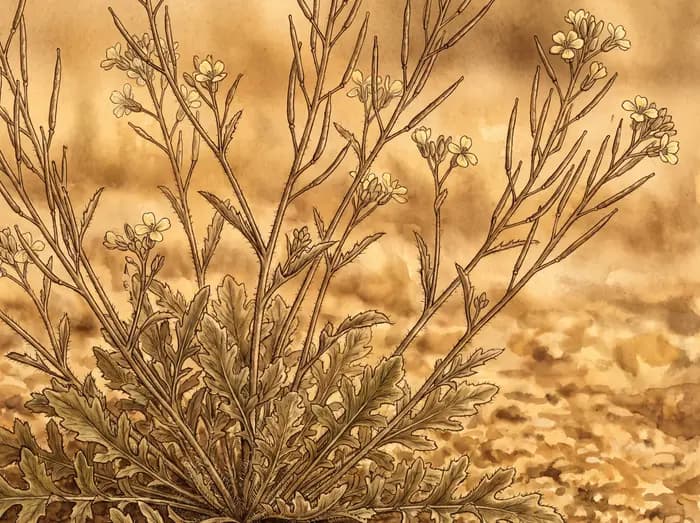
Sahara mustard
Brassica tournefortii
An invasive winter annual that germinates first, grows fastest, and blankets the ground before natives start, then dies to fine fuel. One plant can throw thousands of seeds.
Read more →
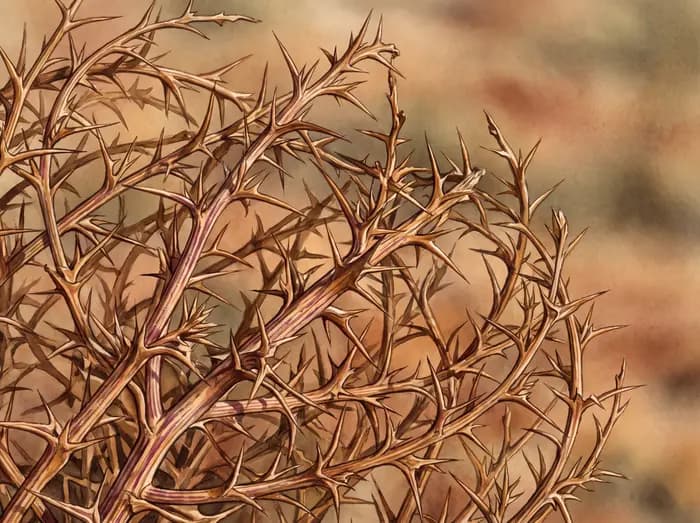
Russian thistle (tumbleweed)
Salsola tragus
Not native, not western, not a tumbleweed until it dies — an 1870s Eurasian invader whose tumbling is its seed machine, sowing the disturbed ground it colonizes.
Read more →
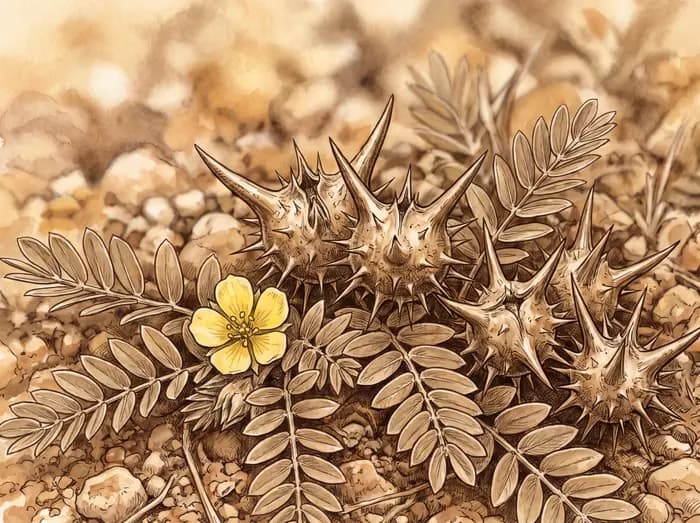
Puncturevine (goathead)
Tribulus terrestris
Not native. It takes the bare, disturbed dirt a build leaves, and its spiny burr rides off on any tire or paw. One plant seeds thousands, so catch it green before the burs harden.
Read more →
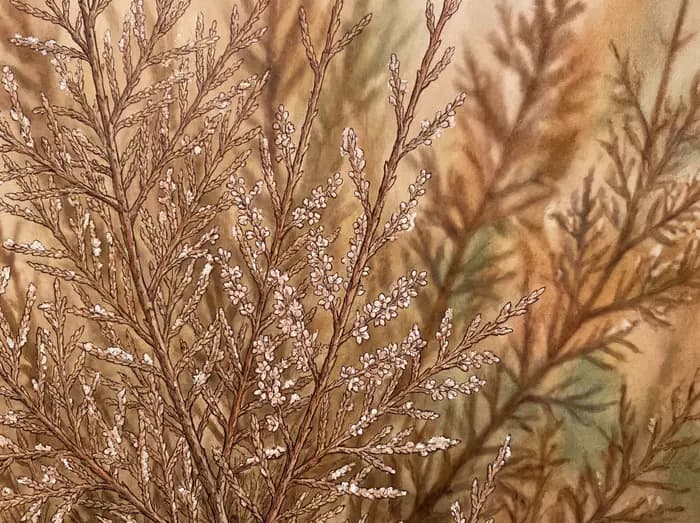
Tamarisk (salt cedar)
Tamarix ramosissima
Not a plant of dry ground but of water: an introduced Eurasian shrub that finds any seep or leak, salts the soil against natives, and burns hot. The famous 200-gallon-a-day drinker is a myth.
Read more →