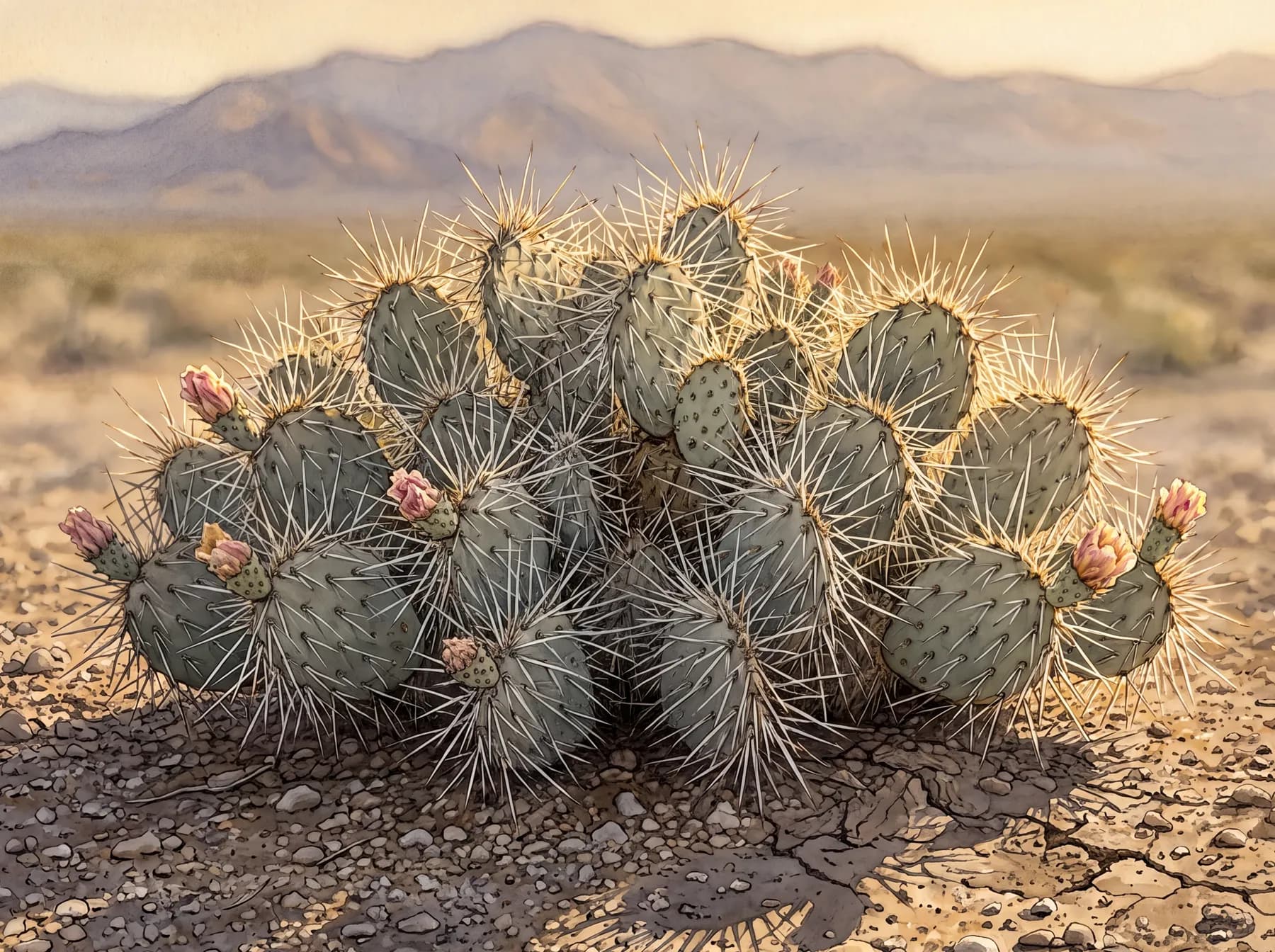
Find a low cactus on this bajada that looks like it grew a pelt, and you have probably found this one. The pads sit close to the ground and all but disappear under a mat of long, pale spines — white to gray, reddish where they meet the pad, anywhere from 1 to 7 inches long. The longest of them are thin and flexible, almost hair, and they drape and curl over the surface until the plant reads less like a cactus and more like something furred. Grizzled, even, which is where the name comes from. Nothing else here wears that coat.
That coat is a clue to where it belongs. This is not the prickly pear of the low, hot desert. It is the cold-desert one, a high-desert specialist whose range centers on exactly this corner of the map (the Mojave and Great Basin uplands of eastern California, northwest Arizona, southern Nevada, and a strip of Utah), in scrubland, pinyon-juniper, and Joshua-tree country. It climbs to about 7,000 feet. This ground sits toward the low edge of its band, so expect more of it upslope than out on the flat. Two neighbors can fool you: the beavertail is blue-gray and nearly spineless with magenta flowers, and the big Engelmann stands several feet tall with sparse stout spines and juicy red fruit. This one stays a low sprawling clump, under two feet high but reaching some 10 feet across, densely furred, its fruit dry and spiny. Low, shaggy, dry-fruited, flowering yellow to pink from May into July: that is the grizzlybear.
The reason a plant this soft can hold ground where the nights drop below freezing is a trick that sounds backward. A cactus is mostly water, and water swells when it freezes, so ice inside a living cell tears it apart. This one gets ahead of the problem by pulling water out of its own cells before the cold sets in, letting it gather in the spaces between them. When the freeze comes, the ice forms out there, in the gaps, where it does no harm, and the pads visibly shrink and go flaccid as the plant dries itself down. Researchers found the water loss is the whole point: put the water back to keep the tissue plump, and the cactus loses its hardiness. It makes peace with the freeze by getting thirsty on purpose.
Stranger still is the signal it reads. The chemical that tells the plant winter is coming is abscisic acid, the same one that signals drought. To a cactus, cold and dry are two faces of one problem, and the same chemistry answers both. Spray that hormone onto a related cold-hardy prickly pear in warm conditions and its freezing tolerance can jump by 23.4 degrees Celsius, as if you had fast-forwarded it into winter. The honest catch is that the spray mostly unmasks a hardiness the plant already owns; tender cacti given the same treatment barely moved. The hormone hurries the machinery along. It does not hand it out.
And the fur is not only armor. Those pale spines are a private climate for the growing tip beneath them. Modeling of desert prickly pears found that spine shade can cut the sunlight reaching the tender apex by about 70 percent and lower its surface temperature by as much as 17 degrees, easing both a scorching afternoon and the radiant frost of a clear night. Light spines throw back the sun's load on top of that. The coat that makes the plant look furred is doing a coat's work in two directions at once, against the heat of the day and the cold of the dark.
Look low for a cactus wearing hair rather than armor, its dry spiny fruit still clinging on. No other cactus here grows that pelt.