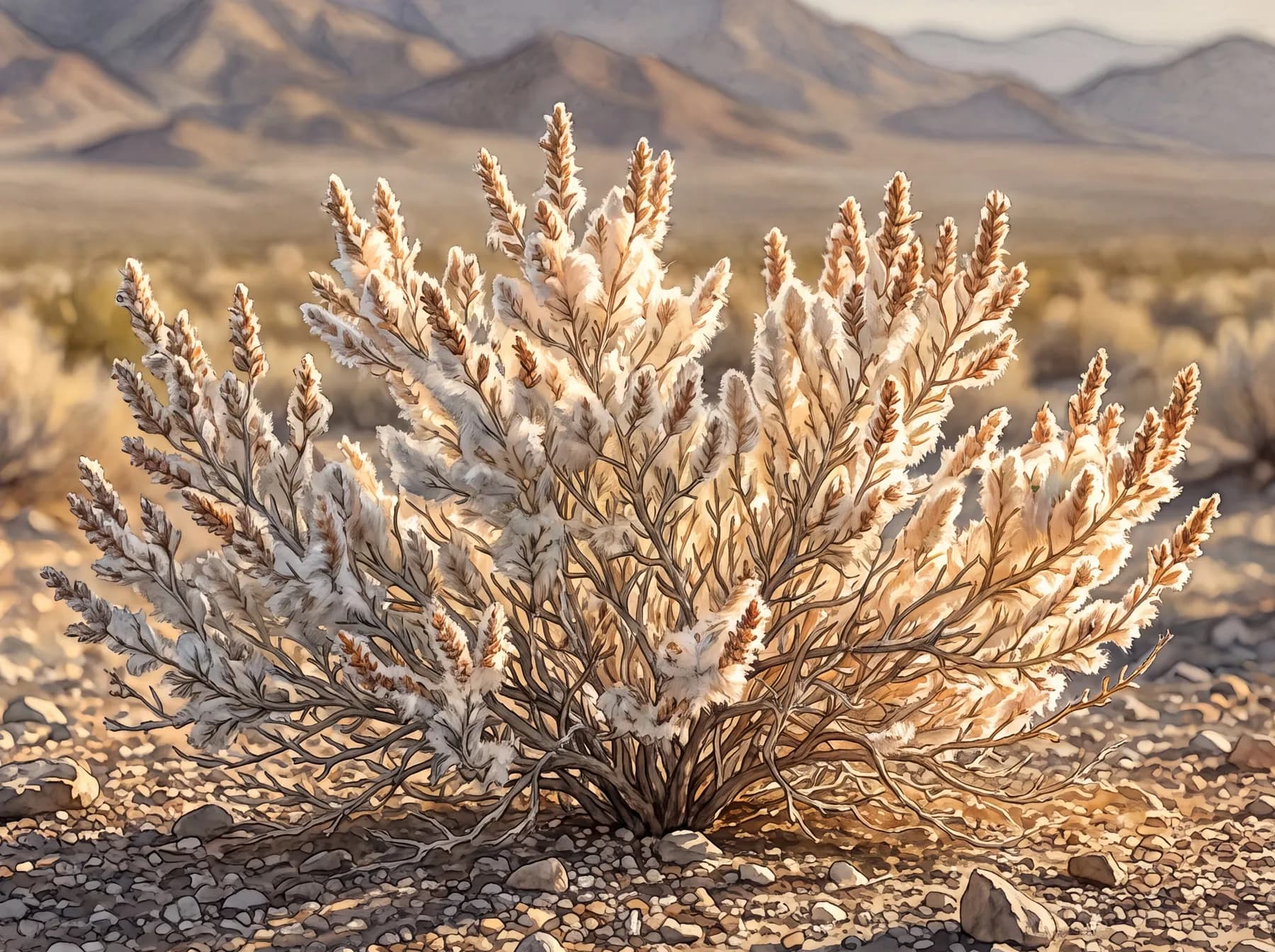
In late fall, when the grasses have gone brown and the bajada looks spent, one low shrub does the opposite of quit. Its upper stems crowd with dense white wool until the whole plant seems to fatten and pale, and in flat winter light you can pick that glow out from a good distance. That cottony swelling is the fat in winterfat, and it is seed rather than leaf or flower.
Each tuft is a single seed wrapped in two bracts clothed in long silky hairs, up to about 12 millimeters, white at first and aging to a rusty tan. Those hairs are a dispersal machine. They catch the wind and snag on the fur of anything that brushes past, so the same coat that makes the shrub easy to spot is what carries its seed away from the parent. No other plant here wears wool on its fruit, which makes it the surest way to name it. Saltbushes share the pale, dusty look and the same salty flats, but their seeds ride flat papery wings, not tufts of hair.
The wool is not only on the seed. Stems and the narrow, inrolled leaves carry the same dense hairs, and there they do heat-and-water work rather than travel. A pale, fuzzy surface turns back some of the sun and holds a still layer of air against the leaf, slowing the rate at which a plant this exposed loses water to dry desert air. It is the coat half the shrubs out here have arrived at on their own, though winterfat wears a heavier one than most. The strange part is that a plant so built for drought is also strongly cold-hardy; its leaves fall, and the woolly seed heads are what carry it, lit, through the cold months.
The name carries a second meaning, and the more useful one. Winterfat is among the best cold-season browse on western range because it holds more than 10 percent crude protein into winter, when the dormant grasses around it have gone feed-poor. That timing is the point: it puts weight on animals in the season nothing else can. Pronghorn, mule deer, and stock all seek it out, and rabbits and rodents work the lower stems.
For a long time ranchers read a thick stand of it as a sign of good ground, and there is a real mechanism under the reading. Winterfat takes winter browsing well but is hurt by heavy grazing while it is actively growing; strip more than about 25 percent of a season's new growth and the vigorous plants thin out. So a healthy stand does suggest range that has not been pushed too hard. It is only a suggestion, though. The plant also favors heavier, chalky or salty flats, so its absence can mean the wrong soil as easily as abused ground.
In late winter, find the pale, fattened shrub and check one seed up close: four bands of silky hair, and no wings.