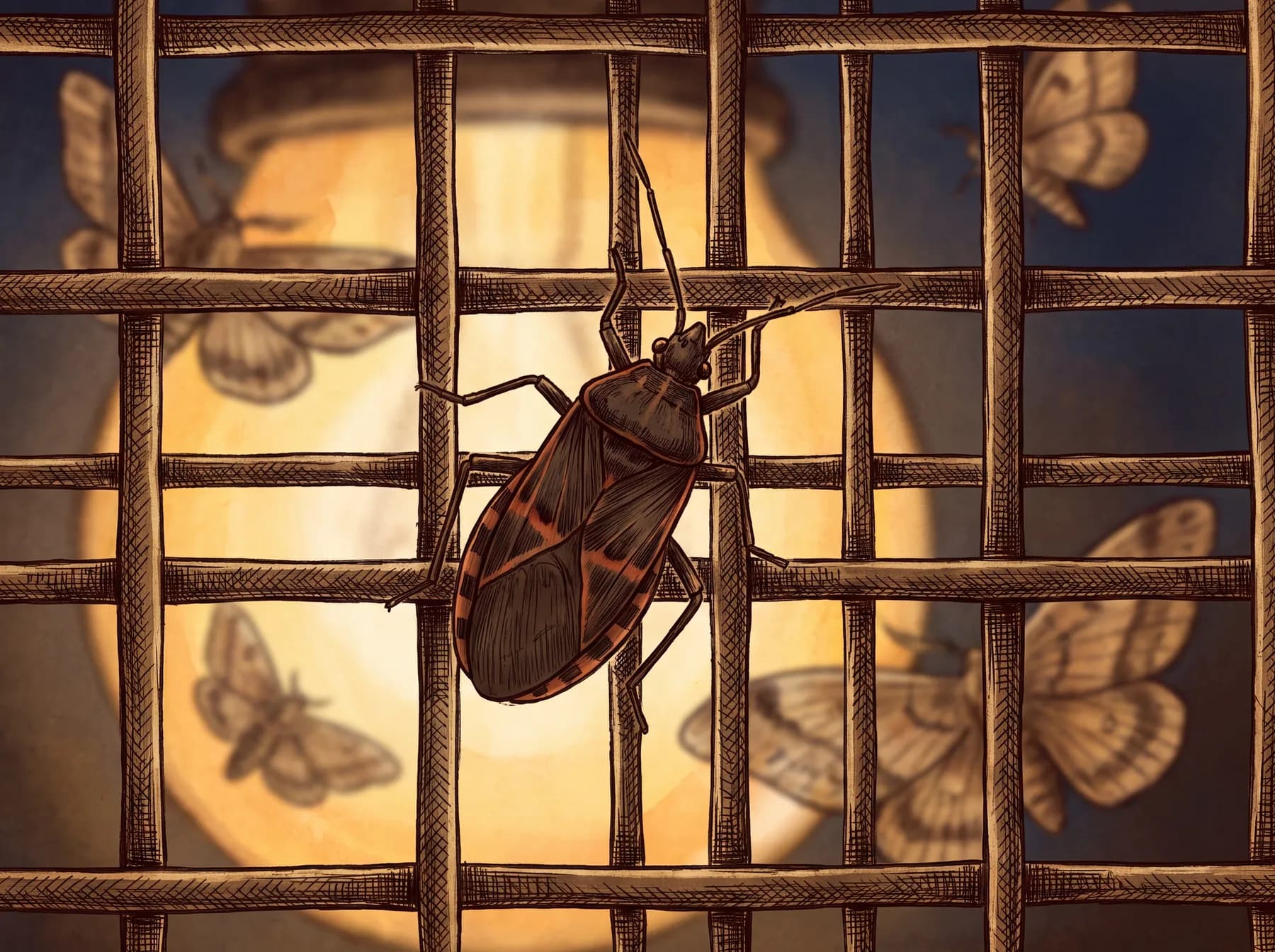
On a warm, still night in early summer, an insect the size of a thumbnail may come to the porch light and drop through an open door. It is a conenose, or kissing bug: a flat, dark insect with a narrow cone-shaped head that feeds on blood the way a mosquito does, only slower and larger. It tracks the carbon dioxide you breathe out, your body heat, and your skin's smell, settles near the face, and draws blood for 10 to 30 minutes.
The reason it gets attention is the parasite some of them carry. Trypanosoma cruzi causes Chagas disease, which can sit silent in a person for years or decades and then damage the heart. And these bugs are not lightly infected. In one Tucson study of 158 kissing bugs, about 41 percent carried the parasite; the University of Arizona puts it at over 40 percent, and submissions nationwide run near 50 percent. Taken alone, the numbers sound like a serious hazard.
The count of human cases does not match. Only about 28 people are known to have caught Chagas locally in the continental United States between 1955 and 2015. The gap is in the plumbing. The parasite is not in the bite or the saliva; it rides in the bug's feces, and it reaches a person only when those feces are rubbed into the wound, an eye, or another opening. Latin American kissing bugs tend to defecate as they feed, planting the parasite on the spot, while the southwestern species wait longer and often crawl off before leaving anything infectious behind. That delay, not any tidiness, is most of why the disease stays rare here. It is timing and degree, though, not a firewall — the Tucson researchers found these bugs do sometimes defecate while feeding, correcting an older claim that they never do.
The likelier trouble here has nothing to do with the parasite. Kissing-bug bites are the most common cause of insect-bite anaphylaxis in the United States. A sensitized person can answer the bug's saliva with hives, swelling, a drop in blood pressure, even a closing airway, and the reaction tends to sharpen with exposure; roughly half of those bitten react more severely the second time. The honest local worry is not the heart parasite most people will never get, but the allergic reaction.
Where the bug lives explains where it turns up. Conenoses breed in the nests of woodrats, the packrat middens, and in other rodent burrows. The adult flight is a narrow season. Adults fly from May into July, about half of them on the wing in the two weeks around late June, and they travel on warm, still evenings, the same calm nights people leave a door open. Which conenose this would be is genuinely unsettled. This is upper Mojave, high desert, at the edge of the best-known species' Sonoran range, where a woodrat specialist and the desert conenose are at least as likely. The honest name is the general one: conenose, or kissing bug.
If one does turn up, the mark you want is along the sides. Just outside the folded wings, the flattened abdomen carries reddish, brownish-red markings on its lateral edges, the detail that separates it from its plainer relatives. The useful answers are dull and they work: a dark porch on calm summer nights, beds kept off the walls, gaps screened, and no woodrat nest built against the house. We have not found one here yet.
On the right warm night in June, the open door is the beacon; which conenose it might draw, if any, we still cannot say.