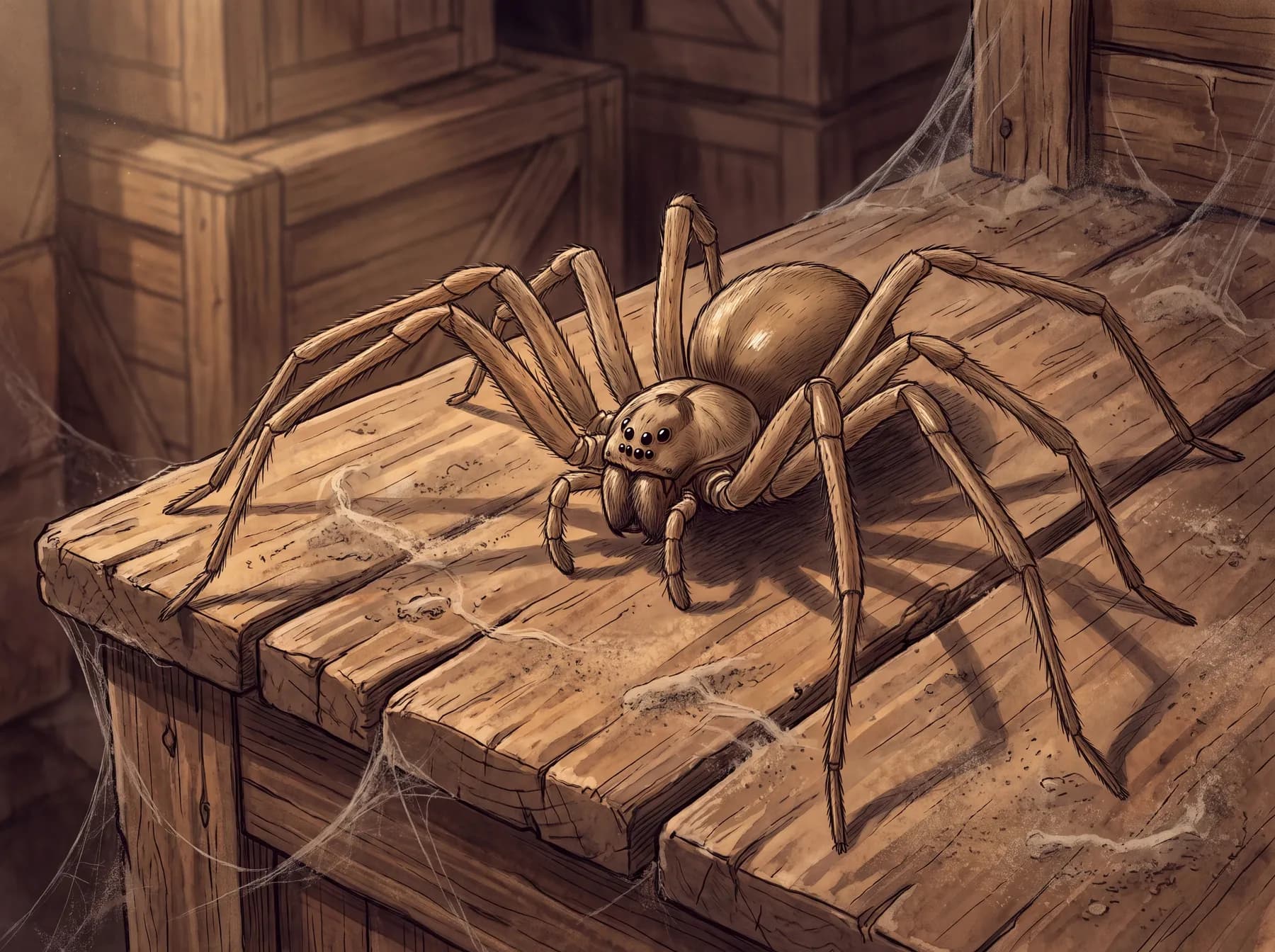
A sore opens on someone's leg, red and slow to close, and a name arrives before any spider does: recluse. The name gets assigned far more often than the animal is ever found. Across California, Oregon, Washington and Colorado, researchers logged 216 diagnoses of recluse bite in 41 months, against only about 35 recluse spiders ever verified in those four states. Whatever is opening those wounds, in most of that country it is not a recluse.
Part of the confusion is two animals wearing one name. The spider most people picture is the brown recluse, a creature of Missouri and the mid-continent that does not occur here. What lives on this bajada is its desert cousin, Loxosceles deserta, a native of the Mojave and Sonoran country. It is not a house spider that followed people in. It dwells in the wild, packed most densely into packrat dens, and comes indoors only where a house stands in native desert. Pave the ground or lay down a lawn and it mostly vanishes; the Joshua-tree and blackbrush of western Arizona is the ground it wants. We have not turned one up on this bajada, which for a spider this retiring settles almost nothing.
It earns the name recluse honestly. A home well inside its range can hold several hundred of these spiders while the people sleeping there are almost never bitten. It spins no snare to catch anything your size; it hunts small prey and spends the day folded into something undisturbed. Nearly every bite on record is mechanical: a hand pushed blind into a stored box, or a sleeper rolling onto one tucked in the bedding. Researchers once took six of them in a single night out of one cottage bedroom at a desert research facility.
The venom is not the reassuring part. In the lab it runs about as potent as the brown recluse's, which is a fact about the chemistry and not about your odds. The odds come from how seldom a bite happens and how most of them end. Of the bites that do occur, researchers put roughly 90 percent as healing on their own, about 10 percent as leaving a slow necrotic sore that wants medical care, and under 1 percent as turning systemic; deaths from this species are essentially unrecorded. The trickier problem runs the other way. Around 40 other conditions, some as serious as a MRSA infection, get written off as recluse bites and then treated as the wrong thing. So the plain advice is to see a doctor about the wound, not about the spider you never saw.
If you want to name one, ignore the violin. The famous fiddle mark is faint to absent on the desert recluse, and leaning on it will fool you. Look at the eyes instead. Most spiders carry eight, and a recluse carries six, set as three close pairs. The rest of it is a slim, long-legged, plain tan spider with no stripes and no leg bands, nothing dramatic to catch the eye, which is much of why it goes unrecognized. The habit that keeps you clear of it is the same one the black widow asks for: gloves, a light, and no reaching blind into stored, undisturbed places.
Count the eyes before anything else. Eight, and you can stop worrying; six in three pairs, and you have actually found it.