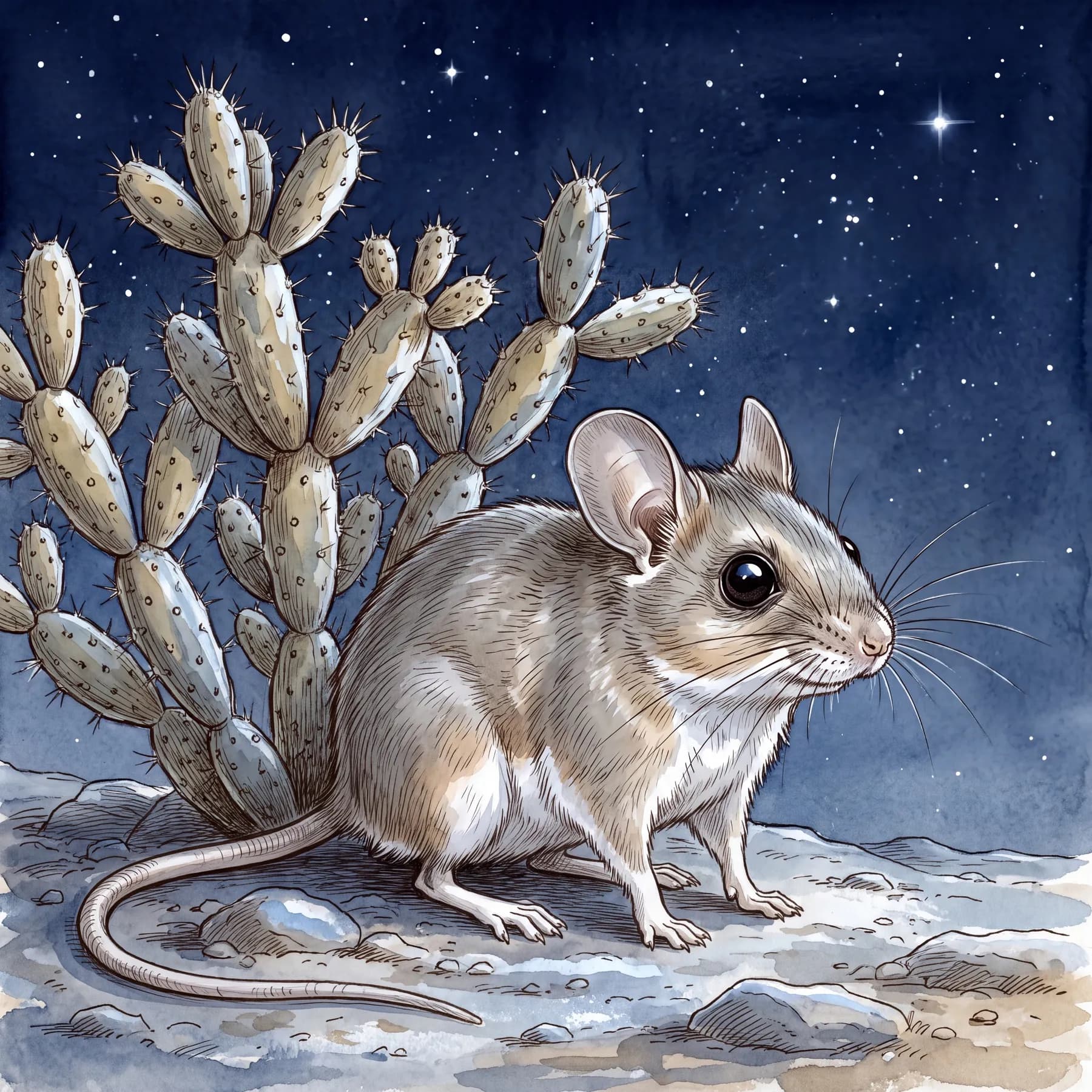
The desert mouse you would expect is a specialist in staying awake through the heat, wringing water out of dry seed the way a kangaroo rat is supposed to. The cactus mouse is not quite that animal. Deprive it of food and water and, within about 12 hours, it does the opposite of enduring. It drops into torpor, lets its body cool toward the temperature of its burrow, and waits the shortage out.
The strange part is the season. This is aestivation, summer dormancy, not the winter sleep the word hibernation brings to mind. A single bout of torpor seldom runs more than a day, but the dormant stretch can span 6 to 8 weeks of the hottest, driest part of the year, the mouse cycling in and out and feeding on cached seed between bouts. It carries the lowest metabolism measured in any Peromyscus, the deermouse genus, and the shutdown banks both energy and water at once. Water is the part that made it famous, though that should not erase the energy it saves.
Here is where the tidy story of a desert animal beating the heat breaks. A cactus mouse in torpor can die of cold. Its dormancy is tuned to a burrow near 20 degrees Celsius, and if its core falls much below 16, it may not come back. This is a warm-weather shutdown with a floor beneath it: the same slowing that carries the mouse through summer would kill it on a cold night at the wrong depth. The low metabolism is probably run by an underactive thyroid, though that is the leading explanation, not a settled fact.
The water side is stranger, and it is not the kangaroo rat's story of kidneys wringing urine dry. Held in controlled dehydration, cactus mice went 3 days losing on average 23.2 percent of their body weight and became, in the researchers' phrase, essentially anuric, all but ceasing to urinate, with no rise in creatinine and so no kidney injury. They reabsorb water instead, through vasopressin and the renin-angiotensin-aldosterone system, and they stop eating as they dry out, since food would only add solute they would have to flush. Much of the water they run on is made inside them, oxidized out of the seeds they eat.
At about 3,050 feet in the Mohave County high desert, this ground sits well inside the cactus mouse's range, which runs from roughly 115 up to 6,988 feet. No sighting of ours here; it is nocturnal, weighs about an ounce, and reads at a glance like any deermouse. The tell is the tail. On most Peromyscus it is well furred, but on the cactus mouse it is longer than the head and body and noticeably barer, and the soles of the hind feet are naked.
In your headlamp, look for a small pale mouse whose tail is longer than its body and oddly bare. That bareness is the name.