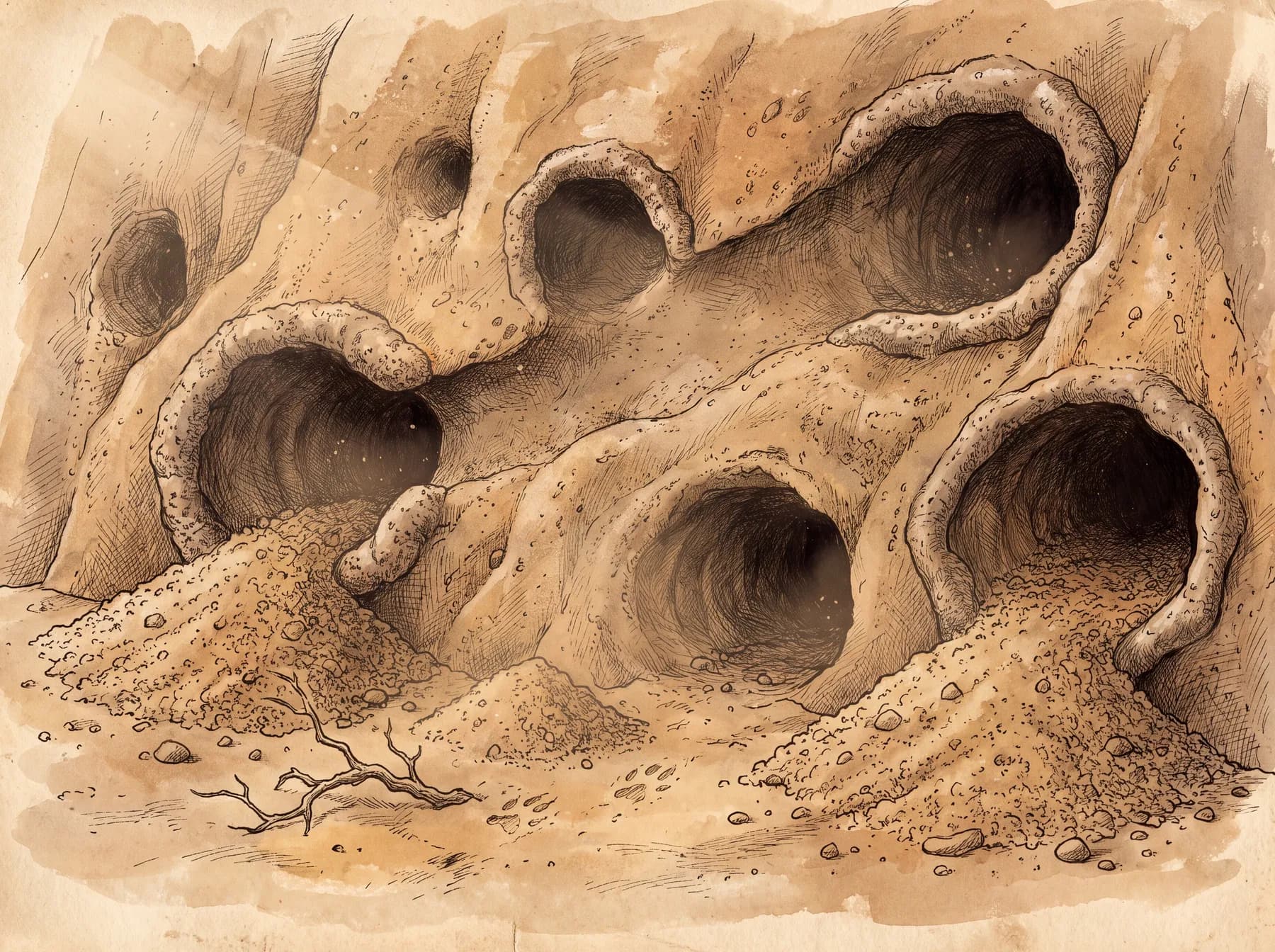
A hole in the ground is hard to read, because so many diggers work the same brown dirt. The temptation is to glance down, call it a rodent hole, and move on. The mouth is telling you more than that. Read its shape first: round, oval, or crescent, and that shape narrows the maker before you ever see a track.
Round holes belong to the small burrowers. A kangaroo rat does not dig one clean opening; it raises a low mound at a shrub base and pocks it with a cluster of small entrances, three to five inches across, and because the animal works at night it usually plugs them with soil by day. A squirrel's hole is open and left unplugged, two to four inches wide, with a loose fan of dirt thrown out one side and satellite escape holes nearby. A round hole barely an inch across, lined with silk or hung with a fine curtain, belongs to a spider, not a rodent.
Two diggers break the round pattern in opposite directions. A badger tears a wide oval mouth, wider than it is tall, eight to twelve inches across, backed by a huge fresh crater of thrown earth. That is a hunting excavation, not a home, a rodent colony dug open from above. A kit fox does the reverse: several entrances, each taller than wide so the slender fox fits through, with a long low berm of spoil beside them. The real tell waits at the mouth, in the scat and the bones and fur of whatever it carried inside.
One shape breaks from all of them at a glance. A desert tortoise pushes a wide, low, half-moon mouth, a flattened arch as wide as its own domed shell and clearly wider than it is tall, fronted by a smooth packed ramp of apron. Nothing else on this ground makes that crescent. If you find one, note it and route around it: the Mojave tortoise is protected, and a burrow you dig into, block, or drive over is one the law does not let you touch.
A hole also tells you who dug it, not who lives there now. Snakes, Gila monsters, and burrowing owls move into burrows that other animals abandoned, so the maker and the tenant are often two different species. An owl leaves its own sign at the door: whitewash and pale regurgitated pellets, sometimes a loose feather. A shed skin at the lip says a snake has passed through.
So here is the one rule the mouth cannot give you: never put your hand into any burrow to find out what is home.