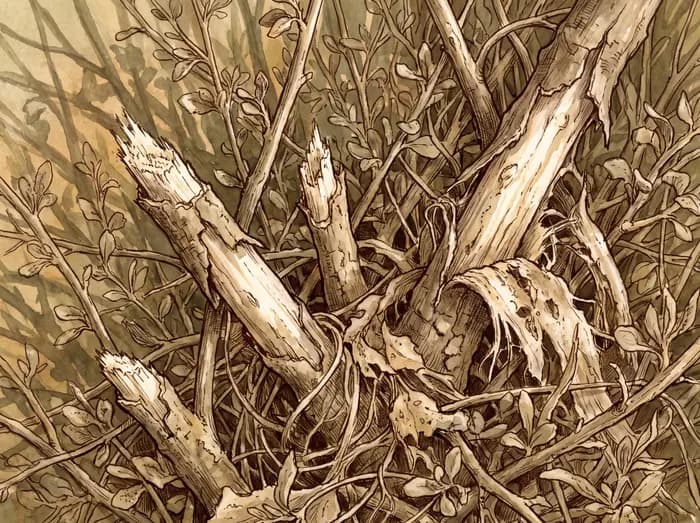
Tracks & Sign
You meet most animals by their sign long before you see one.
Key
subtitle = sign type / who made it
The Makers
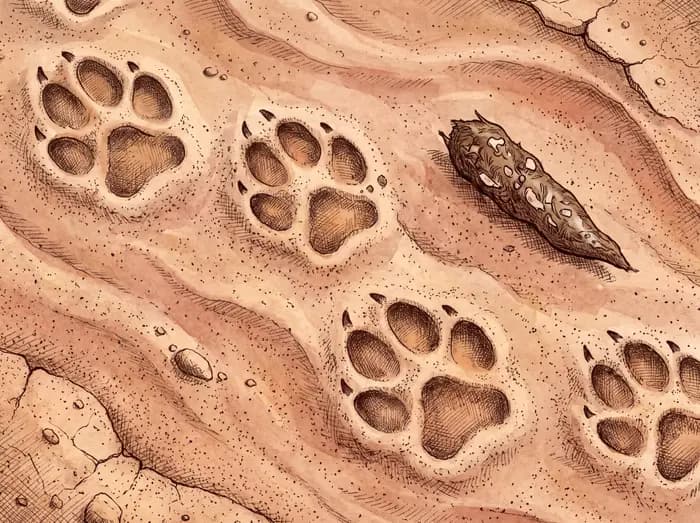
Coyote
Oval print + claw marks; rope-like scat
An oval track with claw tips and a straight, single-file line — a dog's is round and wandering. The scat is a rope of fur and bone, left on a rock as a signature.
Read more →
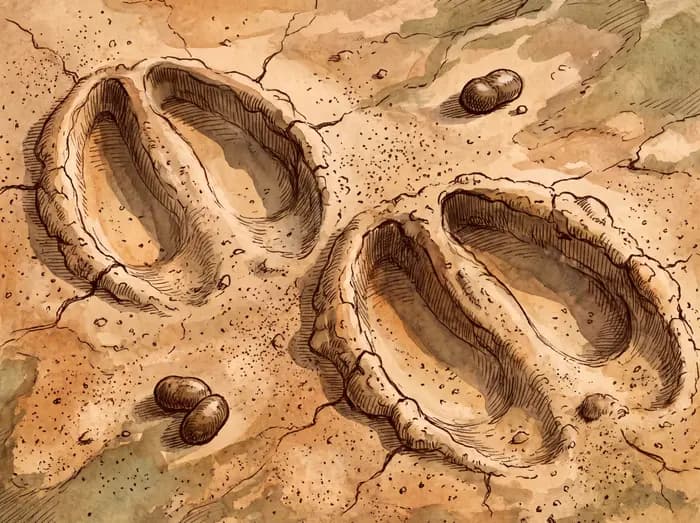
Mule deer
Split heart-shaped hoof
A cloven heart pressed point-first into the sand, pointing the way the deer went. Bighorn's is blockier; a burro's single hoof isn't cloven. Bunched sets of four mean a running deer.
Read more →
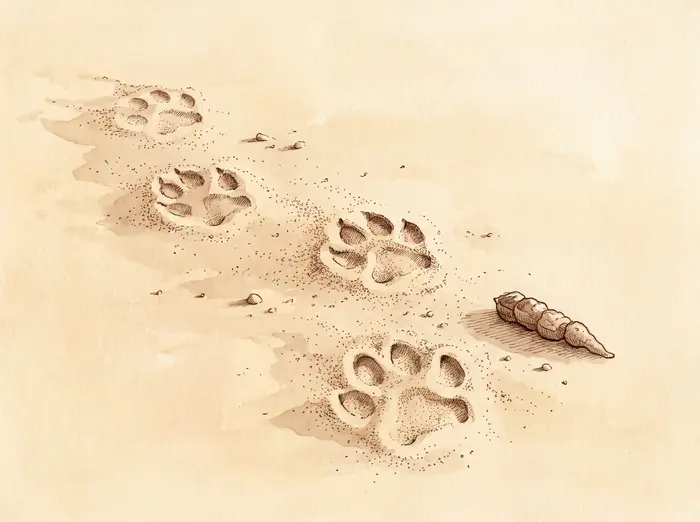
Bobcat
Round, four toes, no claws
A round print with no claw marks and a C of empty space inside, not the coyote's X. About the size of a big house cat; the scat it leaves is no secret — a hard, blunt segment set out on a scrape, the opposite of the house cat that buries.
Read more →
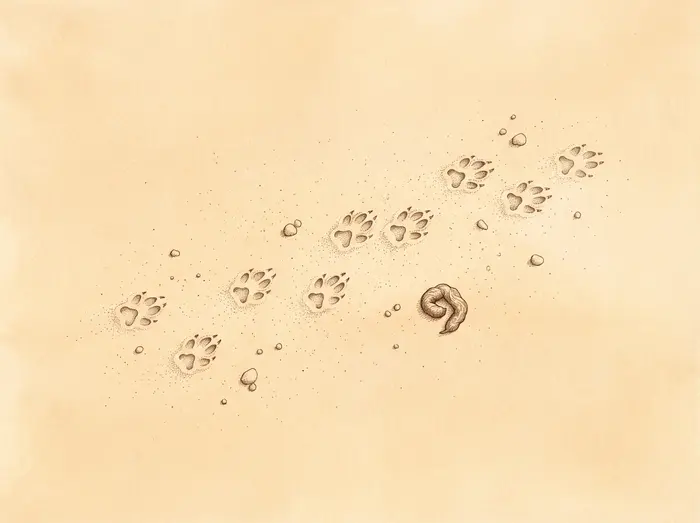
Kit / gray fox
Tiny neat canid print
A dog print shrunk to an inch is a fox, not a coyote. The kit fox blurs soft in its own foot fur; the gray prints crisper and may hide its claws like a cat. Read the trail.
Read more →
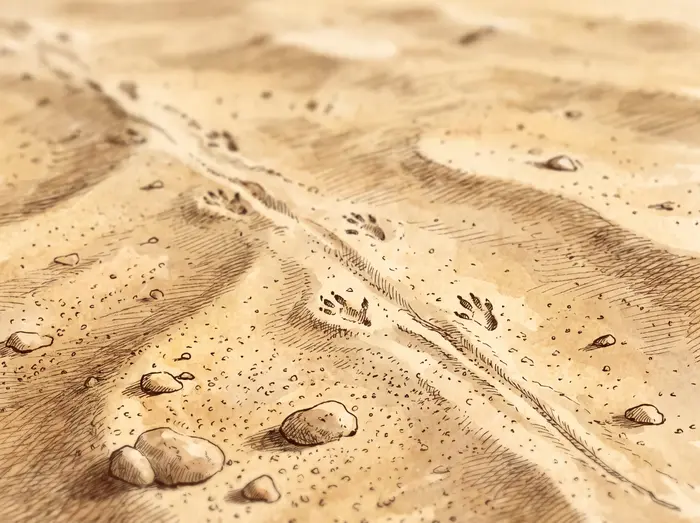
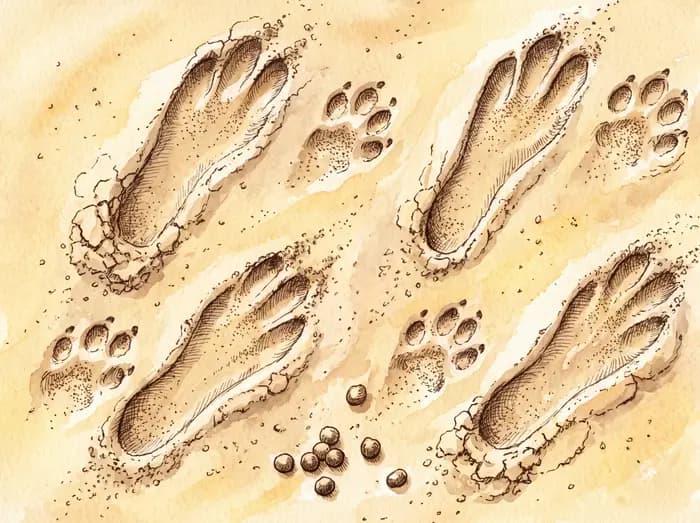
Kangaroo rat
Paired hops + tail-drag line
Two prints side by side, repeated with a gap between each pair. Bipedal, not four-footed. A faint center tail line shows only on slow hops. Count the prints: two, not four.
Read more →
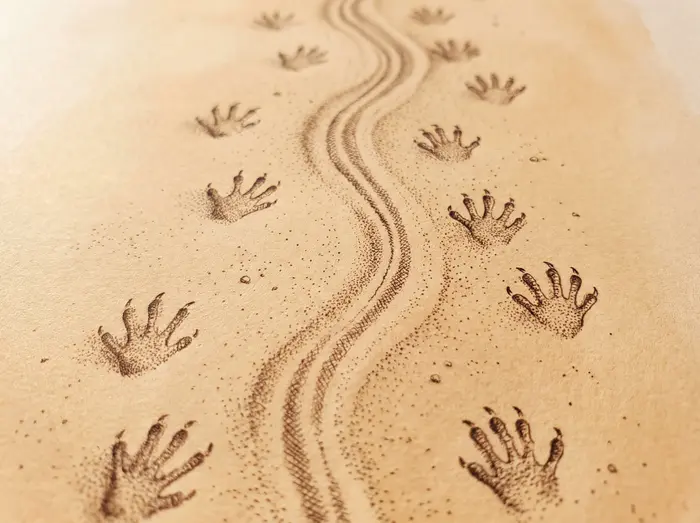
Lizard
Tiny handprints + tail line
A single thin drag line, mostly straight, running down the middle of two rows of five-toed prints. Straightness is the tell: a salamander's drag snakes side to side; a lizard's holds the line.
Read more →
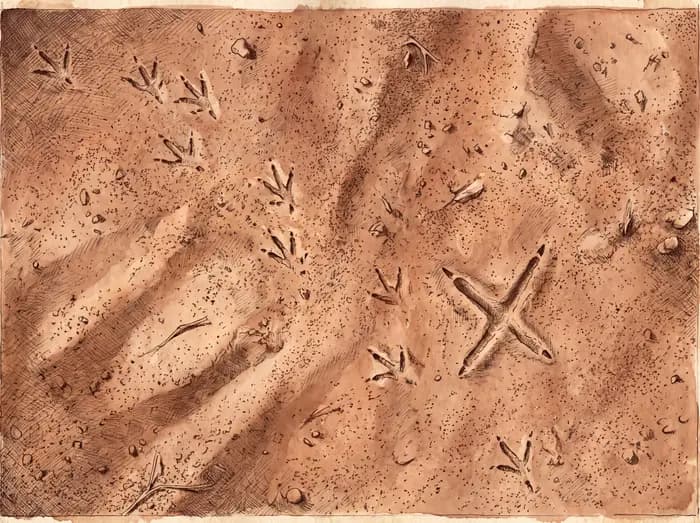
Bird sign
Three-toe prints; quail vs raven
Three thin toes and pin claws, no pad and no tail drag: that is bird. But the print barely names the maker; the gait does, and a roadrunner prints an X.
Read more →
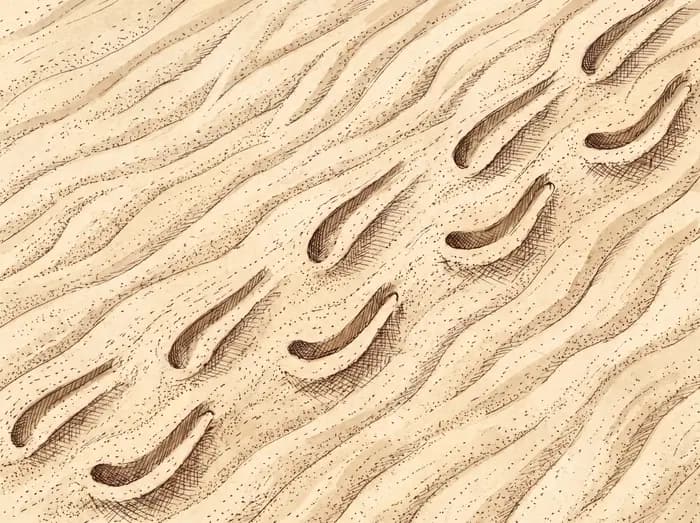
Sidewinder
Disconnected J-shaped bars
A row of separate bars in loose sand, not one wavy line, each with a hook at one end. The snake stepped across them, not along them; follow the hook tips to read which way it went.
Read more →
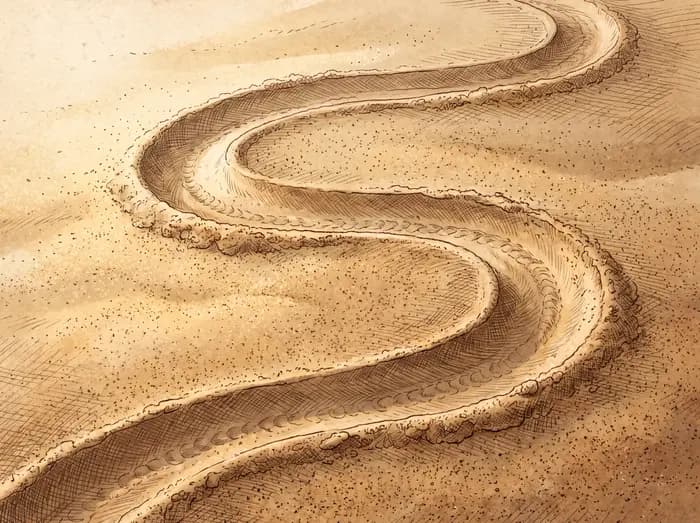
Snake trail
Continuous serpentine groove
A continuous wavy groove with no footprints beside it is the whole ID — snakes are legless. Separate angled bars mean a sidewinder instead. Groove width tells you the snake's size.
Read more →
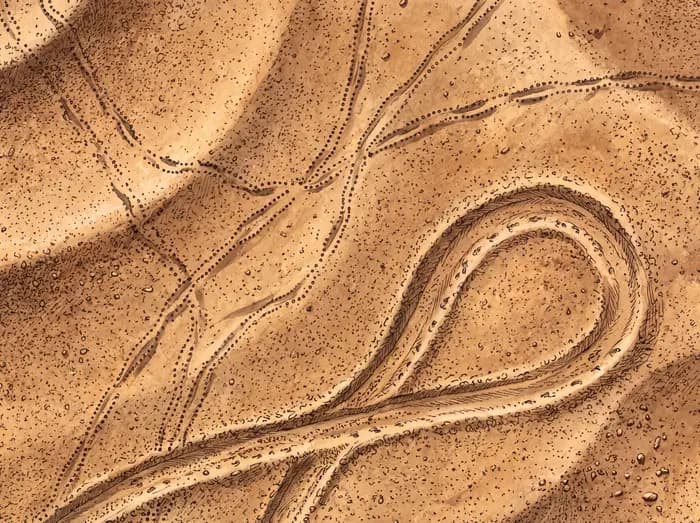
Invertebrate trackways
Fine stitched lines (scorpion, beetle)
Faint rows of dots in dawn sand, sometimes a hairline drag between them. Count the legs first: six is an insect, eight a spider or scorpion. The line down the middle is the least reliable mark.
Read more →
Scat & Pellets
Structures
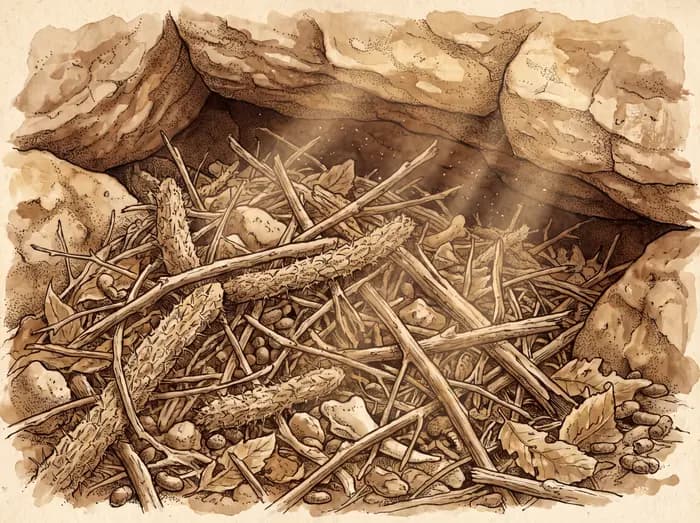
Packrat midden
Stick-and-debris fortress
A stick heap welded into a rock crevice and glazed dark with crystallised urine. That glaze, amberat, is the tell, and it can outlast the plants around it by thousands of years.
Read more →
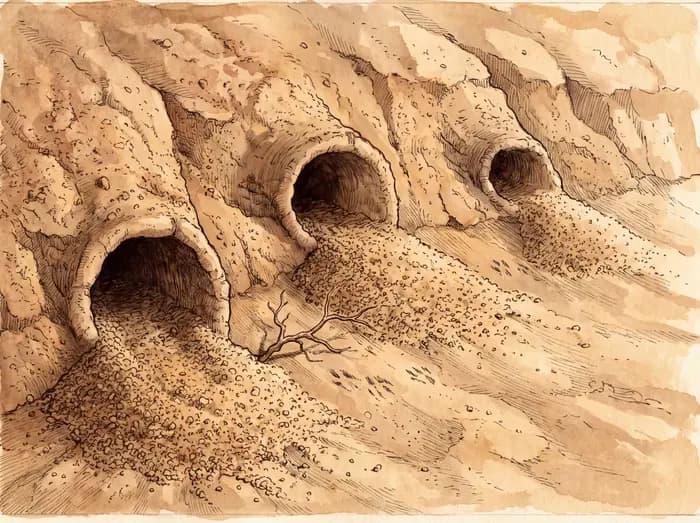
Burrow ID
Read the hole by shape & spoil
The mouth's shape names the maker before you see a track: round for rodent or spider, a wide-oval crater for badger, a low half-moon as wide as a shell for the protected tortoise.
Read more →