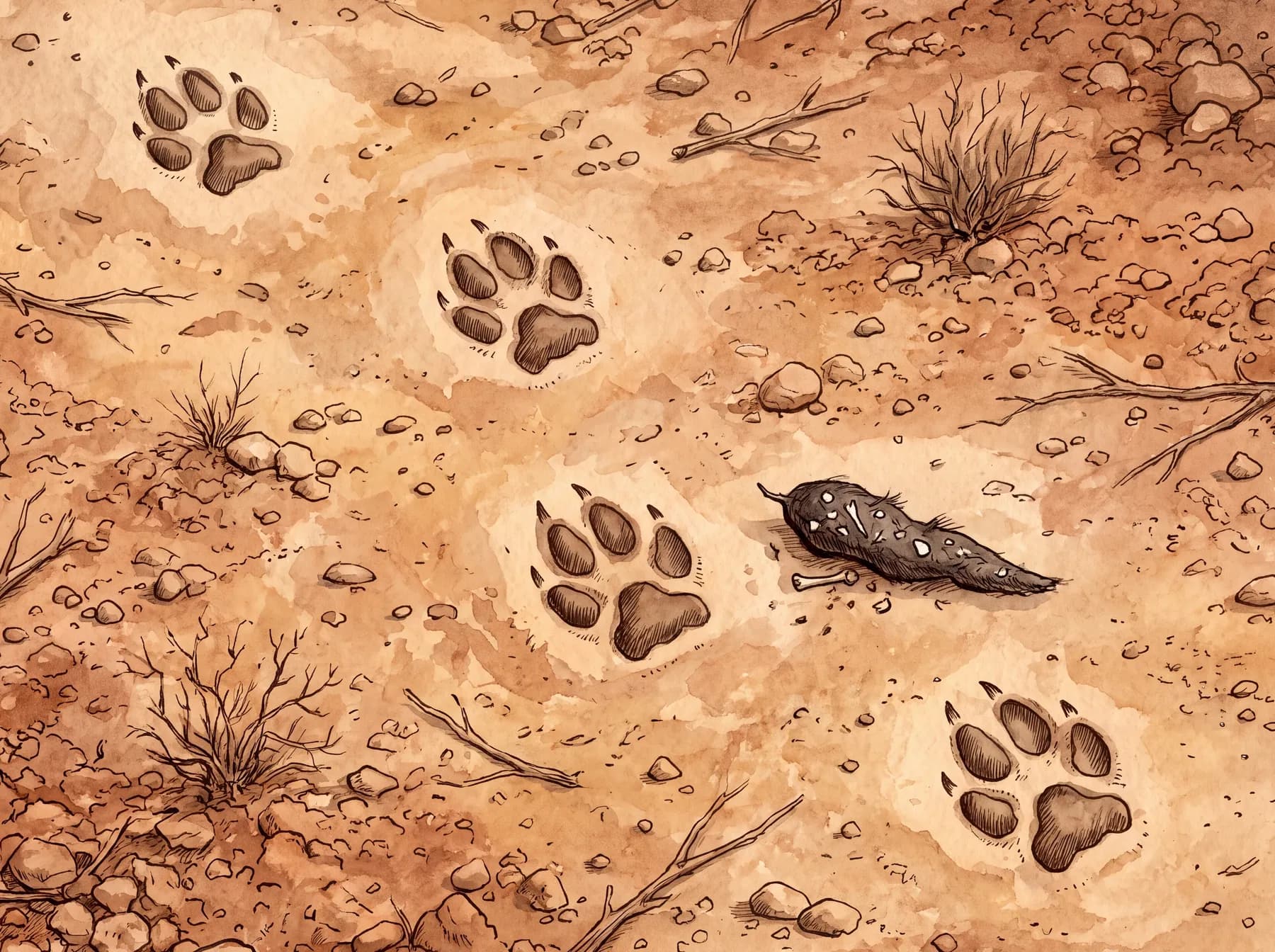
The track that stops you on a wash bank is an oval, a little longer than it is wide, maybe two to three inches from the front claws to the heel, carrying four toes and — the first thing to read — small sharp claw marks pressed into the dust ahead of them. Claws usually mean a dog of some kind rather than a cat, because a cat walks with its claws retracted and a coyote cannot pull its in.
Usually is the honest word, and it is worth keeping, because a confident rule that is wrong will cost you a call. Cats do sometimes register claws on slick or steep ground, and the gray fox, which is a canid, has semi-retractile claws that often do not print at all. So claws usually mean canid, and their absence usually means cat, and neither is a law. The trail is where you actually settle it.
To separate a coyote from someone's loose dog, look inside the print. A coyote track holds a clean, compact X of open space between the four toes and the heel pad, and you can lay a straight X right through it. A dog's toes splay wider and break that X apart. It is the most reliable single feature in the print, more dependable than size, which overlaps badly between the two.
Then stop reading the single print and read the line. A coyote trots in a disciplined, nearly single-file trail across open desert, each hind foot dropping close to where the front foot landed, going somewhere on purpose. A dog wanders, cuts back, circles, and sniffs. Follow twenty feet of trail and the difference stops being subtle: one animal is commuting, the other is having a nice time.
The scat says the same thing a second way. A coyote leaves a tapered, rope-like cord, often twisted at the ends and packed with hair and splinters of bone, the record of a wild meat-and-fruit diet, nothing like the even tube a dog on kibble drops. And it is set where it will be found: on a rock, at a trail junction, on a low rise. That is not carelessness. It is a signpost, left on purpose for the next coyote to read.
One print can mislead you. Twenty feet of straight, clawed, single-file ovals, signed in fur and bone, cannot.