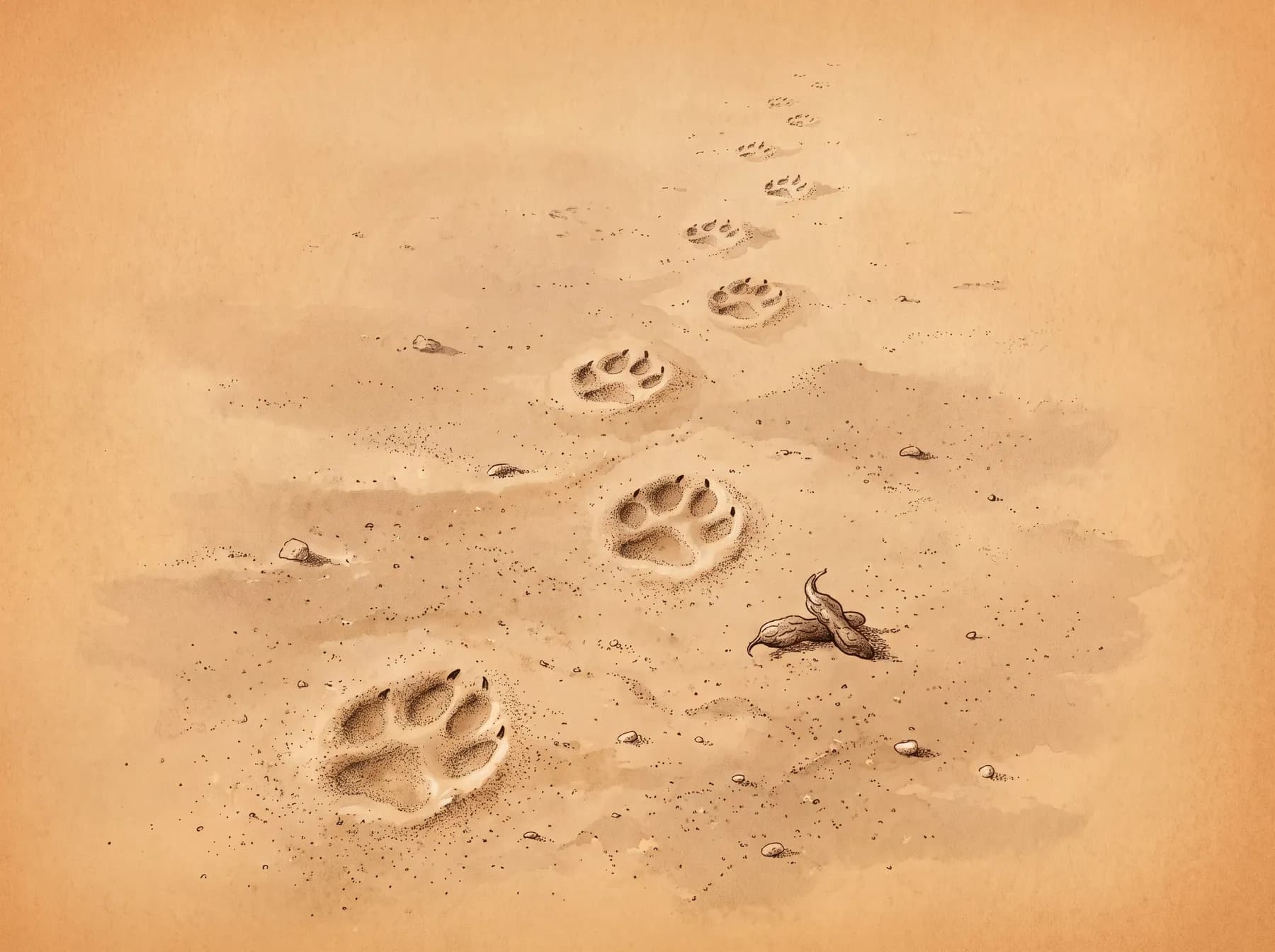
The print stops you because it looks like a coyote's track, only shrunk. The same oval a little longer than wide, the same four toes, but where a coyote runs 2.5 to 3.5 inches from claw to heel, this one is barely an inch. Nothing else on this ground leaves a dog-shaped print that small. A track that dainty is a fox, not a coyote. That is the first cut, and the easy one.
Which fox is the harder question, and the answer is not size. Two of them work this bajada: the kit fox out on the open flats and the gray fox back in the brushier, rockier ground. Their prints separate on clarity instead. A kit fox walks on furred feet, its pads small and half-buried in foot hair, so the track comes out soft and low in contrast, the edges already dissolving as if the wind had worked at it before the foot ever landed. The blur is the diagnostic here, not a sign the track has decayed.
The gray fox prints cleaner. Its pads read as distinct shapes, crisper than the kit's smudge, and a front foot runs larger, roughly 1.4 to 2 inches long and up to 1.75 inches wide. It also carries a surprise for anyone holding the tidy rule that claws mean a dog and a bare print means a cat. The gray fox is a canid with semi-retractile claws, cat-like, that often do not register at all; when they do show, they sit ahead of the toes rather than pressed against them. A dog-family animal that hides its claws is the exception that costs you a call if you trust one print alone.
So stop reading the single track and read the line it belongs to. Both foxes trot in direct register, the hind foot dropping onto the front foot's mark, and the result is a tight, nearly single-file trail with a narrow straddle, laid down like an animal going somewhere. The stride runs about 13 to 18 inches, shorter than a coyote's 17.5 to 26, and the kit fox especially keeps it economical across open sand. Follow the trail and the size you already read gets a second confirmation from the spacing.
The scat tells the same story a third way. Fox scat is a small rope, tapered and twisted, packed with fur, and set out in the open on a rock or the center of a trail where the next fox will find it. One detail sorts the two: the gray fox is the more omnivorous, and in season its droppings carry the seeds of fruit and berries worked into the twist. Seeds in the rope lean gray. A clean cord of fur could be either.
None of this is confirmed on the parcel yet. The habitat fits both foxes, and the flats are the kind of open ground kangaroo rats favor, and those rats are a kit fox's whole reason for being here, so the page is a recognition guide for a print we expect rather than one we have measured.
A coyote's print is bold. The kit fox's looks weathered the moment it is made, and that softness is the signature.